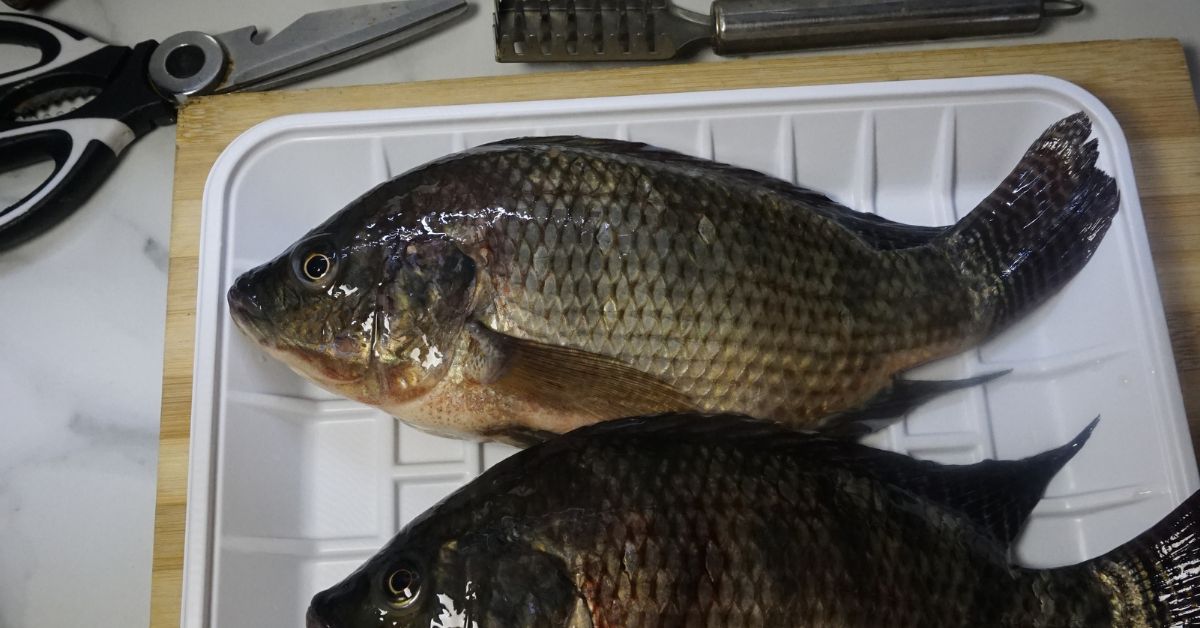
I love any dish with tilapia but there’s one thing I hate doing, cleaning it. It’s messy, slimy, and sometimes smells too fishy. But if you want your tilapia dish to taste fresh and clean, you have to start with a properly cleaned fish. Trust me, it makes a big difference in the final flavor.
Things You Need
- Whole fresh tilapia
- Knife or fish scaler
- Cutting board
- Kitchen scissors (optional)
- Gloves (optional)
- Bowl for guts and scales
- Running water
How To Clean Tilapia
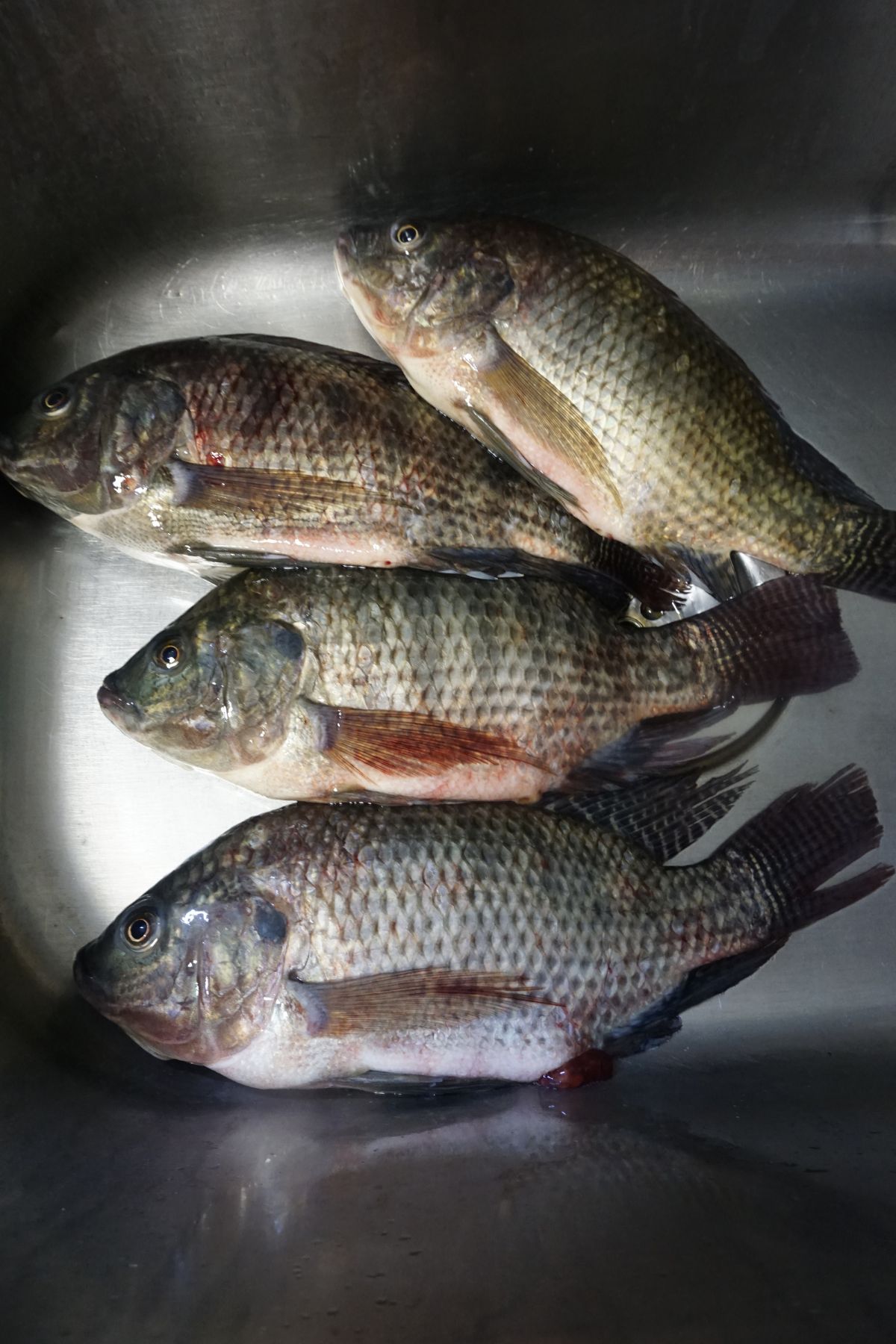
1. Rinse the Tilapia
Hold the fish under running water to remove dirt and slime. It’s slippery, so hold it firmly by the tail or use gloves if you want a better grip.
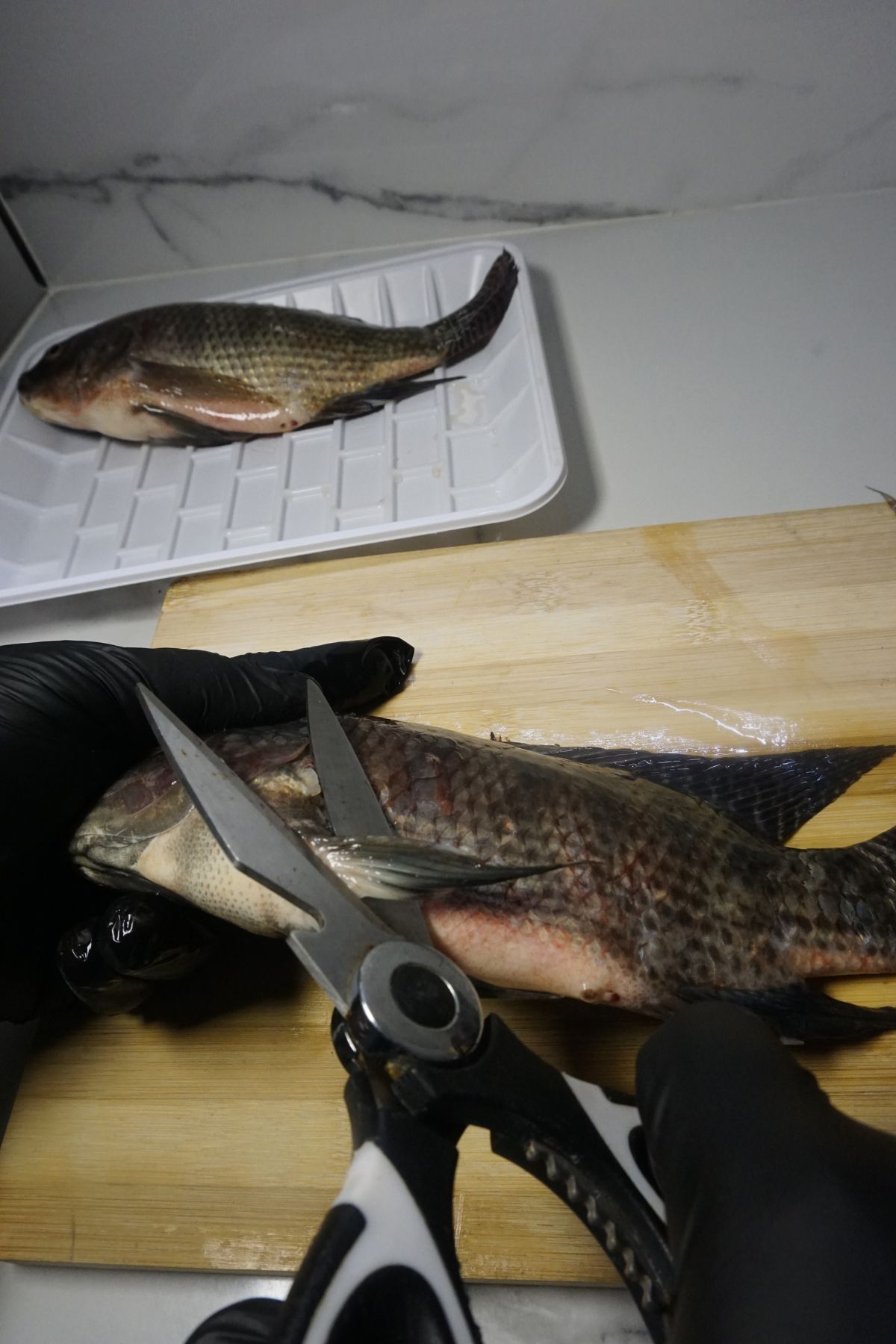
2. Trim the Fins
Use scissors or a knife to cut off the sharp fins near the back, belly, and tail. These can poke your fingers while cooking or eating, so better remove them now.
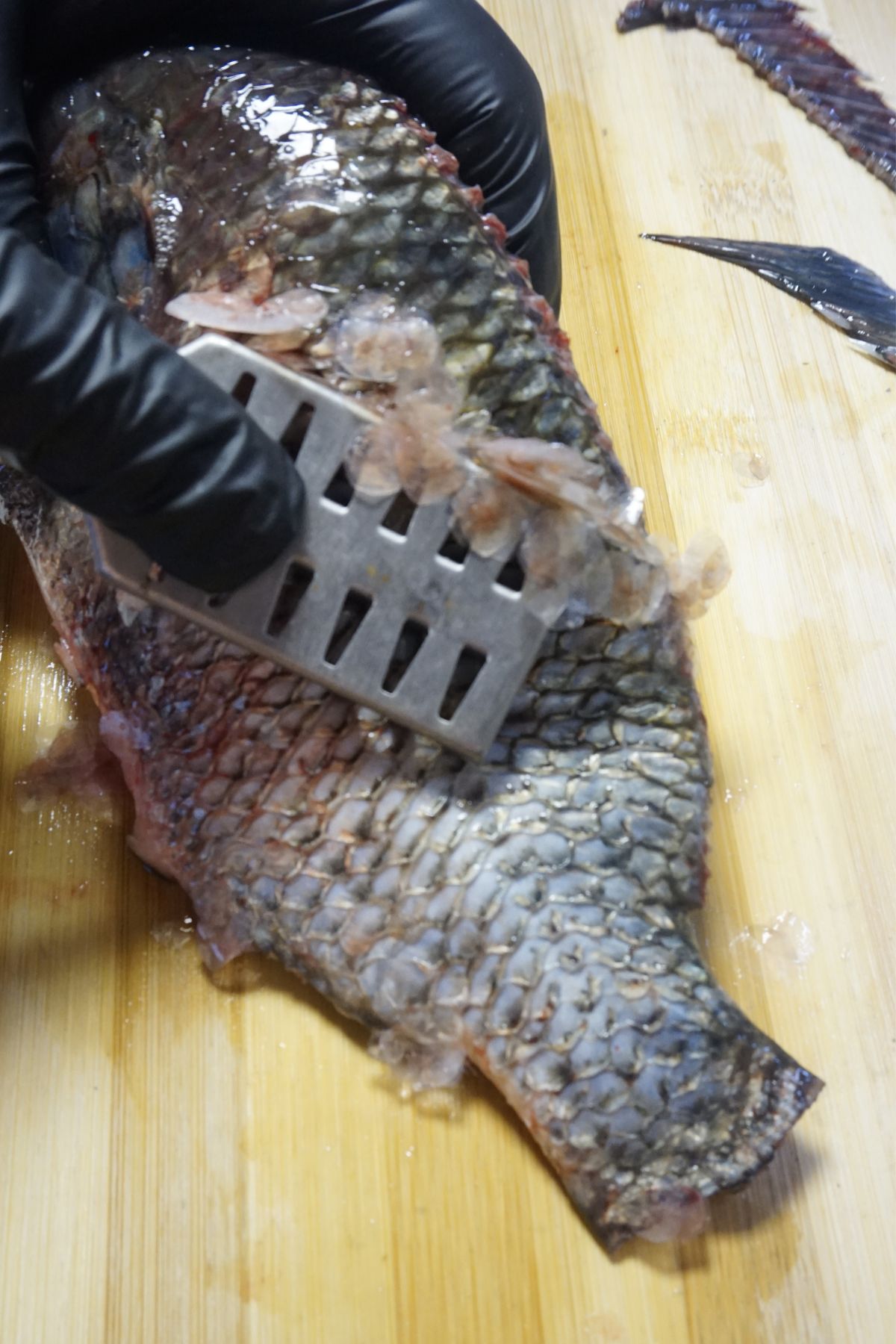
3. Remove the Scales
Using a fish scaler or the back of a knife, scrape from the tail toward the head. Do this on both sides until all the scales are gone. Rinse the fish again to wash off loose scales.
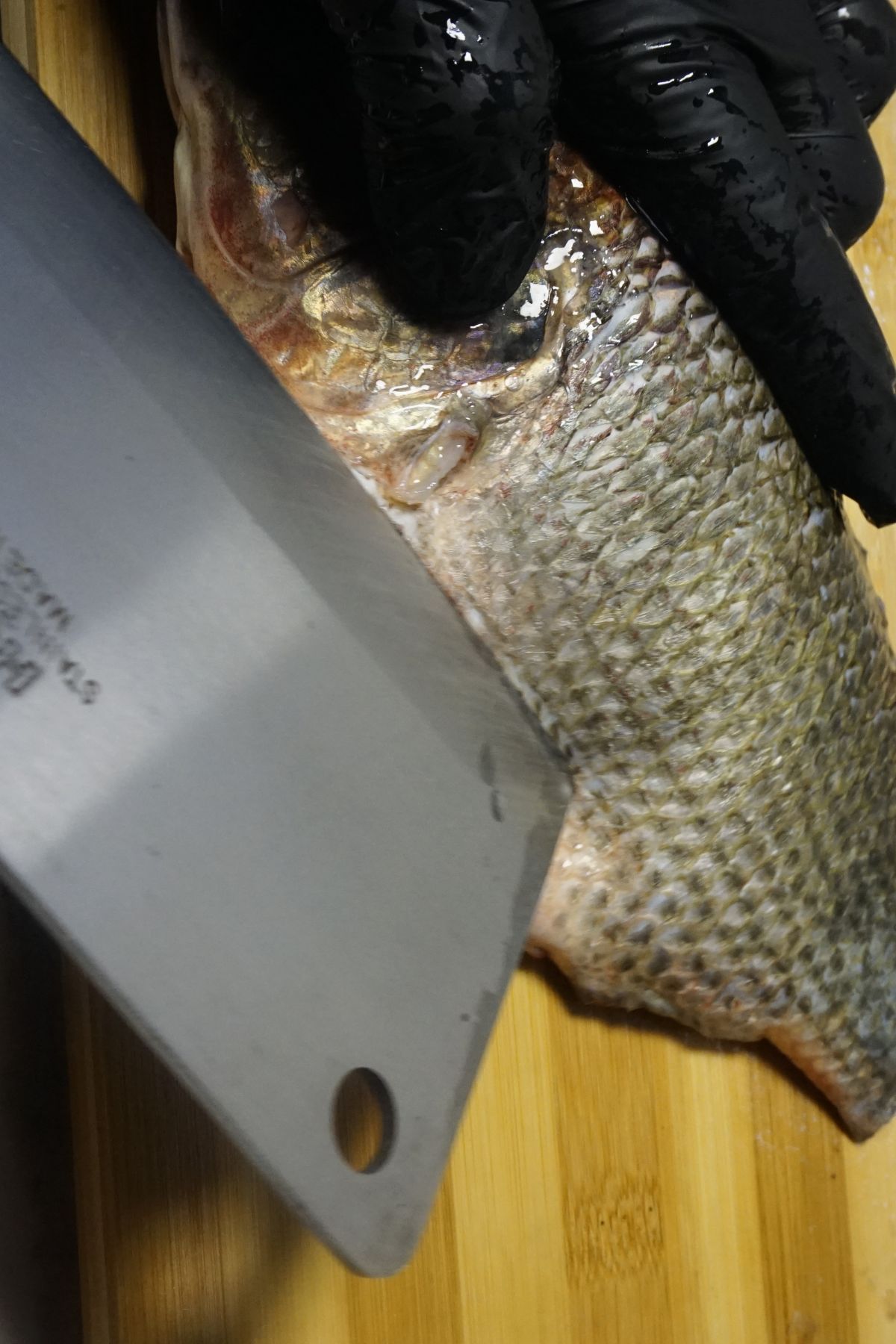
4. Slice the Belly Open
Make a clean cut from the belly up to the head. Don’t press too deep — just enough to open the belly without slicing into the guts.
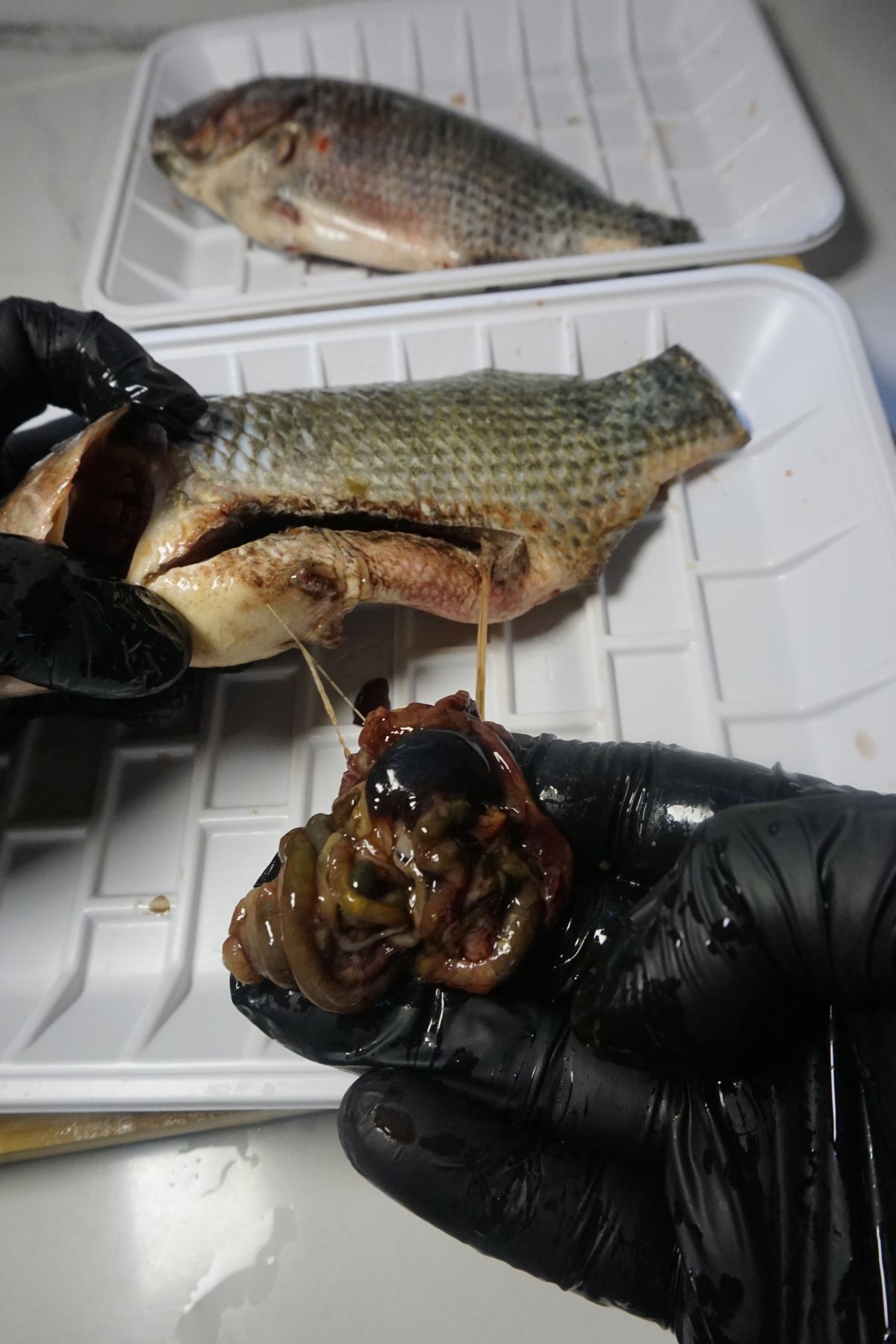
5.Remove the Guts
Pull out everything inside using your hands or a spoon. Make sure to scrape out the dark red bloodline near the backbone. That’s what gives off the strong fishy smell.
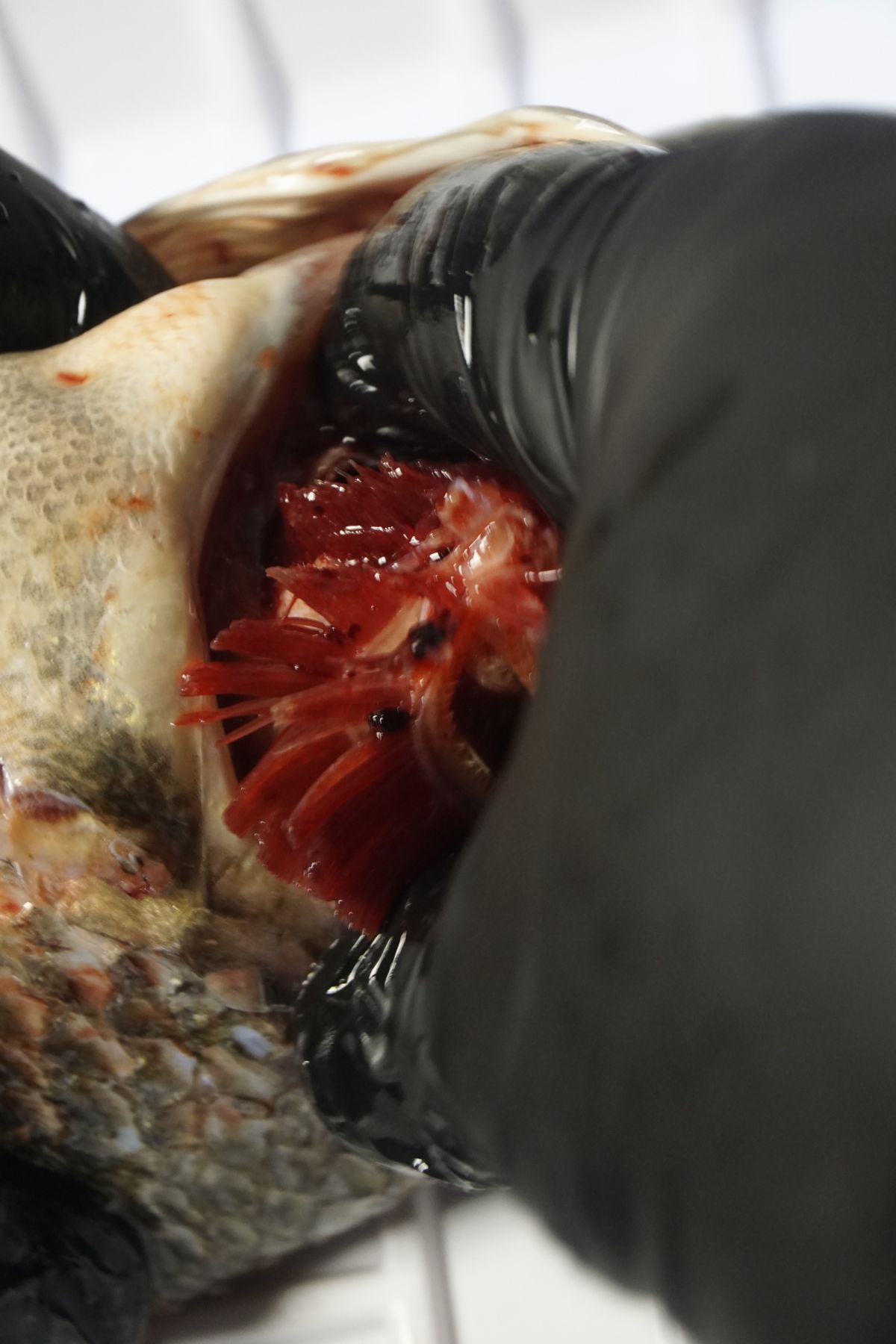
6. Clean the Gills
Next is to remove the gills. Just lift the gill flap and cut them out for a cleaner flavor.
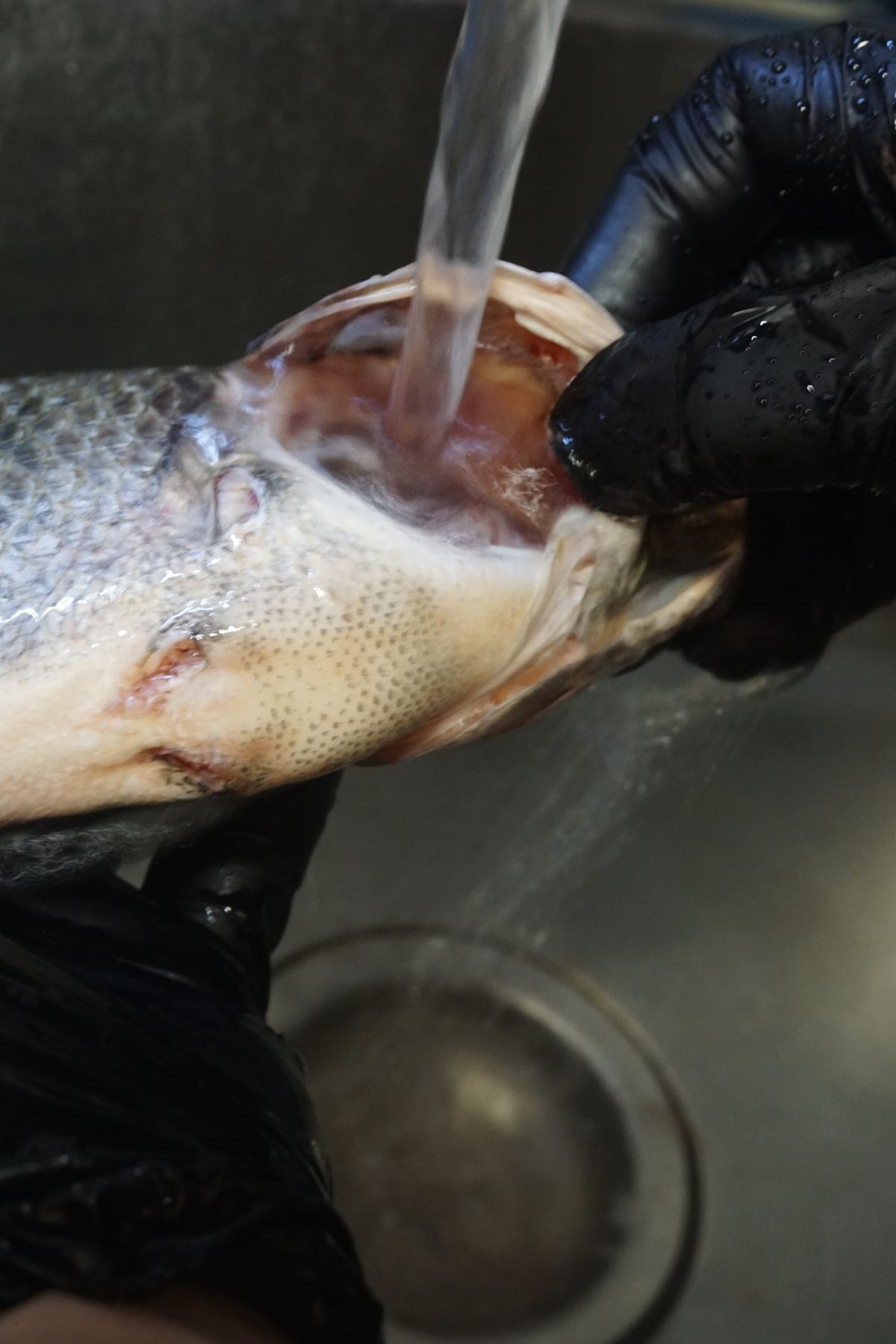
7. Final Rinse
Rinse the fish thoroughly inside and out. If you want to lessen the smell, rub some calamansi or vinegar before rinsing again.
Tips:
- Always clean tilapia as soon as you get home to keep it fresh.
- You can also ask the vendor to clean it for you, but it’s still good to rinse and check it yourself.
- Throw fish waste in a sealed bag to avoid any lingering smell in the trash.
Frequently Asked Questions
Yes, tilapia needs to be descaled. The scales are tough and not pleasant to eat, especially when frying or grilling the fish. Use the back of a knife or a fish scaler and scrape from the tail toward the head until all the scales are gone.
Yes, you can rinse fish with a bit of vinegar and water. It helps remove any fishy smell and can slightly tighten the flesh. Just don’t soak it too long—about 5 minutes is enough before rinsing with clean water.
If your tilapia has a muddy or dirty taste, it might be because it came from a pond with poor water quality. That earthy flavor comes from a compound called geosmin found in some algae. You can reduce the taste by soaking the fish in milk or vinegar before cooking.
Spoiled tilapia usually smells very fishy or sour. The flesh may look dull, slimy, or sticky to the touch. Fresh tilapia should smell clean, not have a strong odor, and the eyes (if whole) should be clear and not sunken.
Cleaning tilapia might not be the most fun part of cooking, but once you get the hang of it, it’s simple and fast. A well-cleaned fish gives your dish a fresher taste and helps avoid that malansa smell. So the next time you’re craving your favorite tilapia dish, take a few extra minutes to clean it right — your taste buds will thank you.
Looking for tilapia recipe ideas? Check out my easy and flavorful tilapia recipes, from saucy sarciado to creamy ginataang tilapia. I’m sure you’ll find something tasty and simple to cook for your next meal! .
Related posts:
 10 Best Cooking Tips for Beginners
 Cooking Measurement Converter
 Dos and Don’ts in the Kitchen – Safety Tips That You Should Never Forget
 10 Basic Cooking Skills That Will Help You Create The Best Family Meal Ever!
 How to Cook Boiled Egg?
 How to Clean a Fish (Step-by-Step for Beginners!)
 How To Clean Bangus (Milkfish) Like a Pro
 How to Clean Galunggong (Round Scad) the Easy Way