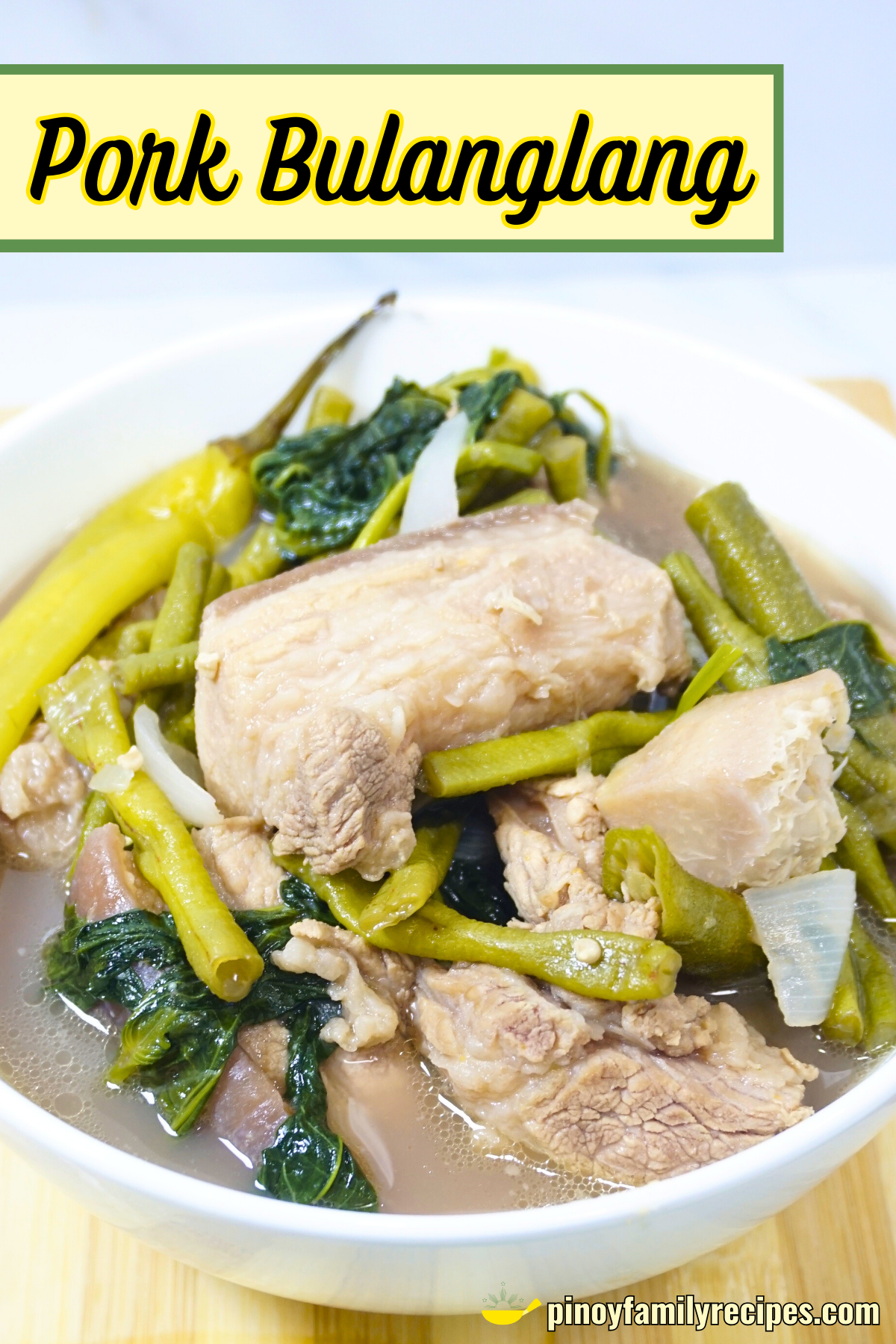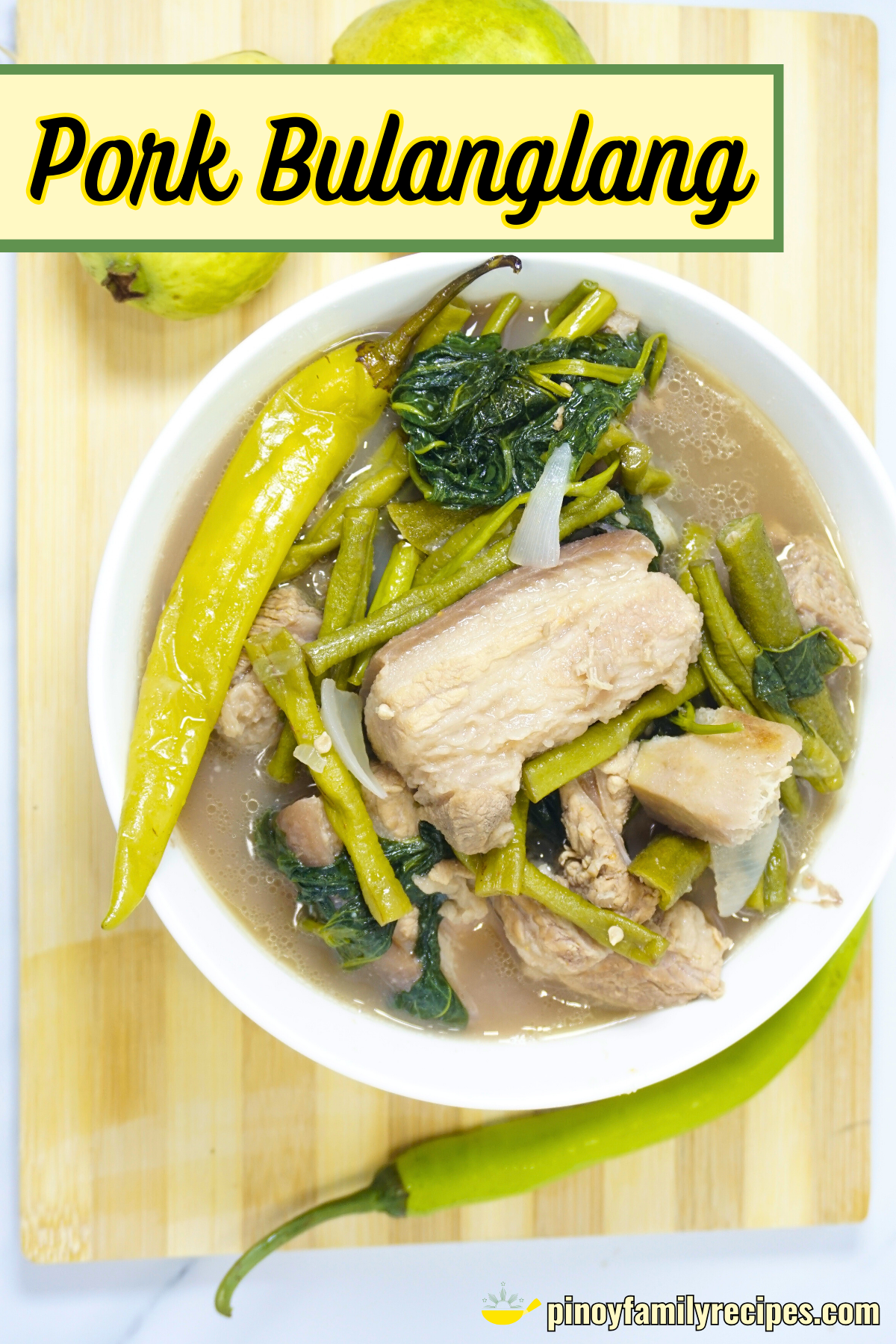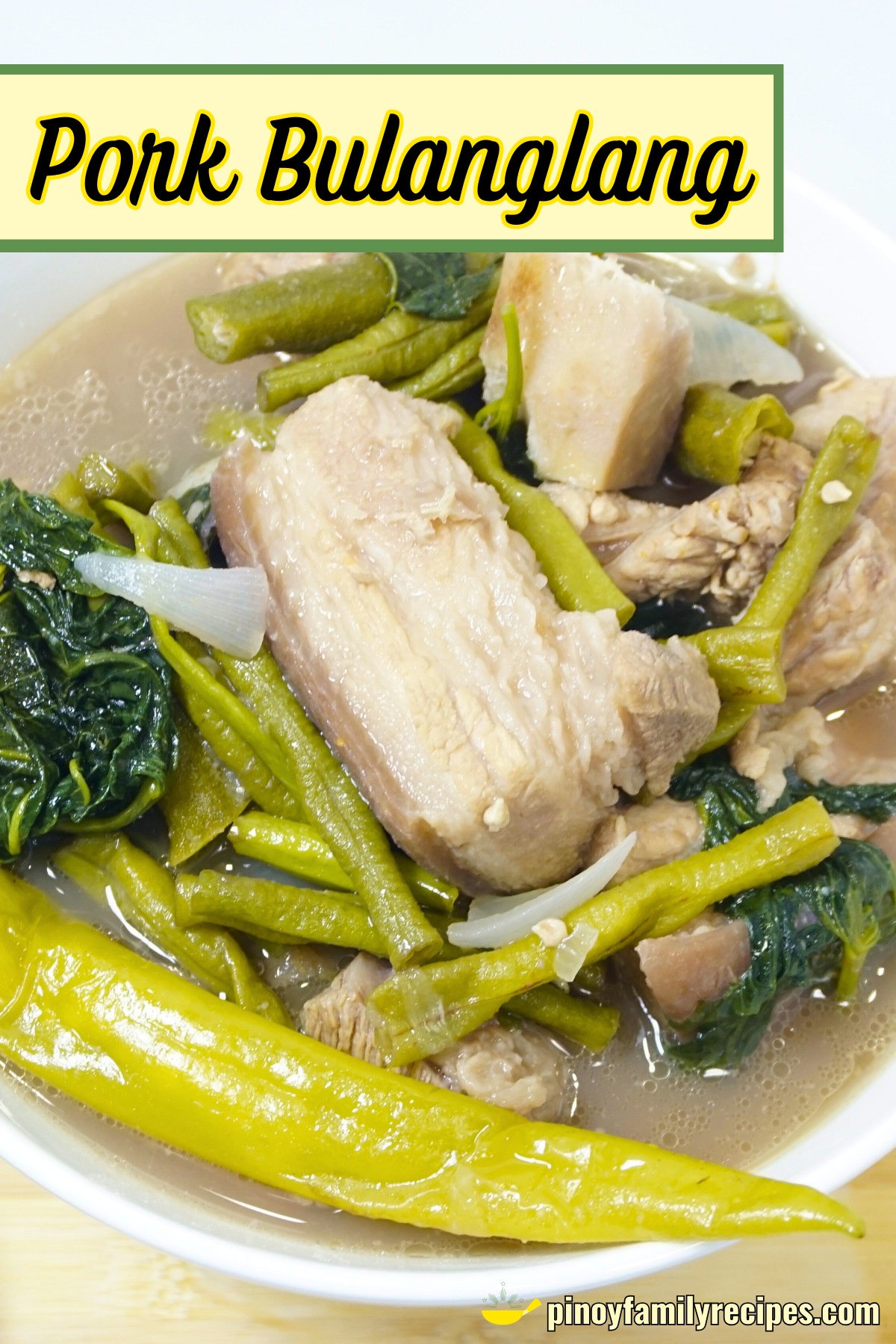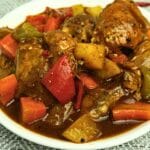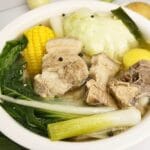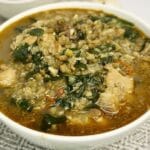
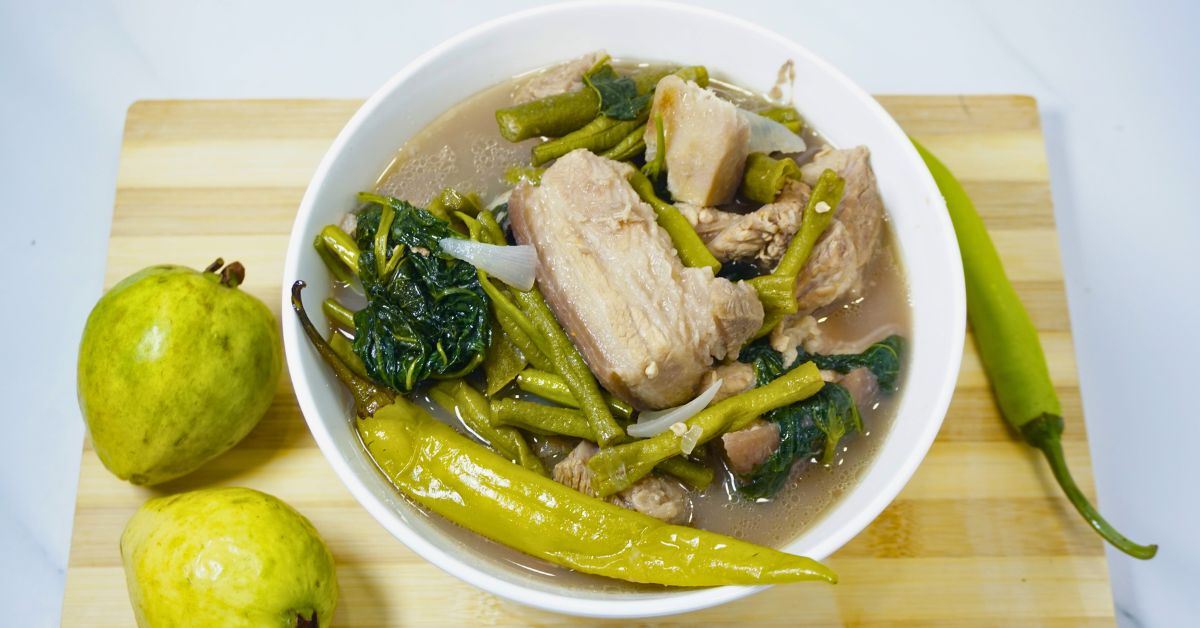
If you’ve ever searched for a bulanglang recipe online, you’ve probably noticed that there’s more than one version out there.
One of the most common is the Batangas-style bulanglang, like the one shared by Panlasang Pinoy.
But what I’m sharing here is our Kapampangan version.
It’s a bit like sinigang na baboy, but instead of using tamarind for the sourness, we use ripe guava for a naturally sweet and fruity twist.
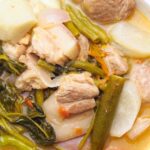
Imagine pork simmered until tender in a broth that’s both savory and lightly sweet. Simple, comforting, and full of home-cooked flavor.
As it cooks, the aroma of guava blending with pork and vegetables fills the kitchen.
It smells like a warm Kapampangan feast.
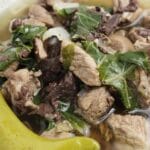
Each spoonful gives you that satisfying mix of soft pork, fresh veggies, and sweet guava that makes the broth rich yet light.
It’s the kind of dish that’s perfect for cozy days or when you just want something truly Filipino and comforting to share with the people you love.
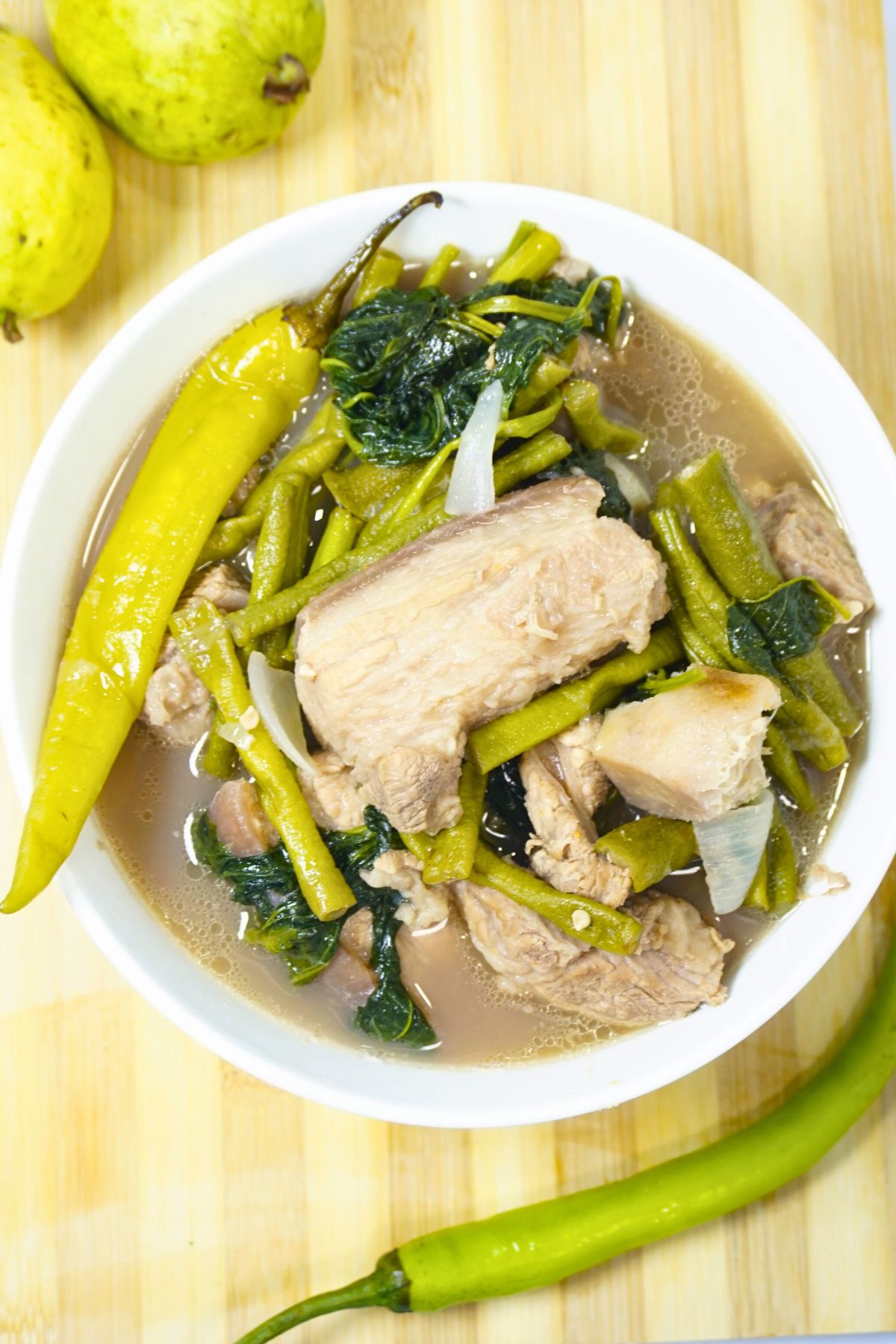
So, what is Bulanglang?
As I’ve mentioned, there are a lot of versions of bulanglang, depending on what province you’re from.
But here in Pampanga, we often call this Bulanglang sa Bayabas, where, as the name suggests, we use guava to give the soup its signature sweet flavor.
The ripe guava adds a light, fruity sweetness to the broth that perfectly complements the savory taste of the pork and fresh vegetables.
It’s a simple dish, but the combination of flavors makes it special.
This Kapampangan version is all about balancing sweetness and savoriness in one warm, comforting bowl.
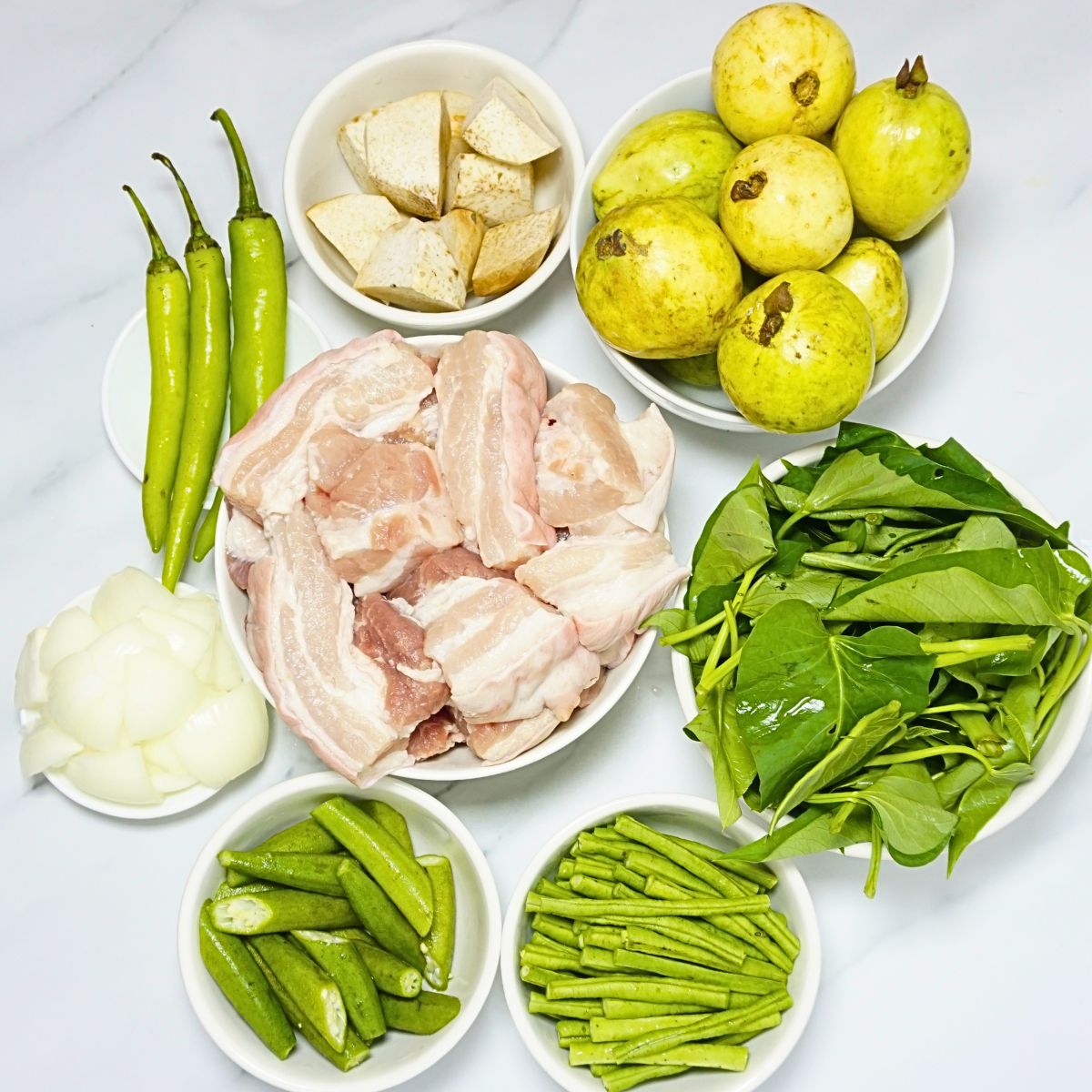
Pork Bulanglang Kapampangan Ingredients
Ripe Guava and Sugar (optional): The ripe guava gives the broth a natural sweetness and fruity flavor that makes this bulanglang unique. The sugar is optional, but it enhances the sweetness if you prefer a slightly sweeter taste.
Pork Belly: Tender and juicy, the pork belly adds rich, savory flavor to the broth, making the dish hearty and satisfying.
Gabi (Taro): Taro thickens the broth as it softens, adding a creamy texture that blends well with the other ingredients.
Snake Beans and Okra: These fresh vegetables add a nice crunch and balance to the dish, bringing both texture and nutrition.
Green Chilies: These give the soup a mild kick of heat, enhancing the overall flavor without overpowering the dish.
Fish Sauce and Salt: These seasonings bring out the savory depth in the broth, tying all the flavors together.
Kangkong Leaves: Light and earthy, these leafy greens add freshness and a pop of color to the dish, rounding out the flavor.
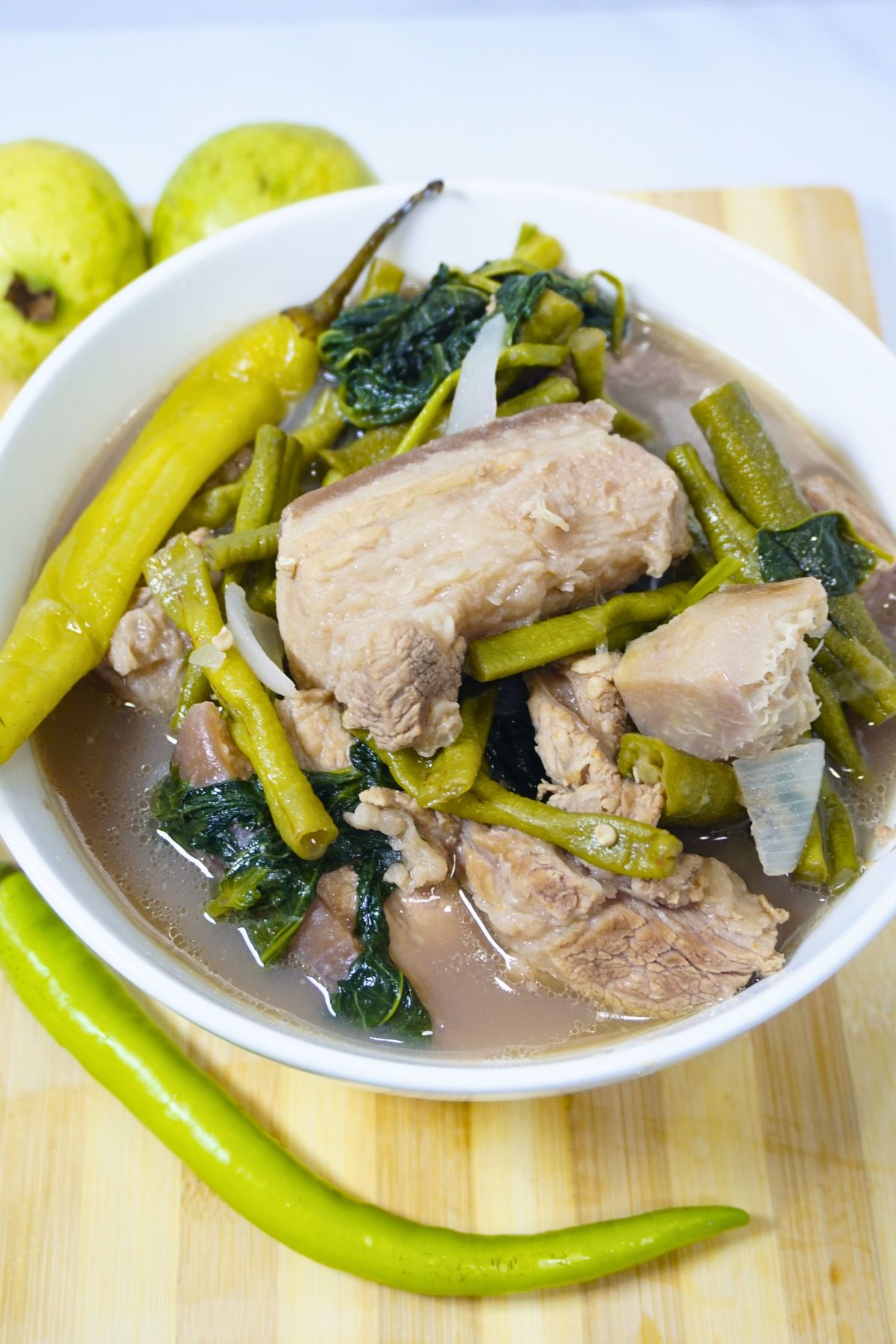
How To Cook Pork Bulanglang
1. Boil the Guava
Start by boiling water in a large pot. Once it’s bubbling, add the peeled guavas and cook until soft. Mash them in a bowl and strain the juice using a sieve. This guava juice gives the soup its signature fruity flavor, so set it aside for later.
2. Cook the Pork
Using the same pot, add the pork belly and let it boil until tender. Skim off any scum that rises to the top to keep your broth clear and clean.
3. Add the Guava Juice and Gabi
When the pork is tender, pour in the guava juice. Add the gabi and let it simmer until it softens. The gabi will help thicken the soup and make it rich and comforting.
4. Add the Vegetables
Once the gabi is halfway cooked, add the sitaw, okra, and green chilies. Cook them just until they’re still a bit crisp for that fresh bite.
5. Season the Soup
Season the broth with fish sauce and a bit of sugar, depending on how sweet your guavas are. Taste and adjust with salt as needed.
6. Add the Kangkong
Add the kangkong leaves last since they cook quickly. Let them simmer for about a minute or two, then turn off the heat.
7. Serve and Enjoy
Serve your Pork Bulanglang hot with steamed rice. You’ll love the mix of savory pork, fresh vegetables, and that slightly sweet and tangy guava broth in every spoonful.
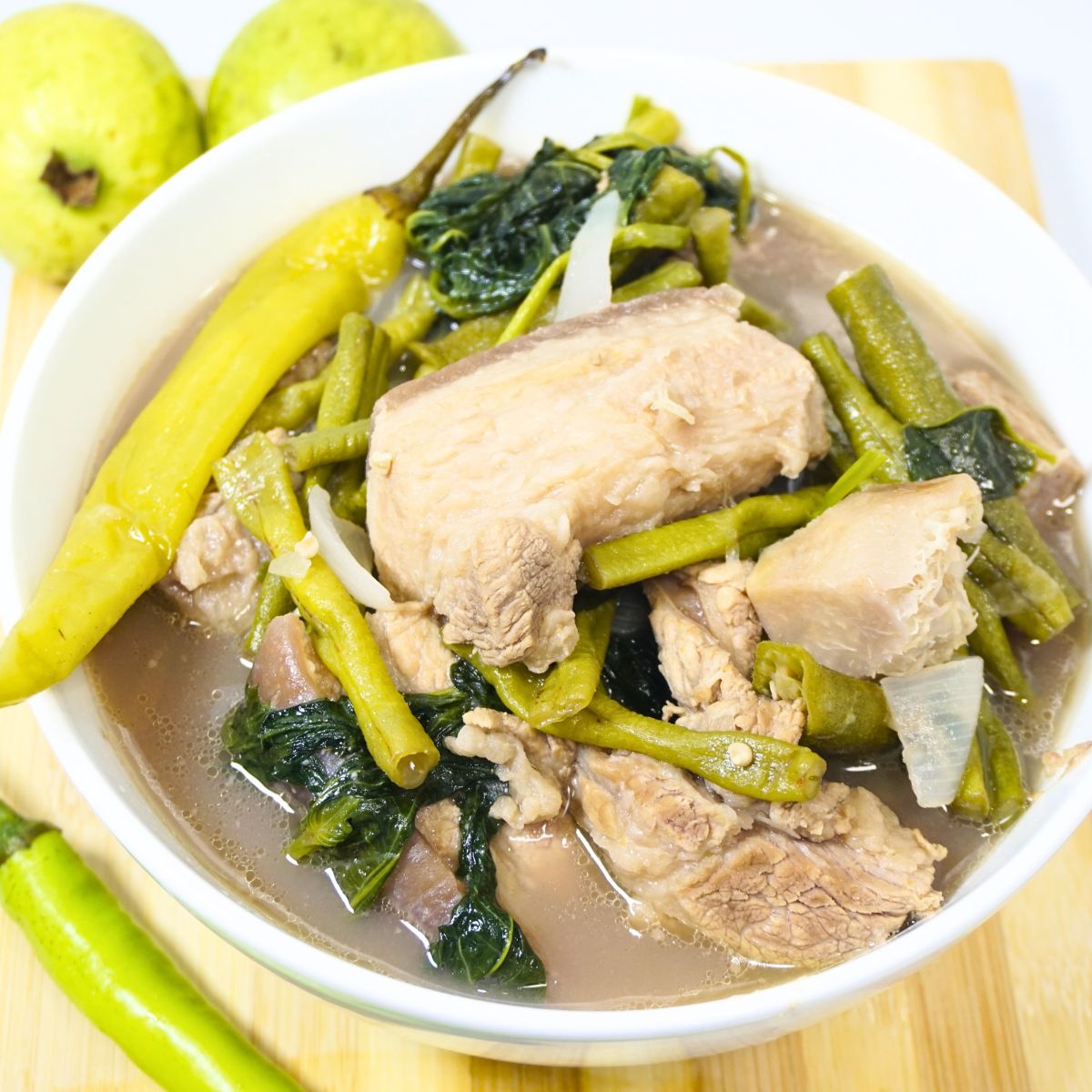
Tips in Cooking Bulanglang
- Choose Ripe Guavas – Make sure your guavas are fully ripe because the sweetness and flavor come from the ripeness. Unripe guavas can make the broth taste a bit bland. If your guava isn’t as sweet as you’d like, that’s where a little sugar can help balance it out.
- Simmer the Pork Until Tender – Don’t rush cooking the pork belly. Let it simmer slowly until it’s really tender. This gives the broth more flavor, and no one likes tough pork in their soup, right?
- Mash and Strain the Guava Well – When you mash and strain the guava, try to get as much juice out as possible. This is the key to giving the broth that signature fruity taste. Don’t skip the straining step to avoid having too much pulp in the soup.
- Add the Vegetables Last – To keep the vegetables fresh and slightly crunchy, add them toward the end of cooking. Overcooked veggies can turn mushy and lose their vibrant colors.
- Adjust the Salt and Fish Sauce – Taste the broth before serving. Sometimes, the sweetness of the guava can overpower the dish, so adding a bit more fish sauce or salt can bring balance.
- Serve Immediately – Bulanglang is best enjoyed hot and fresh. If it sits too long, the vegetables can get soggy, and the flavors might change. So serve it as soon as everything is perfectly cooked!
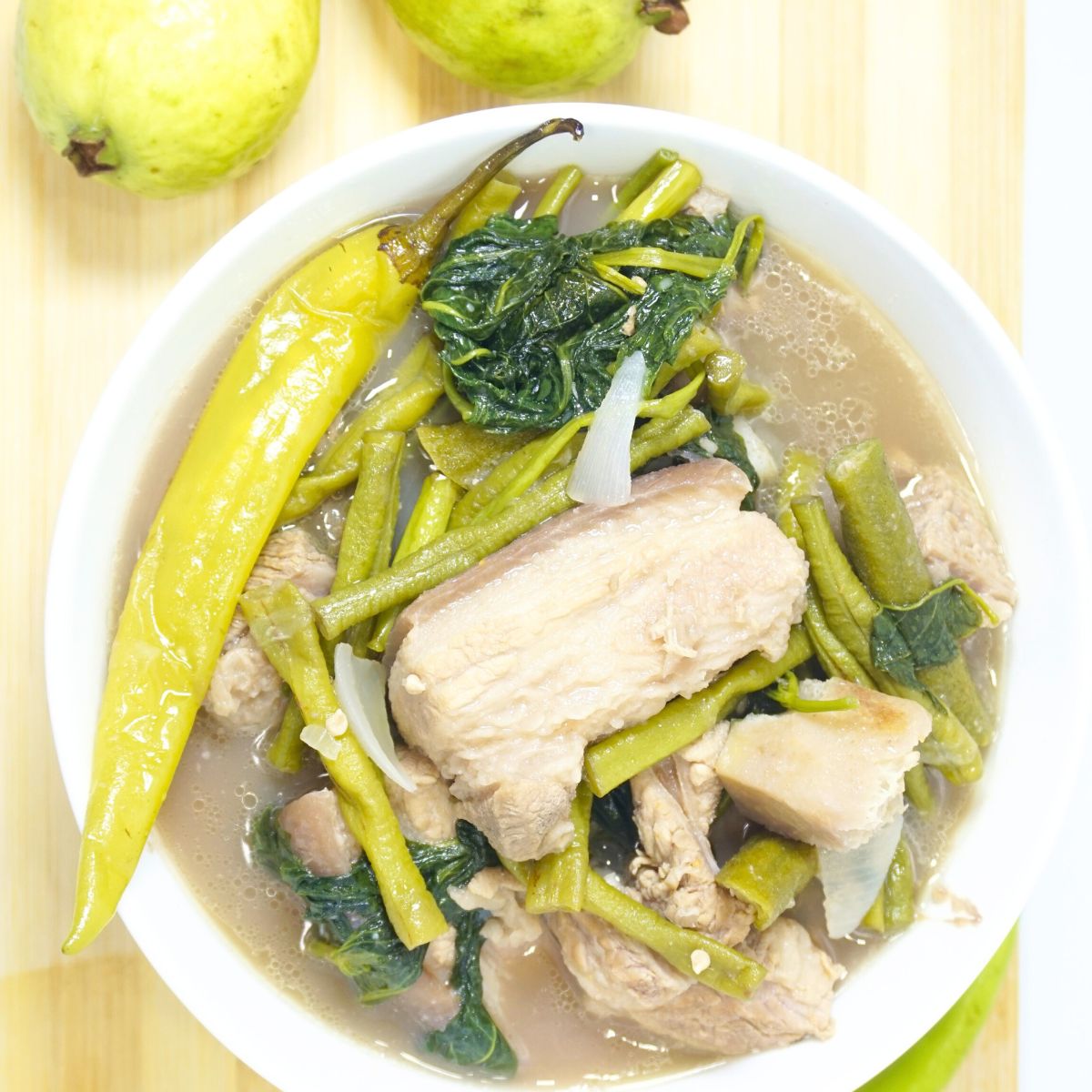
More Pork Soup Recipes
Looking for more warm and hearty pork soups? Try these comforting bowls next:
Pork Nilaga – Classic clear broth with tender pork, potatoes, and veggie
Sinigang na Baboy – Tangy tamarind soup with pork and vegetables
- Batchoy Kapampangan (Batsui) – Rich pork soup with garlic, ginger, and liver for extra flavor
Frequently Asked Questions
You can, but it won’t give the same sweetness. If using unripe guava, you might want to add a bit more sugar to balance the flavor.
Bulanglang can last up to 2-3 days in the fridge, but it’s best enjoyed fresh. Just be aware that the vegetables may get mushy when reheated.
Yes, you can substitute pork with fish or shrimp for a lighter version. Just adjust the cooking time, as seafood cooks faster than pork.
Not exactly. Bulanglang uses guava for sweetness, while sinigang typically uses tamarind for sourness, giving each dish a distinct flavor.
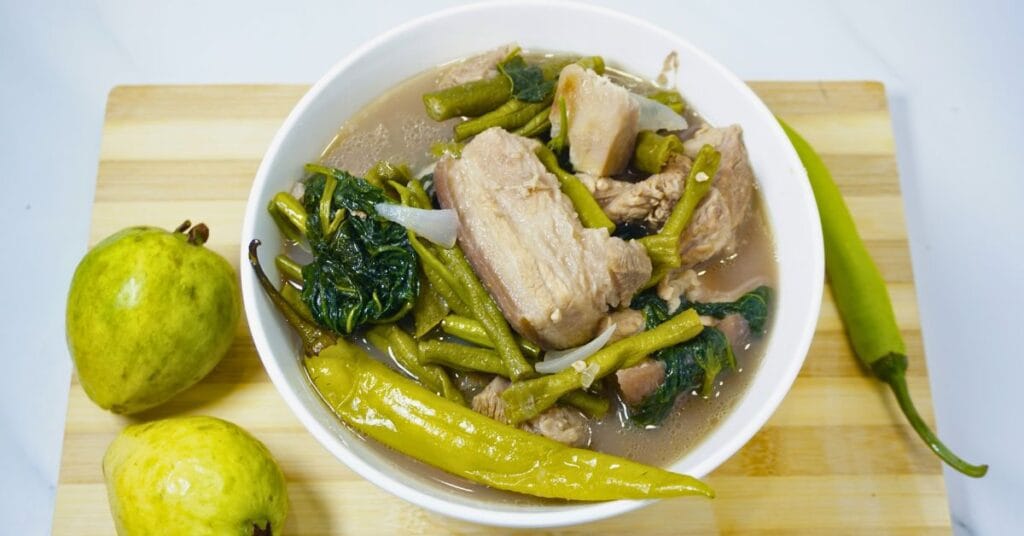
Pork Bulanglang
Ingredients
- 1.5 liters Water
- 1 kilogram Guava (ripe)
- 1 kilogram Pork Belly (cut into serving pieces)
- 4 pieces Gabi / Taro (quartered)
- 1 piece Onion (quartered)
- 1 bunch Snake Beans (cut into pieces)
- 1 bunch Okra
- 3 pieces Green Chilies
- 2 tablespoons Fish Sauce
- 2 tablespoons Sugar (optional)
- Salt to taste
- 2 bunch Kangkong Leaves
Instructions
- In a large pot, bring 1.5 liters of water to a boil. Add the 1 kilogram of peeled ripe guava and simmer until they are soft. Once tender, remove the guava from the pot, mash them in a bowl, and strain the mixture to extract the juice. Set the strained guava juice aside.
- In the same pot, add 1 kilogram of pork belly and let it boil until tender. Skim off any scum that rises to the surface.
- Once the pork is tender, pour back the strained guava juice into the pot. Add 4 pieces of peeled gabi (taro) and let it simmer for a few minutes until the gabi starts to soften.
- Add 1 piece onion (quartered), 1 bunch of snake beans (sitaw), 1 bunch of okra, and 3 green chilies to the pot. Let it simmer until the vegetables are almost cooked.
- Add 2 tablespoons of fish sauce and 2 tablespoons of sugar (optional, adjust to taste). Taste the broth and add salt if needed.
- Finally, stir in 2 bunches of kangkong leaves and simmer for a few more minutes until the vegetables are tender.
Watch this!