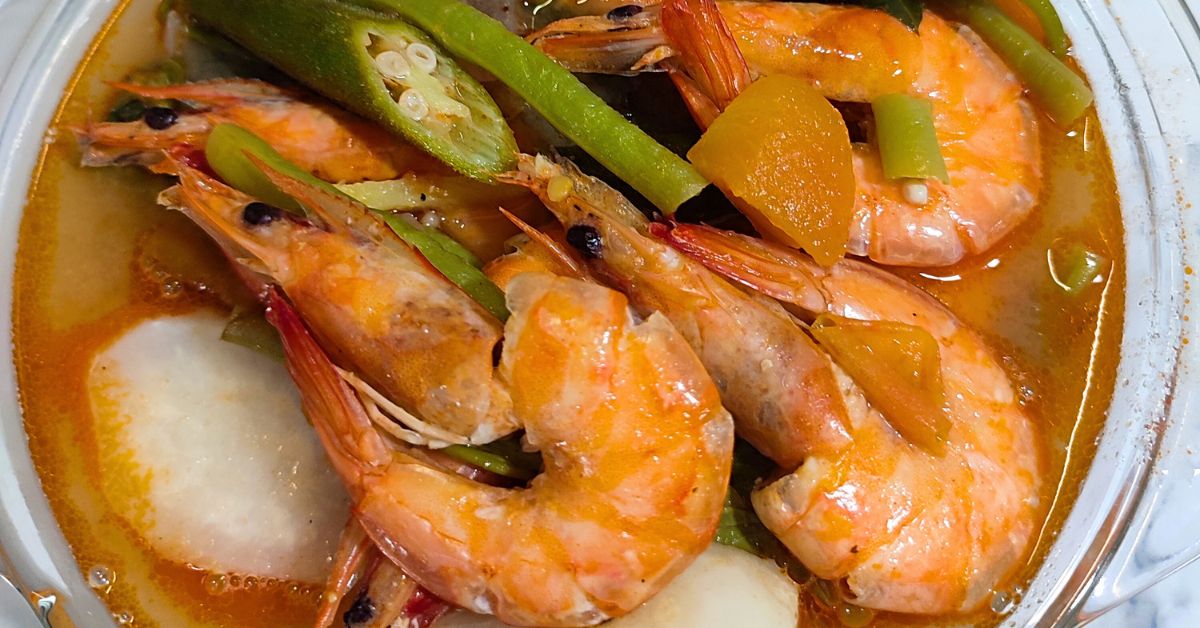
Sinigang na Hipon is one of those dishes that just hits the spot, especially on gloomy rainy days here in the Philippines.
It’s a tangy shrimp soup that instantly warms you up.
Just like Sinigang na Baboy, this comforting bowl brings back a lot of good memories.
Imagine juicy shrimp swimming in a sour broth. Every spoonful feels like a warm cozy hug.
I used to ask for this every time it rained.
Shrimp wasn’t something we had often, so whenever Mom made Sinigang na Hipon, it felt like a treat.
I can still remember the smell filling our kitchen and hearing the rain outside. It made the whole experience feel extra special.

Sinigang na Hipon Ingredients
Cooking Oil
Used for sautéing, cooking oil helps bring out the flavors of the ginger, onion, and tomatoes. It sets the base for the delicious aroma and taste of the soup.
Ginger
Sliced into thumb-sized pieces, ginger adds a warm, zesty kick. It gives the broth that extra depth and a hint of spice.
Onion
A medium onion, sliced, adds a natural sweetness and savory flavor that blends perfectly with the other ingredients.
Tomatoes
Sliced medium tomatoes bring a bit of tang and sweetness. They help balance the sourness of the soup while adding color and flavor.
Gabi (Taro)
Gabi softens as it cooks, giving the soup a slightly thick and creamy texture. It makes every spoonful extra comforting.
Shrimp
Cleaned and deveined shrimp are the star of the dish. They cook quickly and add a naturally sweet seafood flavor to the broth.
String Beans
Cut into 3-inch pieces, string beans add a bit of crunch and freshness. They also give the soup a nice pop of green.
Water
This is the base of the soup, helping all the ingredients come together into one flavorful bowl.
Okra
Trimmed and halved, okra adds a slightly earthy taste and helps thicken the broth a little. It goes well with the other veggies.
Radish (Labanos)
Sliced radish brings a mild peppery flavor and a crisp bite. It balances out the rich and sour notes in the soup.
Sinigang Mix
This is where the signature asim comes from. It’s a quick and easy way to get that traditional sinigang flavor.
Tip: If you have sampaloc sitting around in your pantry, you can use it as a natural souring agent. Just boil it until soft, mash it to release the juice, then strain. It gives your sinigang a more authentic and fresh sourness that’s hard to beat.
Kangkong (Water Spinach)
Cut into 3-inch pieces, kangkong leaves are soft and mild with a hint of sweetness. They cook fast and round out the soup with a fresh green finish.
Green Chili
A single green chili gives the soup a gentle heat. It adds just enough spice to warm up the flavor without making it too spicy.
Salt and Pepper
These are for seasoning and balancing the taste. Add them to suit your preference.

How To Cook Sinigang na Hipon
Disclaimer: I like to sauté the ingredients first to reduce the malansa (fishy smell) and bring out more flavor from the ginger, onion, and tomatoes. It gives the soup a cleaner and richer taste.
But if you prefer the classic method, you can skip the sautéing and just boil everything directly. Start with the gabi and radish, then add the rest step by step. Both styles work well, so go with whatever feels right for you.
1. Prepare the Ingredients
Clean the shrimp and remove the veins for a cleaner taste.
Cut the okra into bite-sized pieces.
Wash the kangkong leaves thoroughly.
Slice the tomato and snake beans.
Peel and slice the ginger and onion.
2. Sauté the Aromatics
In a large pot over medium heat, heat some cooking oil. Add the sliced ginger, onion, and tomatoes. Sauté until the onions turn translucent and the tomatoes start to soften. Then add the gabi pieces. This step builds a flavorful base for your soup.
3. Cook the Shrimp and String Beans
Add the cleaned shrimp and sliced string beans to the pot. Cook for about 3 to 5 minutes or until the shrimp turn pink. Season lightly with salt and pepper, and mix well. The shrimp gives the broth a natural sweetness, while the beans add a nice crunch.
4. Add Water and More Vegetables
Pour in about 8 cups of water. Add the okra and radish, then bring everything to a boil. This step blends the sautéed flavors with the broth, turning it into a rich, flavorful soup.
5. Add the Sinigang Mix
Once the soup is boiling, stir in the sinigang mix until it’s fully dissolved. This gives the dish its signature asim and savory flavor that we all love.
6. Add the Kangkong and Chili
Add the kangkong leaves and a green chili. Cook for another 1 to 2 minutes or until the leaves are just wilted. The chili adds a gentle kick, and the greens bring freshness to the dish.
7. Final Adjustments and Serve
Taste the soup and adjust with more salt or sinigang mix if needed. Serve hot with a bowl of steamed rice. Enjoy this hearty and comforting dish with those you love.

Tips on How To Cook a Perfect Sinigang na Hipon
Choose Fresh Shrimp
Pick shrimp that look bright and feel firm to the touch. This will give your soup that naturally sweet, fresh flavor that makes Sinigang so satisfying.
Clean the Shrimp Well
Always clean and devein the shrimp properly. It only takes a few minutes but makes a big difference in getting rid of that sandy or malansa taste.
Sauté the Aromatics First
Before you add any water, sauté the onion, ginger, and tomato in a bit of oil. This step brings out the aroma and builds a richer flavor for the broth. I always do this when I want a cleaner and more flavorful soup.
Adjust the Sourness
Everyone has their own perfect level of asim. Start with a small amount of sinigang mix, then add more if needed. It’s easier to adjust the tanginess than to fix a soup that’s too sour.
Watch the Salt
Be careful when adding salt, especially if your sinigang mix already has seasoning. Add a little at a time and taste as you go.
Don’t Overcook the Veggies
Add your vegetables based on how fast they cook. Radish and okra go in earlier, while kangkong and sitaw should be added last so they stay fresh and crisp.
Try Other Vegetables Too
You don’t have to stick to the usual ones. I’ve tried adding eggplant and even pechay, and they work great. Feel free to use whatever vegetables you have at home.
Serve While Hot with Rice
This one’s a must. Sinigang na Hipon is best served steaming hot with lots of rice. That sour soup poured over rice? It’s comfort food at its best.

More Comforting Soup Recipes
Looking for more warm and hearty dishes to enjoy on a cozy day? These Filipino soup recipes bring comfort with every spoonful. Perfect with a bowl of rice or enjoyed on their own.
Nilagang Baboy (Boiled Pork Soup) – Tender pork chunks simmered with potatoes, corn, and vegetables in a clear broth. Simple, satisfying, and perfect for any day.
Chicken Tinola – A light ginger-based chicken soup with green papaya and malunggay or spinach. Simple, soothing, and full of flavor.
Sinigang na Baboy – Pork simmered in a tangy tamarind broth with vegetables like kangkong, radish, and eggplant. That sour kick is always comforting.
Beef Bulalo – Tender beef shanks and bone marrow simmered in a rich broth with corn and cabbage. A true Filipino favorite, especially on cold or rainy days.
Frequently Asked Questions
Yes, you can substitute shrimp with other seafood like fish (e.g., bangus/milkfish, tilapia), mussels, or squid. The cooking method remains similar, but cooking times may vary slightly depending on the seafood used.
Yes, you can make Sinigang na Hipon spicy by adding more green chili peppers or using a hotter variety of chili. Adjust the spice level according to your preference.
If the soup is too sour, you can dilute it by adding more water or balancing it out with a small amount of sugar or more fish sauce. Adding more vegetables can also help absorb some of the sourness.
Store leftovers in an airtight container in the refrigerator. Sinigang na Hipon can be kept for up to 3 days. When reheating, do so gently on the stove to avoid overcooking the shrimp.

Sinigang na Hipon Recipe
Ingredients
- 2 tbsp Cooking Oil
- 1 piece Ginger thumb-sized (sliced)
- 1 piece Onion medium (sliced)
- 2 pieces Tomatoes medium (sliced)
- 4 pieces Gabi / Taro
- 500 grams Shrimp (cleaned and deveined)
- 150 grams String beans (cut into 3-inch length)
- 8 cups Water
- 200 grams Okra (trimmed and halved)
- 1 piece Radish (Sliced)
- 1 packet Sinigang Mix
- 200 grams Kangkong leaves (cut into 3-inch length)
- 1 piece Green Chili
- Salt and pepper to taste
Instructions
- In a large pot, heat the cooking oil over medium heat. Add the ginger, onion, and tomatoes. Sauté until the onions are translucent and the tomatoes are softened then add the gabi/taro pieces.
- Add the shrimp and string beans,cook until the shrimps turn pink and opaque, about 3-5 minutes. Add salt and pepper then toss.
- Pour in the 8 cups of water. Add the okra and radish and bring to a boil
- Once boiling, stir in the sinigang mix until fully dissolved.
- Add the kangkong leaves and green chili. Cook for another 1-2 minutes or until the greens are wilted.
- Taste and adjust the seasoning if needed. Serve hot with steamed rice.
Watch this!
Notes
- Fresh tamarind or tamarind paste provides the best sour flavor. If unavailable, tamarind soup base (sinigang mix) is a convenient alternative.