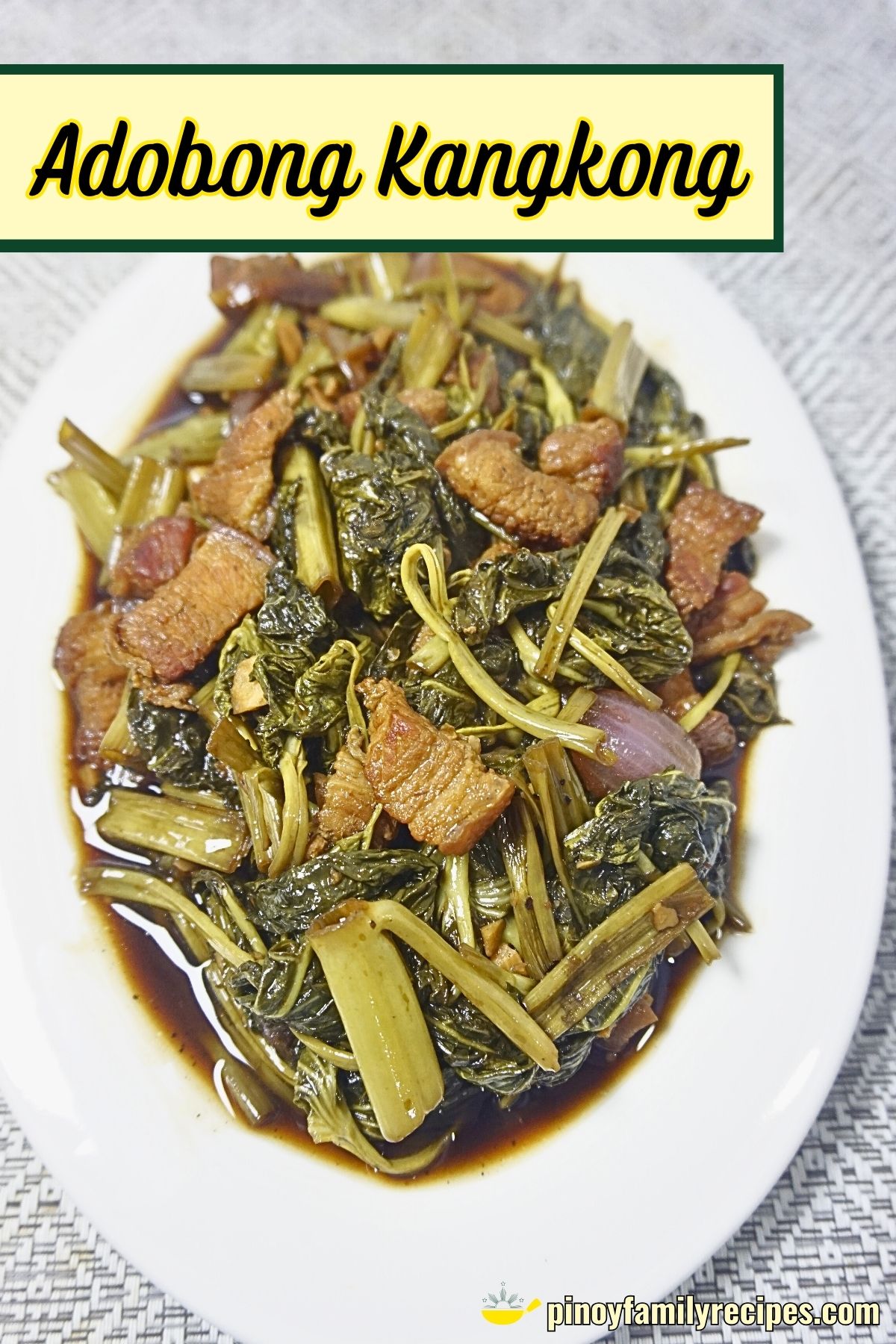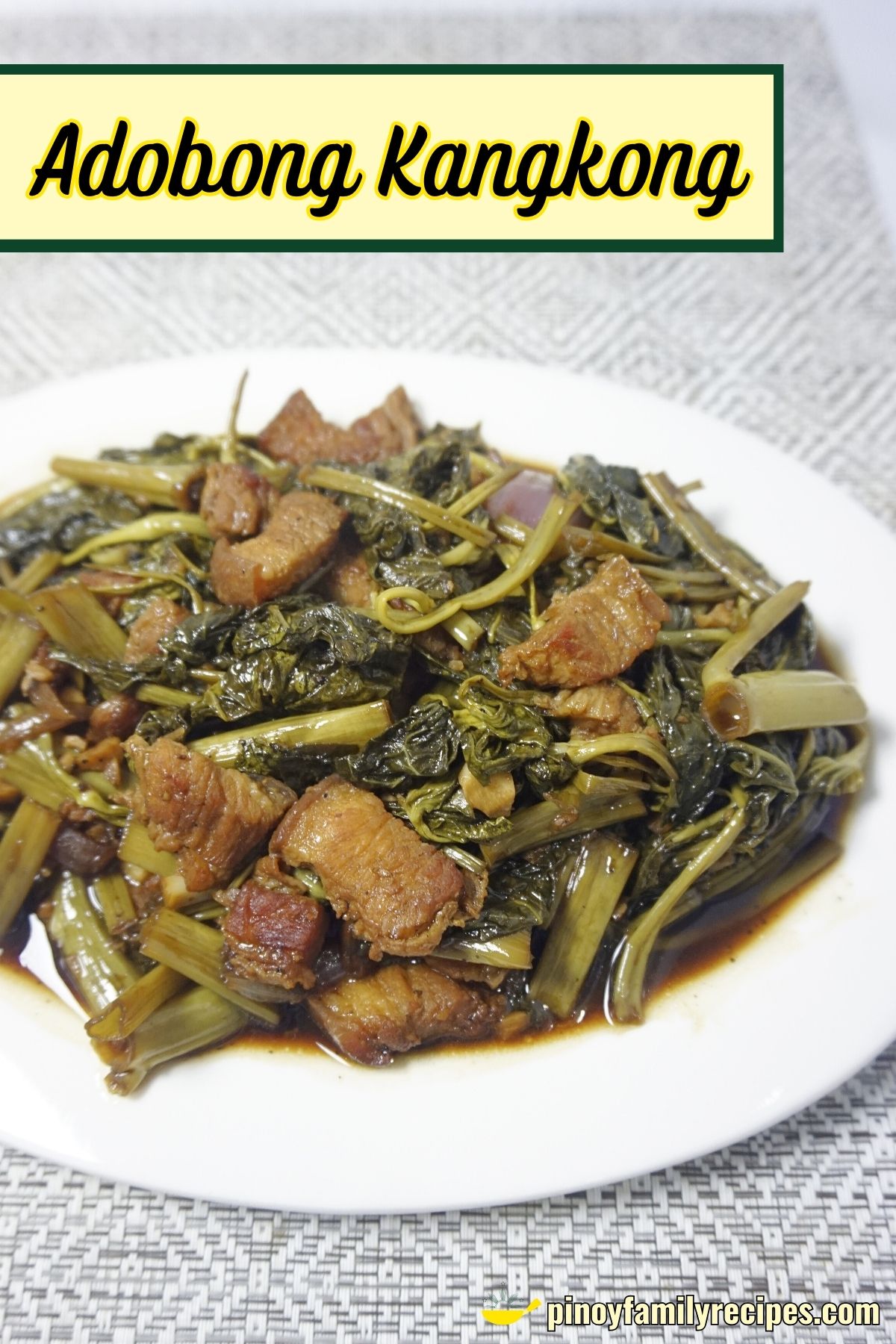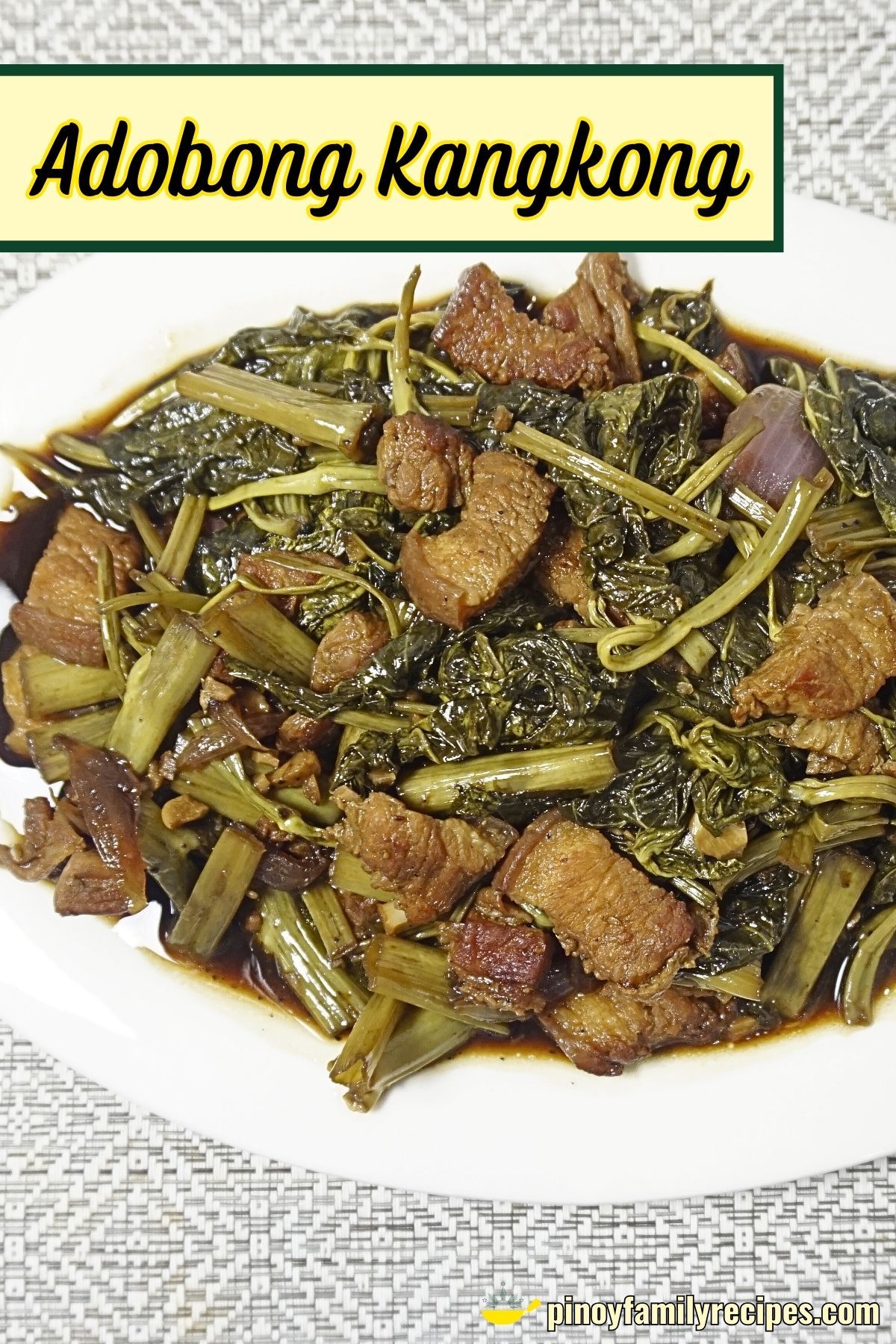
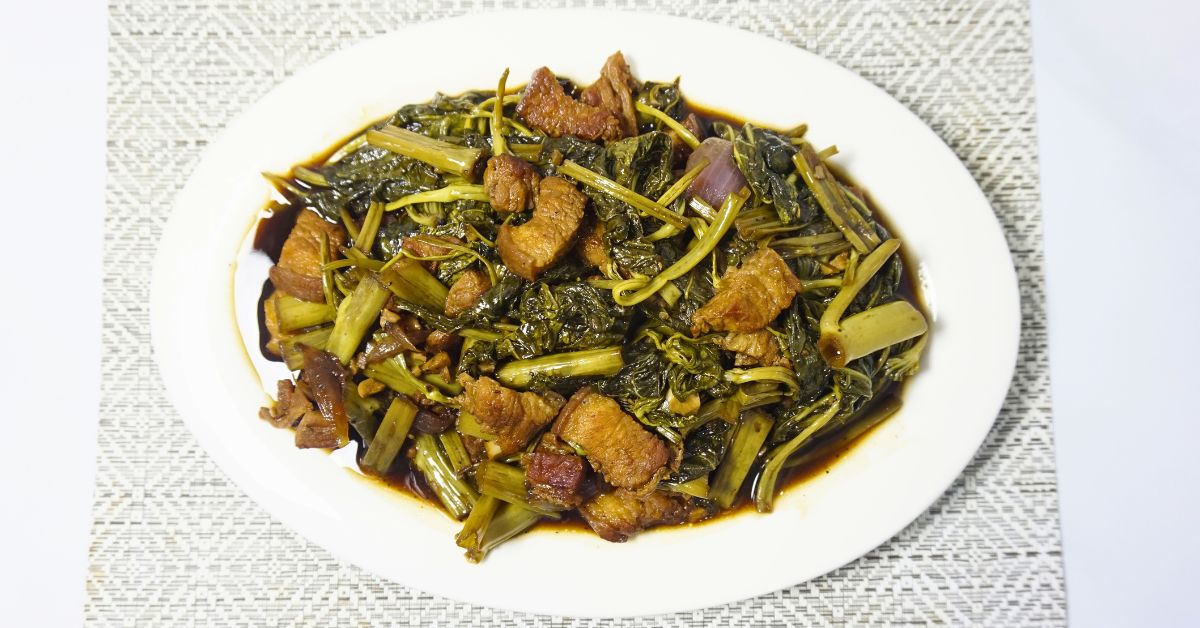
When everyone’s hungry and time is running out, Adobong Kangkong is my go-to.
It’s quick, easy, and packed with that classic adobo flavor we all grew up loving.
We usually toss kangkong into sinigang, right?
But try it cooked adobo-style and you’ll be surprised how good it is.
The tender leaves soak up all that garlicky, tangy sauce, making every bite perfect with a heap of rice.
It has the familiar adobo goodness but feels lighter and a bit more refreshing.
As a dad who’s always thinking of what to cook next, I love dishes that are both flavorful and hassle-free.
This one fits the bill. You don’t need a lot of time or fancy ingredients, but the result tastes like you put real effort into it.
And if you want to level it up, just add some sahog like pork, tofu, or even leftover liempo to make it more filling.
So if you need a budget-friendly, comforting, and tasty ulam, give Adobong Kangkong a try.
It’s simple, full of flavor, and always hits the spot.
What is Adobong Kangkong?
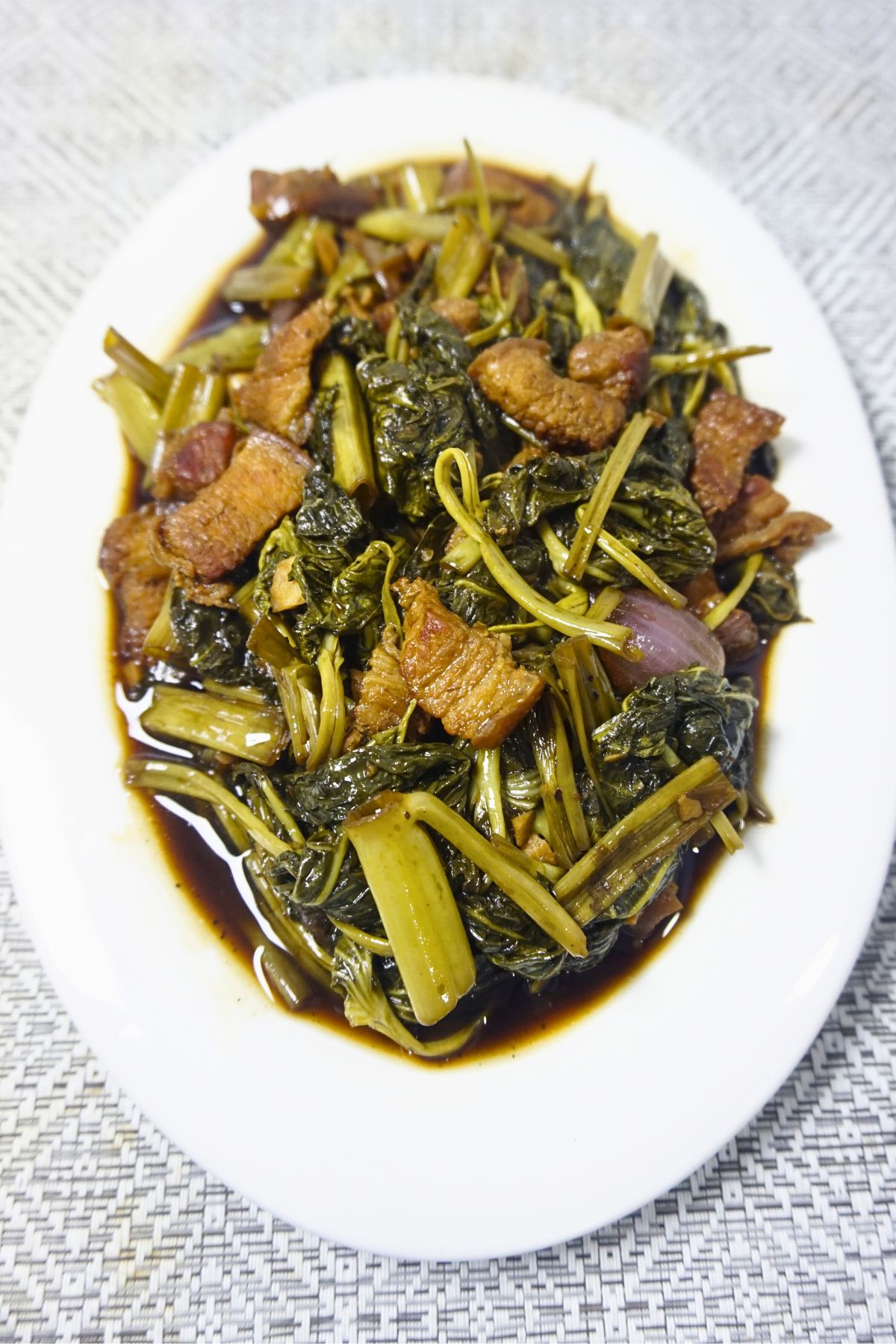
Adobong Kangkong is a unique version of adobo that uses kangkong, or water spinach, instead of the usual chicken or pork.
It’s a popular Filipino vegetable dish where tender kangkong leaves and stems are simmered in a savory sauce made with soy sauce, vinegar, and garlic.
This gives it that classic, tangy adobo taste but with a light, fresh twist.
Usually served over rice, Adobong Kangkong is both a budget-friendly and nutritious option that’s super quick to make.
It’s a dish that feels homey and comforting, yet it’s light enough to enjoy as a side or main meal.
Some add a bit of sahog (like a handful of shrimp or crispy pork bits) to make it more filling, but even on its own, Adobong Kangkong brings out the best of simple, classic Filipino flavors.
Which part of kangkong is edible?
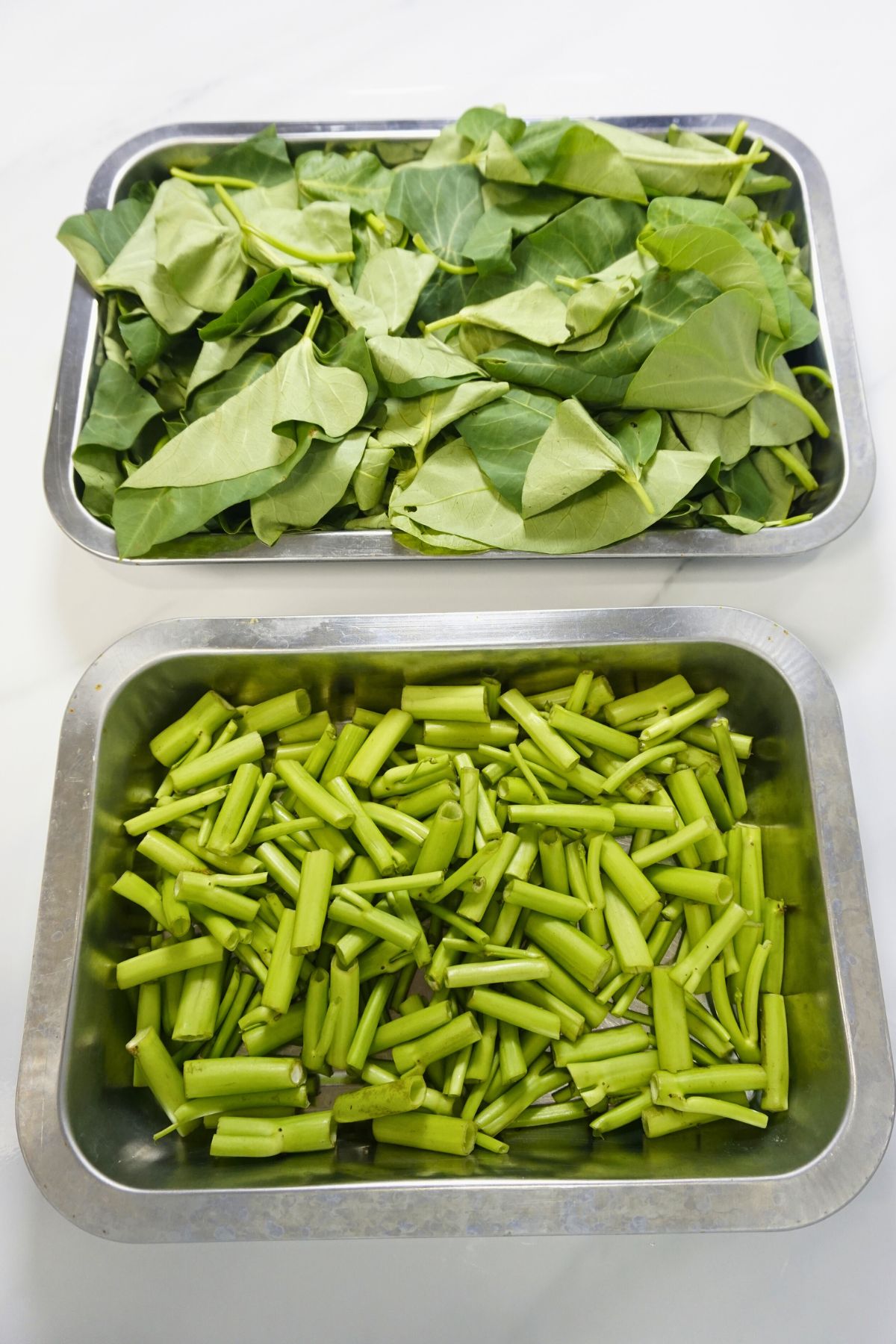
When it comes to kangkong, you can actually eat both the leaves and the tender stems!
The leaves are soft and soak up flavor really well, giving you that perfect, savory bite in dishes like Adobong Kangkong.
The stems are also edible, especially the younger, thinner parts.
They add a bit of crunch, which gives the dish a nice texture.
I usually trim off the tough, woody ends of the stems since those can be a bit hard to chew.
But the rest? It all goes in the pan!
So when you’re cooking kangkong, feel free to use the leaves and most of the stems for a tasty, full-flavored dish.
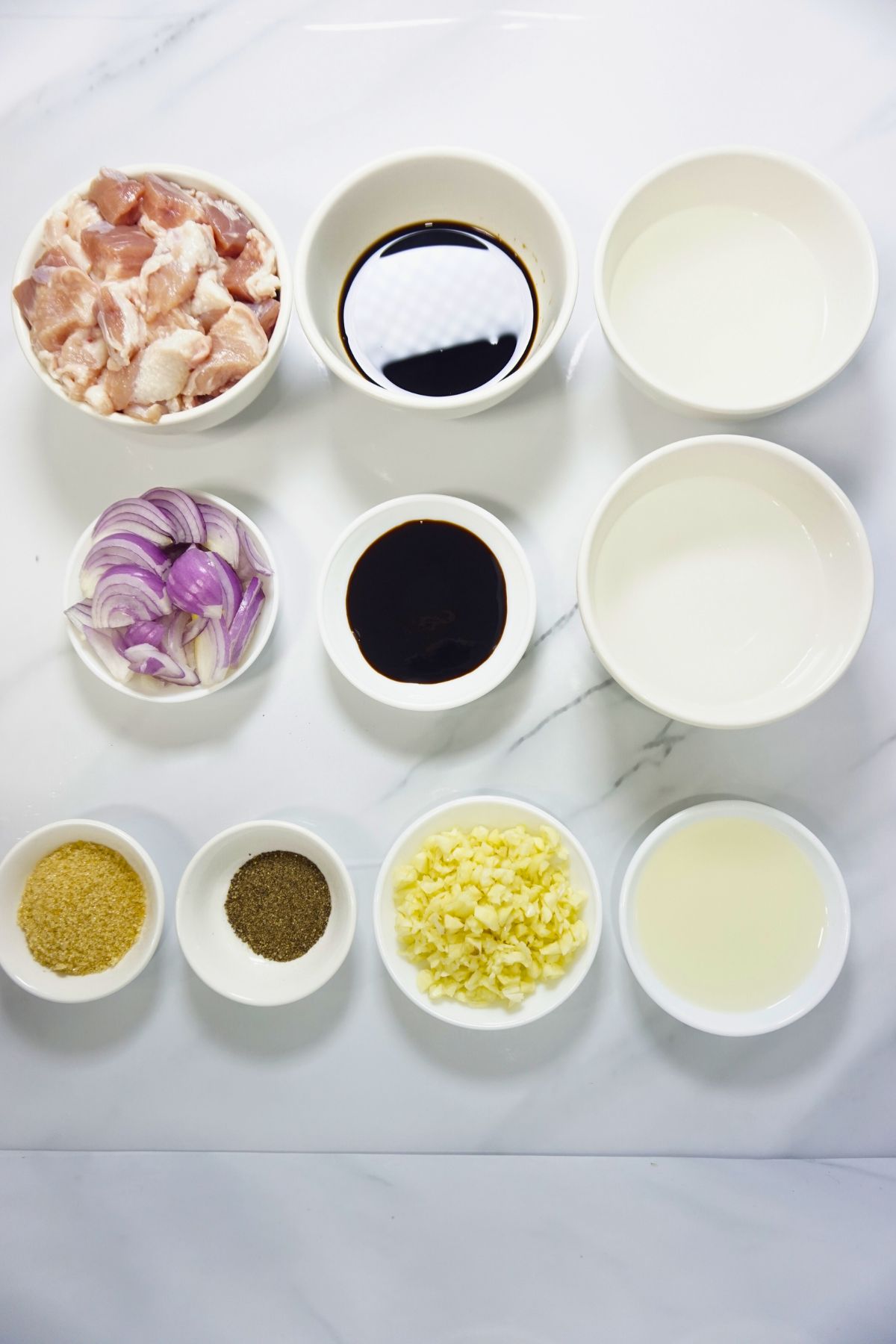
Adobong Kangkong Ingredients
Garlic and Onion
These two are the start of almost every delicious Filipino dish and for good reason. Garlic brings that mouthwatering aroma, while the onion adds a touch of sweetness that rounds out the tangy and savory flavors in the dish.
Pork Belly
Cut into strips, pork belly is the star here. It’s rich, flavorful, and tender, with just enough fat to make the sauce extra tasty. Every bite has that perfect mix of juicy meat and melt-in-your-mouth goodness.
Soy Sauce and Vinegar
The classic adobo combo. The soy sauce gives that deep, salty flavor we all love, while the vinegar adds a tangy punch that keeps everything balanced and exciting.
Oyster Sauce and Brown Sugar
Oyster sauce adds a savory sweetness that levels up the sauce, and the brown sugar? Just a bit is enough to mellow out the vinegar and give a hint of caramel-like sweetness.
Black Pepper Powder
A little sprinkle goes a long way. It brings a mild heat and makes the savory flavors stand out more without taking over the dish.
Kangkong (Water Spinach)
We’re using both the leaves and the tender stems. They soak up the sauce beautifully and add a fresh crunch that cuts through the richness of the pork.
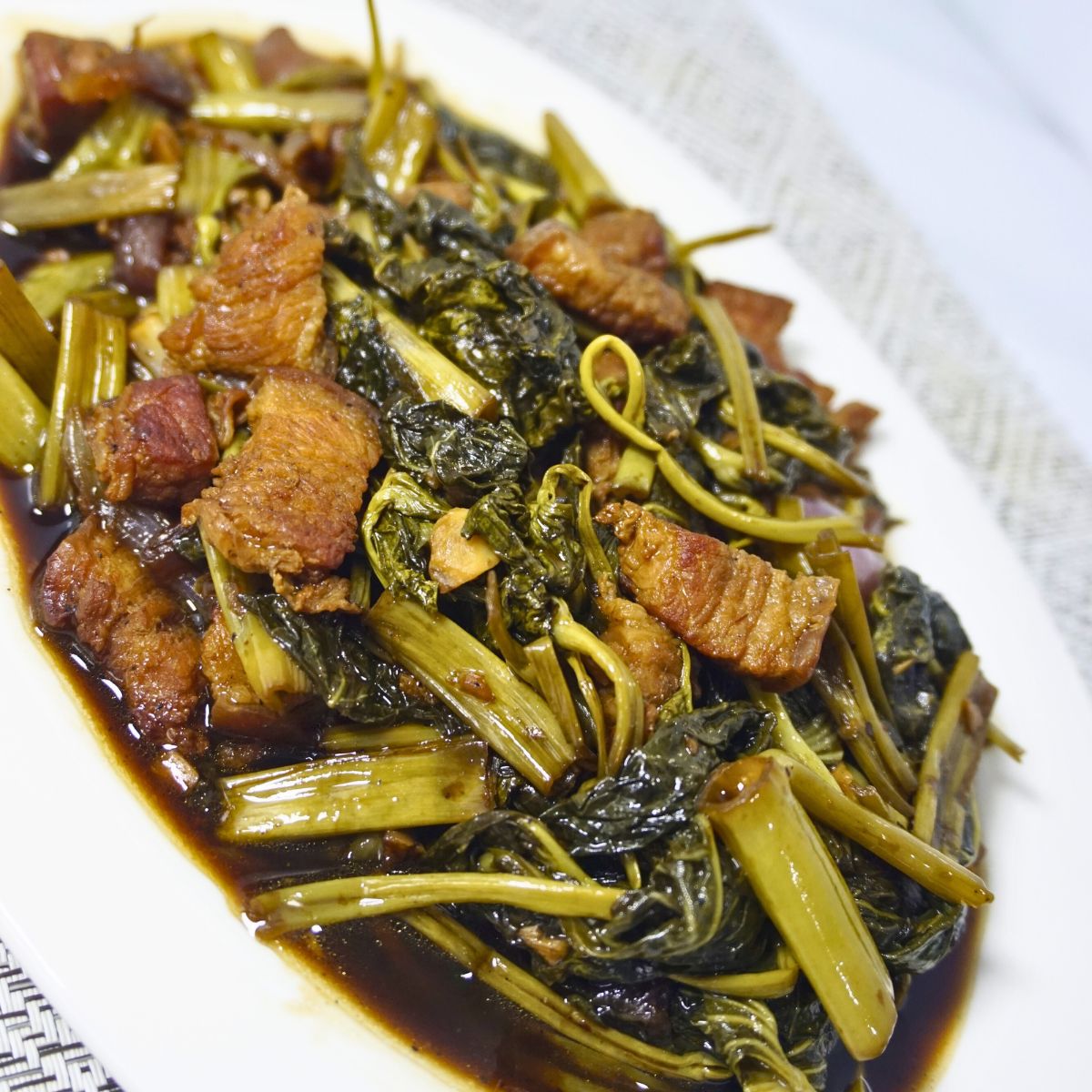
How To Cook Adobong Kangkong?
1. Get Everything Ready
Start by prepping your ingredients. Mince the garlic, chop the onion, and slice the pork belly into thin strips. Trim the kangkong, keeping both the leaves and the soft stalks. Having everything ready before you start makes cooking easier and quicker.
2. Cook the Pork Belly
Heat about 2 tablespoons of oil in a large pan over medium heat. Add the pork belly and let it cook until it starts to brown and release its fat, around 5 to 7 minutes. This brings out the rich, meaty flavor that adds depth to the dish.
3. Sauté the Garlic and Onion
Once the pork is nicely browned, add in the garlic and onion. Sauté until the garlic turns golden and the onion becomes soft. This adds a nice aroma and flavor that builds the base of your adobo.
4. Add the Sauces and Vinegar
Pour in the soy sauce, oyster sauce, vinegar, and a bit of water. Don’t stir just yet. Let it simmer for a few minutes so the strong vinegar flavor can mellow out on its own.
5. Season the Sauce
Add the brown sugar and a pinch of black pepper. Stir everything together so the sauce is well blended. The sugar gives it a little sweetness that balances the salty and tangy flavors.
6. Simmer Until Pork Is Tender
Turn the heat down, cover the pan, and let it simmer for about 10 to 12 minutes. This gives the pork time to soften and helps the sauce thicken a bit.
7. Add the Kangkong
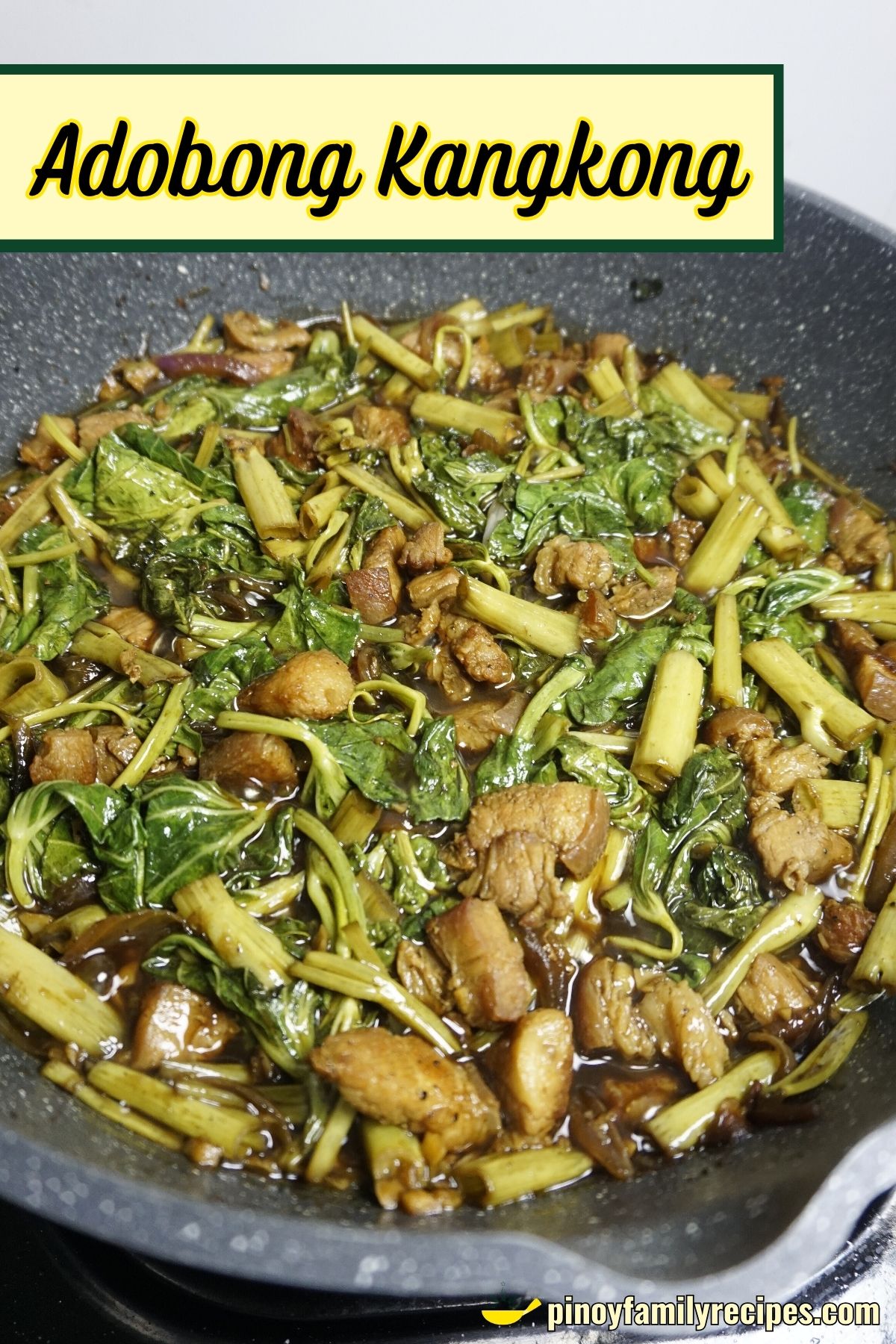
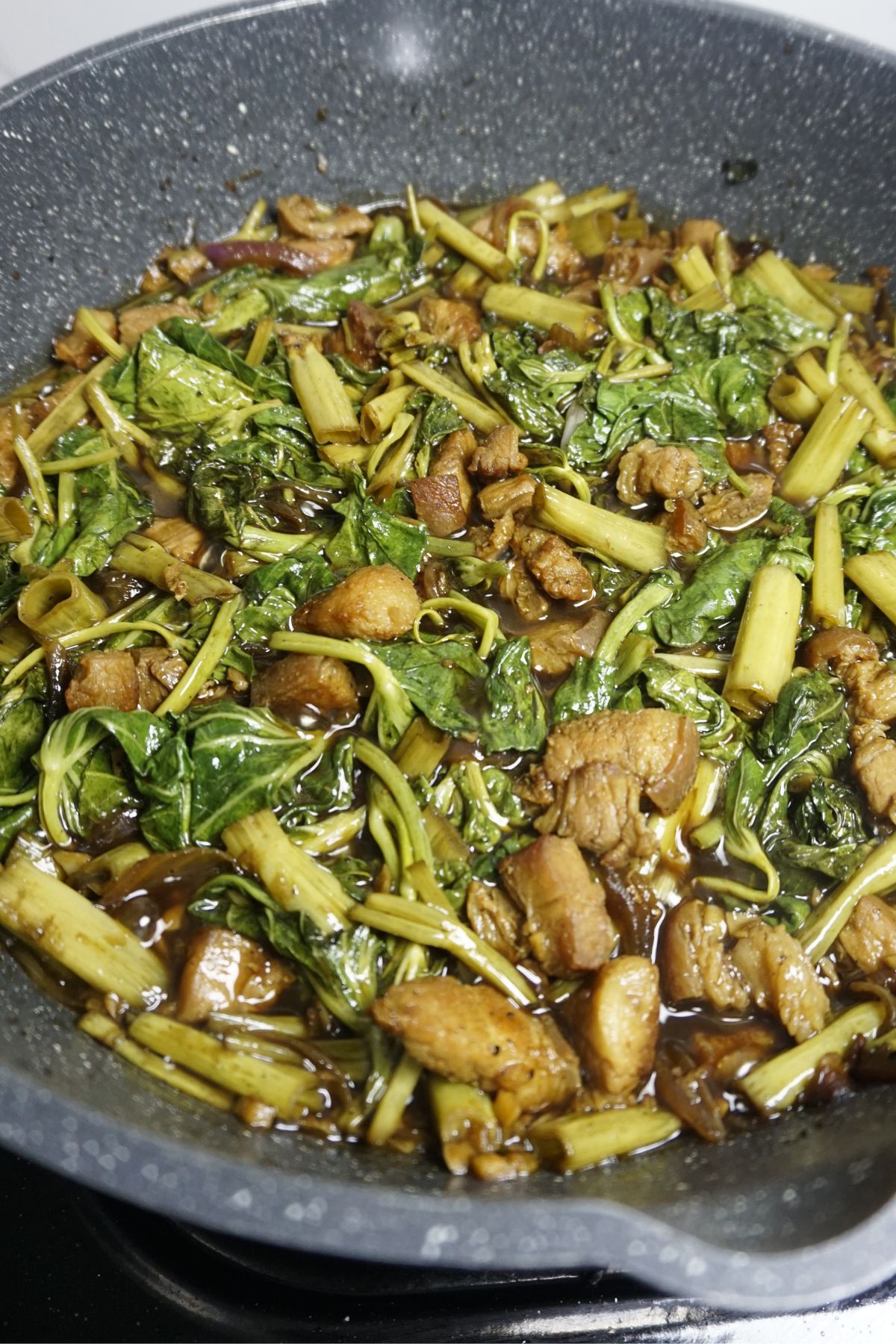
Now it’s time to toss in the kangkong. Add both the leaves and the tender stalks. Stir gently so everything gets coated in the flavorful sauce. Cook for just 2 to 3 minutes until the greens are wilted but still vibrant and fresh-looking.
8. Taste and Adjust
Before serving, give it a quick taste. If you want it saltier, add a splash of soy sauce. If it needs a little more sweetness, sprinkle in a bit more sugar. Serve hot over rice and enjoy every flavorful bite.
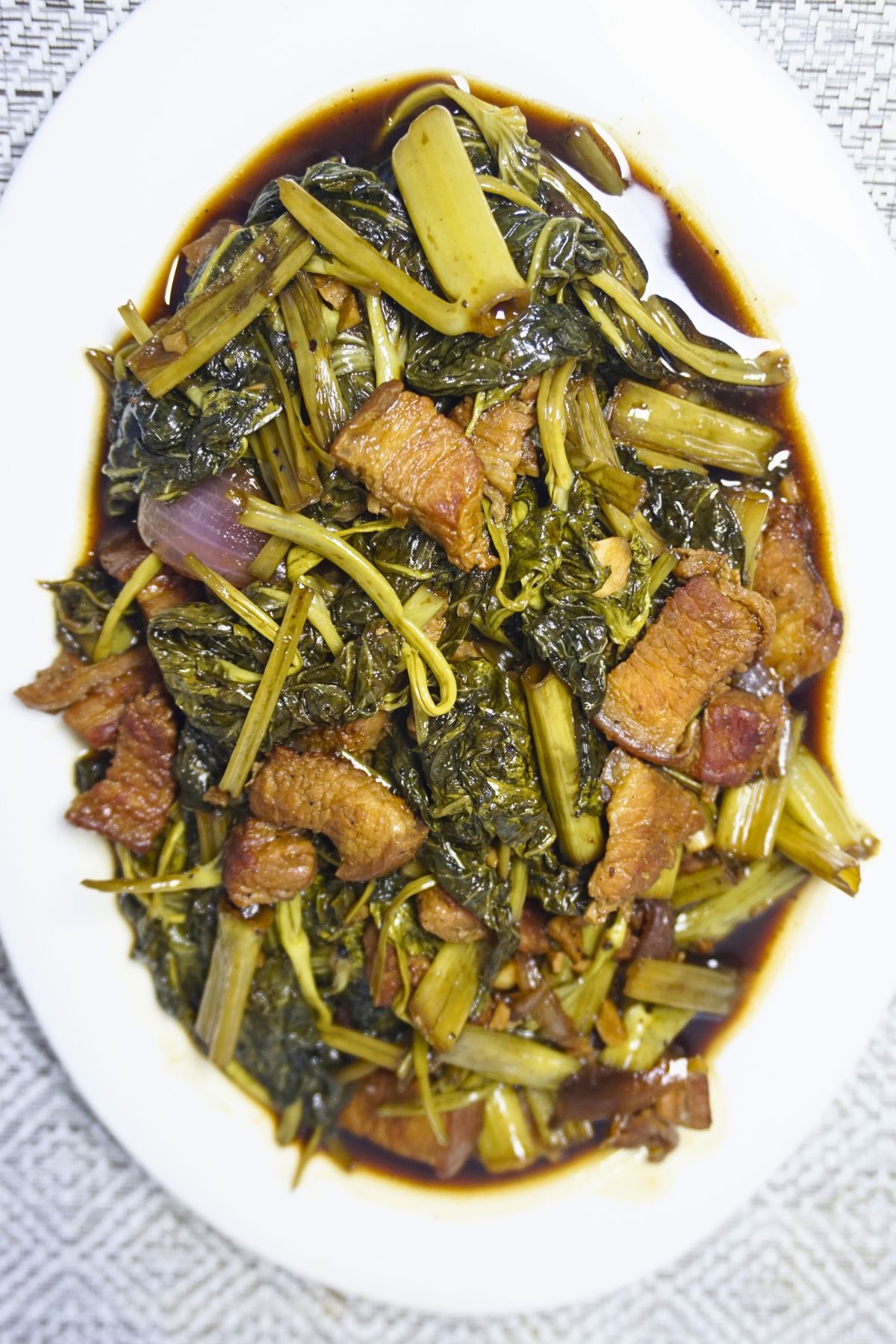
Pro Tips for the Best Adobong Kangkong
1. Brown the Pork for Extra Flavor
If you’re using pork belly, let it brown well before adding the other ingredients. The rendered fat adds richness to the sauce, making it more flavorful.
2. Don’t Stir the Vinegar Right Away
When you pour in the vinegar, resist the urge to stir it immediately. Let it simmer first for a few minutes to cook off its sharpness. This keeps the vinegar tangy but not overpowering.
3. Adjust the Sweetness and Saltiness
Adobong Kangkong is all about balance, so feel free to tweak it to your taste. Add a little more brown sugar for sweetness or soy sauce for saltiness until it’s just right for you.
4. Add the Kangkong Last
Since kangkong wilts quickly, add it just at the end of cooking. This keeps it vibrant and slightly crisp, giving a fresh bite to every spoonful.
5. Experiment with Ingredients
For a heartier version, try adding a bit of shrimp, tofu, or even crispy pork bits. These additions make the dish more filling and add another layer of flavor.
6. Serve with Steamed Rice
Adobong Kangkong shines best with a side of steamed rice, which soaks up that tasty sauce. It’s a simple way to make the meal feel complete and super satisfying.
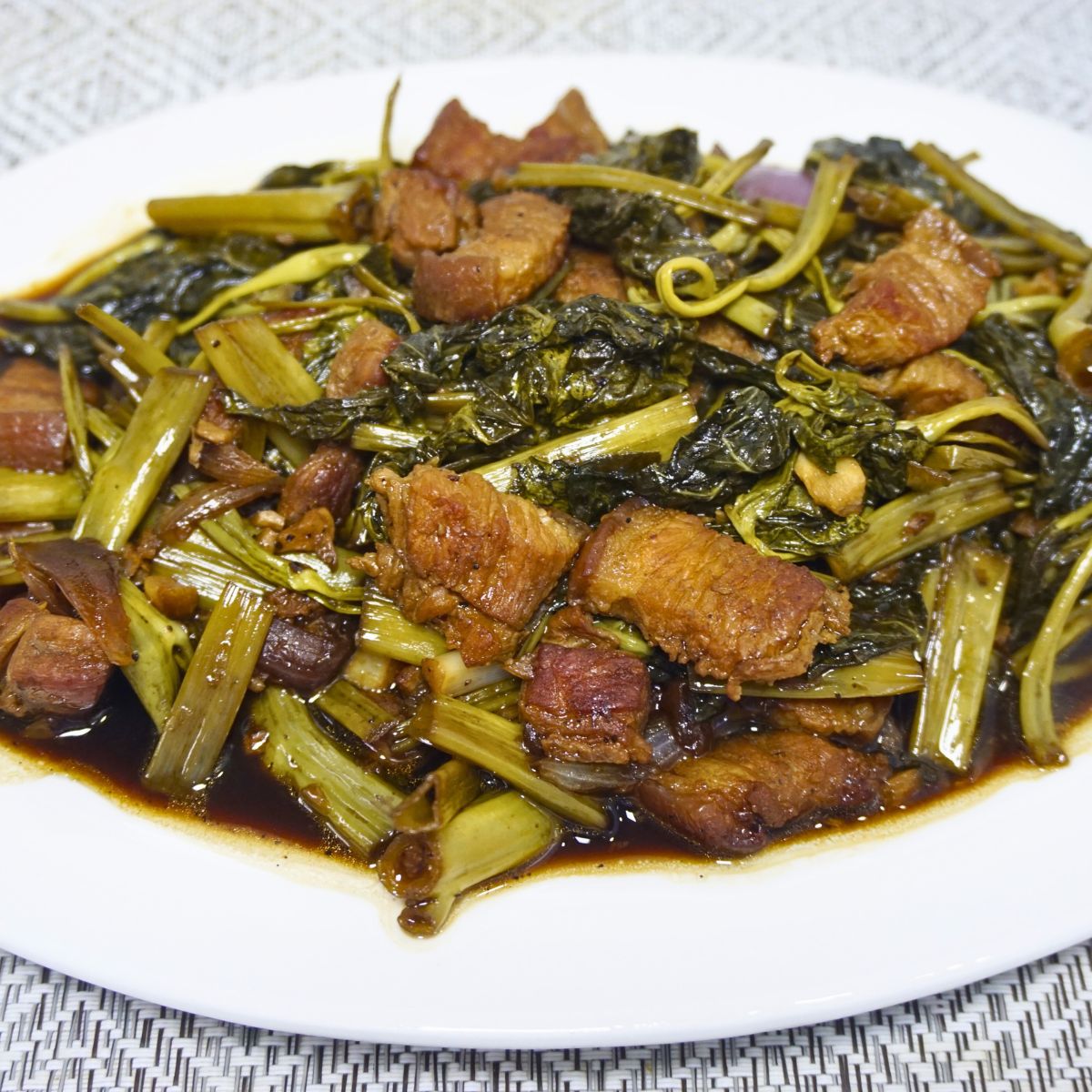
Serving Suggestions
1. Pair with Steamed Rice
The best way to enjoy Adobong Kangkong is with a big serving of freshly steamed rice. The rice soaks up all that delicious, garlicky sauce, making every bite even better.
2. Add a Side of Grilled Meat
To make the meal more filling, serve it with a side of grilled meat like chicken, pork, or fish. The smokiness from the grill pairs perfectly with the savory, tangy flavors of the adobo sauce.
3. Make It a One-Pot Meal
If you want to turn Adobong Kangkong into a heartier dish, you can add some tofu, shrimp, or even crispy pork bits as sahog. This adds protein and makes it a satisfying, all-in-one meal.
4. Serve as a Side Dish
If you’re having a big Filipino feast or a casual dinner, serve Adobong Kangkong as a tasty side dish alongside other Filipino favorites like Sinigang or Lechon Kawali. It balances out the richness of heavier dishes.
More Vegetable Recipes to Try
If you enjoyed Adobong Kangkong, here are more flavorful and easy Pinoy gulay dishes you’ll love:
Ginisang Ampalaya – A simple stir-fry of bitter melon with egg, garlic, and onion. Slightly bitter, super healthy, and perfect with rice.
Ginisang Monggo Recipe with Pork – Nutritious mung beans simmered until soft, cooked with garlic, tomatoes, and tender pork bits for extra flavor.
Ginataang Gulay Recipe (With Shrimp) – A creamy and savory mix of vegetables and shrimp cooked in rich coconut milk. Comforting and packed with flavor.
Pinakbet Recipe – A hearty mix of local vegetables like ampalaya, sitaw, and kalabasa, flavored with bagoong for that classic savory kick.
Tortang Talong Recipe – Grilled eggplant dipped in egg and pan-fried until golden. Simple, budget-friendly, and always satisfying.
Frequently Asked Questions
While kangkong is the traditional choice, you can substitute with other leafy greens like bok choy or mustard greens. However, keep in mind that the texture and flavor may vary slightly.
Yes, you can skip the pork belly and make a vegetarian version of Adobong Kangkong by adding tofu or simply using more vegetables. The sauce still delivers that signature adobo flavor, even without meat.
Store leftovers in an airtight container in the fridge for up to 3 days. Reheat it on the stove, adding a splash of water if needed to bring back the sauce’s consistency
While you can freeze it, the kangkong may lose its texture after thawing. It’s best enjoyed fresh, but if you do freeze it, consume it within a month for the best flavor and quality.
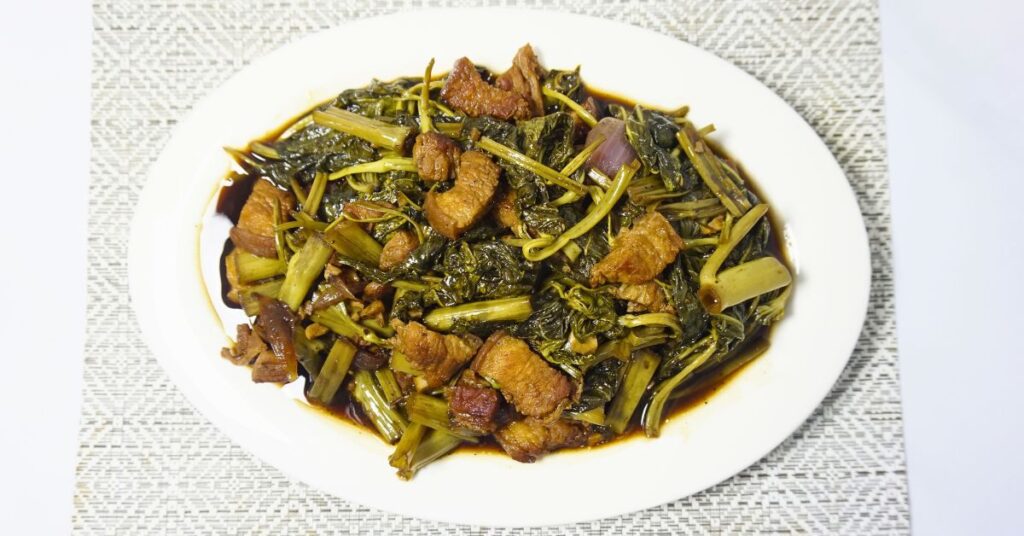
Adobong Kangkong
Ingredients
- 2 tbsp Cooking Oil
- 8 cloves Garlic (minced)
- 1 piece Onion (chopped)
- 250 grams Pork Belly (sliced into strips)
- 1/2 cup Water
- 1/4 cup Soy Sauce
- 1/2 cup Vinegar
- 2 tablespoons Oyster Sauce
- 1 1/2 tablespoon Brown Sugar
- 1 teaspoonBlack Pepper Powder
- 2 bunches Kangkong Water Spinach, (leaves and tender stalks)
Instructions
- Start by prepping all the ingredients. Mince the garlic, chop the onion, slice the pork belly into thin strips, and trim the kangkong, keeping the leaves and tender stalks.
- In a large pan, heat 2 tablespoons of cooking oil over medium heat. Add the sliced pork belly to the pan. Cook, stirring occasionally, until the pork starts to brown and its fat begins to render, about 5–7 minutes.
- Add the minced garlic and chopped onion. Sauté until the garlic is golden brown and the onion is softened and translucent.
- Pour in 2 tablespoons of oyster sauce, 1/4 cup of soy sauce, 1/2 cup of water, and 1/2 cup of vinegar. Let it simmer.
- Add 1 tablespoon of brown sugar, and 1 teaspoon of black pepper powder. Mix everything well.
- Lower the heat, cover the pan, and let it simmer for about 10–12 minutes until the pork is tender and the sauce has slightly thickened.
- Add the kangkong leaves and tender stalks to the pan. Toss gently to coat with the sauce, and cook for 2–3 minutes until the kangkong is just wilted but still vibrant.
- Taste the sauce and adjust if needed (you can add a bit more soy sauce or brown sugar to your preference).