Vegetable lovers, where are you at?
If you’re like me and always looking for ways to enjoy more gulay, you’re going to love this one.
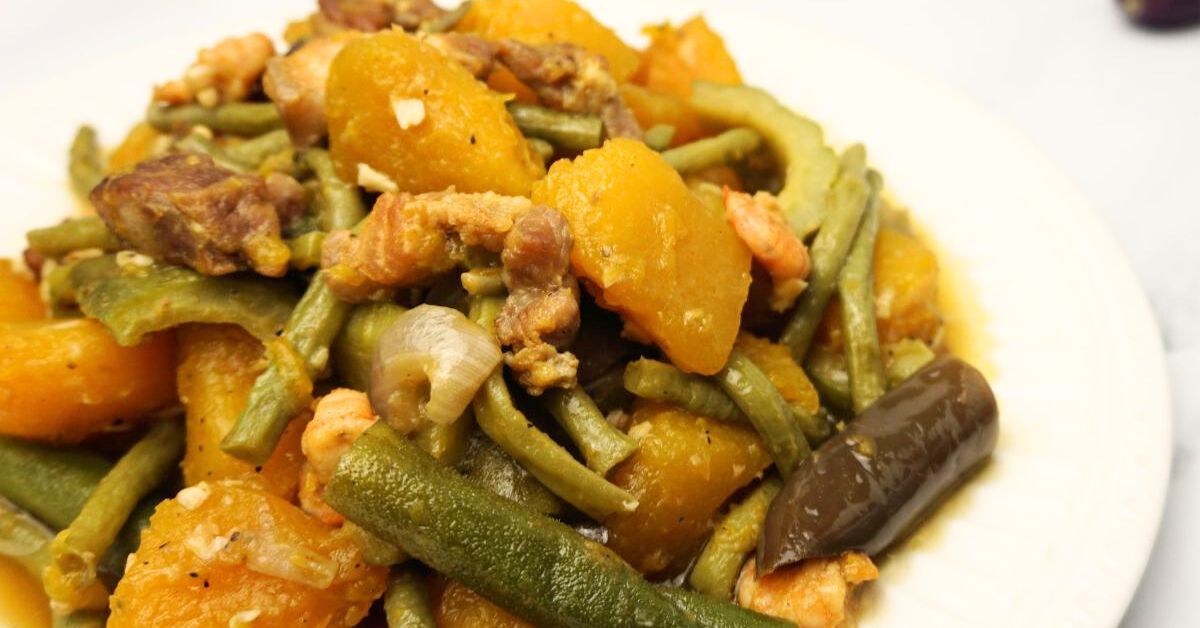
Today, we’re cooking Pinakbet, one of the most comforting and flavorful Filipino vegetable dishes out there.
Quick story before we cook. Pinakbet comes from the northern part of the Philippines.
It’s a dish built on fresh vegetables and bold, homey flavors.
Every household makes it a little differently, but the heart of the dish stays the same.
And no, it’s not complicated at all.
With a few basic ingredients and some easy steps, you’ll have a warm pot of Pinakbet ready to serve with rice.
It’s a great way to enjoy veggies in a dish that actually tastes amazing.
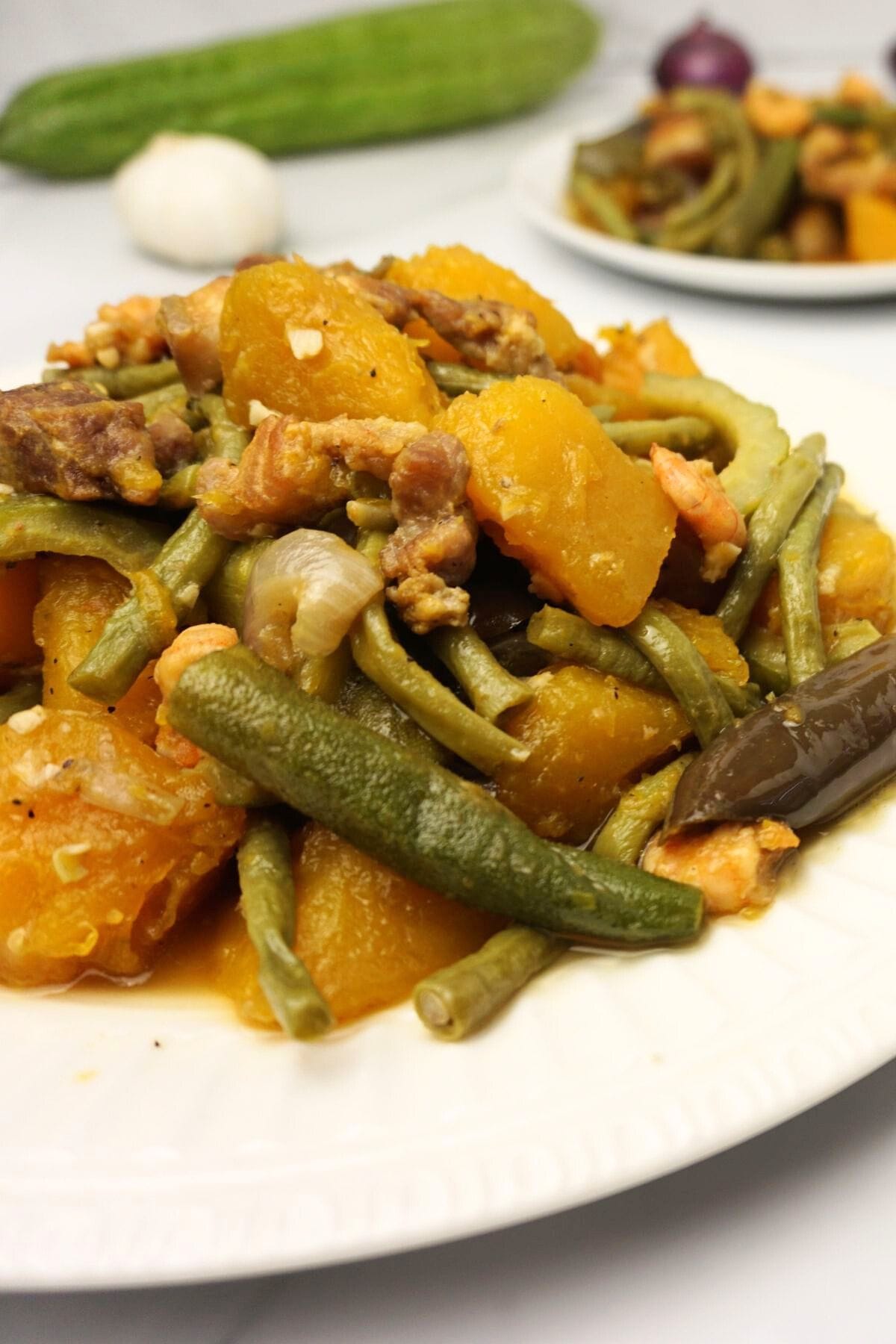
Why Do Filipinos Love Pinakbet
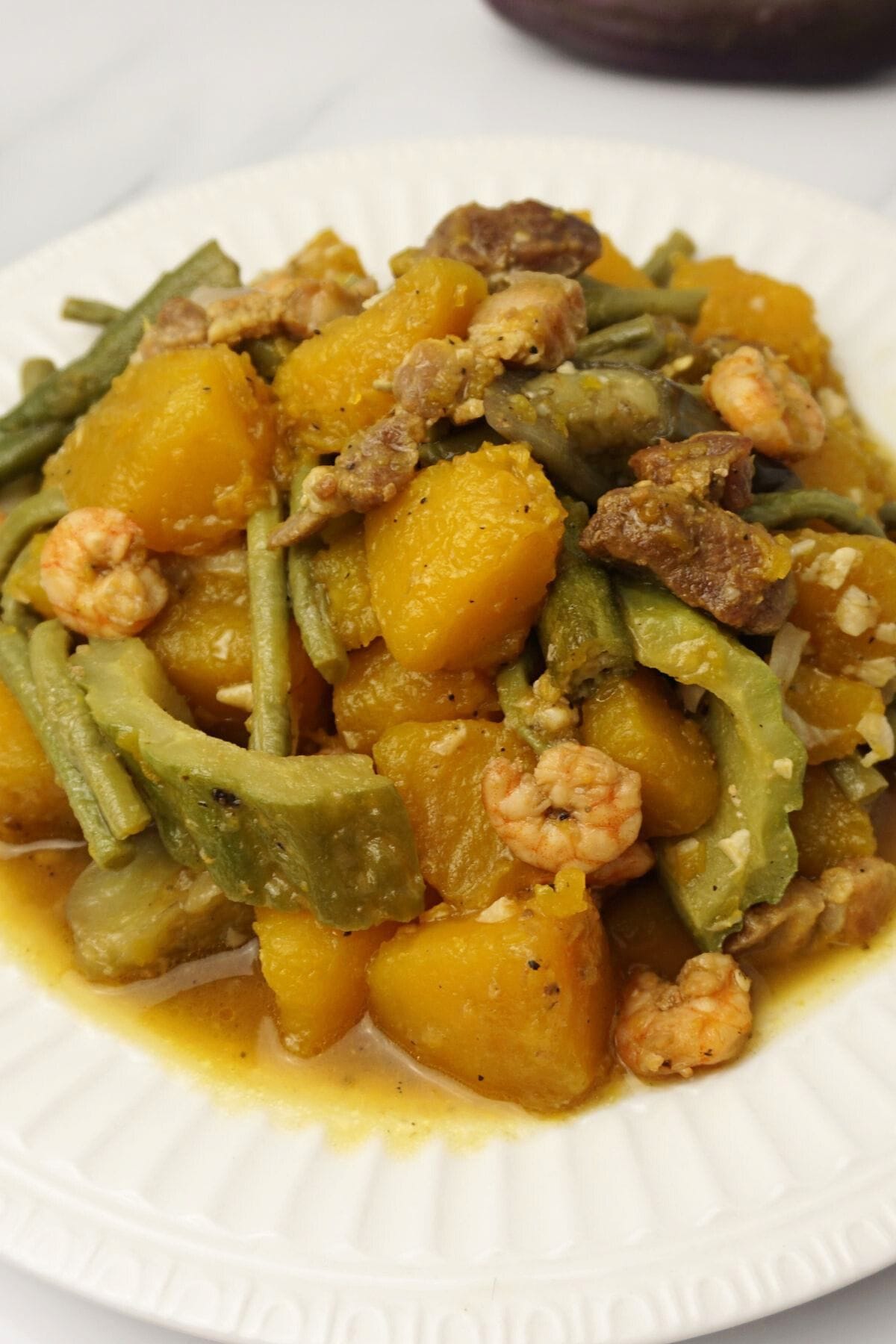
Filipinos love Pinakbet because it’s packed with tasty vegetables like kalabasa and talong.
It’s a flexible dish that you can easily customize with your favorite sahog.
Beyond its flavor, Pinakbet carries a deep cultural connection, passed down through generations.
There are two popular versions in the Philippines: Ilocano and Tagalog.
The Ilocano version uses bagoong isda for a bold, earthy taste, while the Tagalog version uses shrimp paste for a richer and slightly sweeter flavor.
Both are equally delicious and show how diverse Filipino cooking truly is.
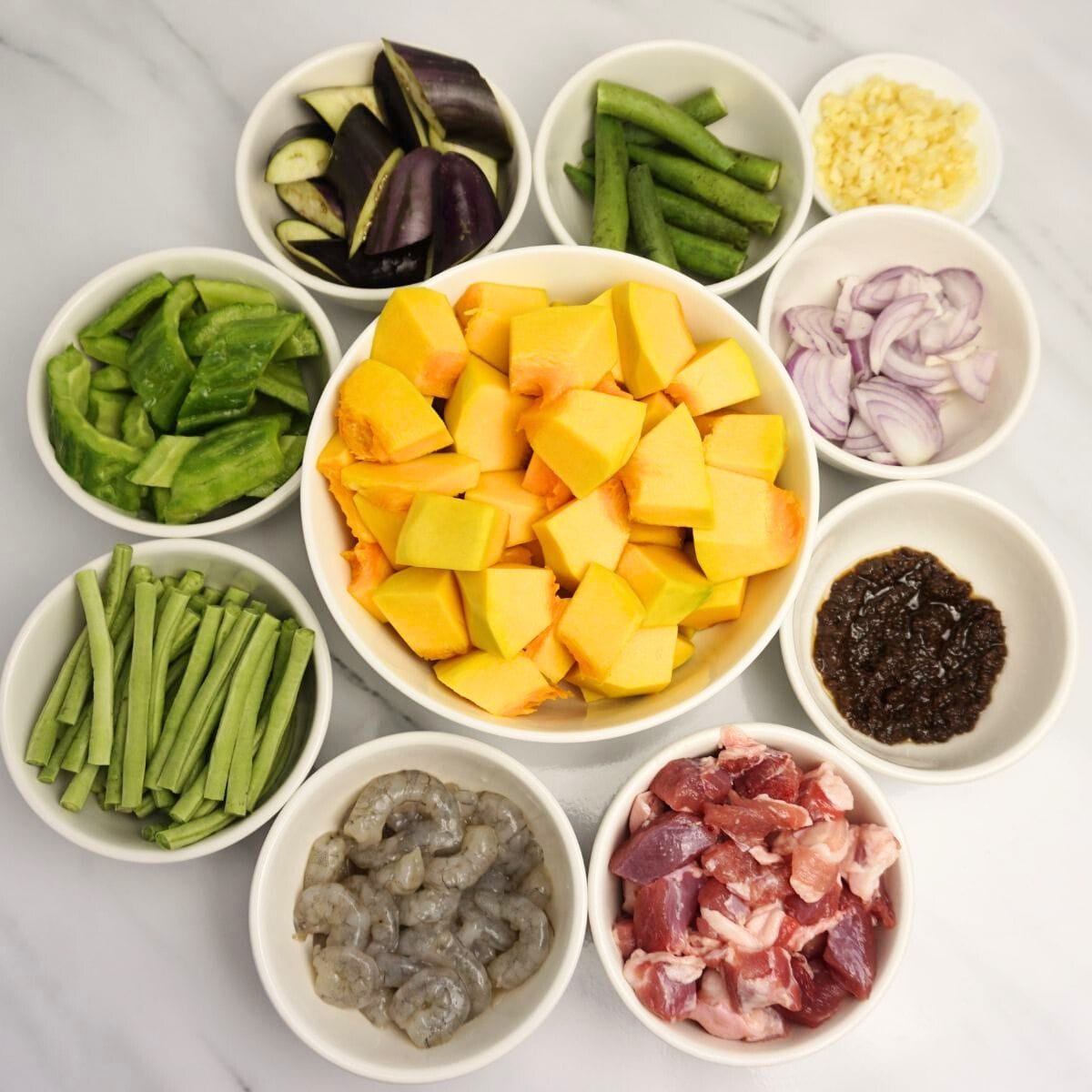
Pinakbet Ingredients
Pork (Small slices)
Tender slices of pork add a meaty flavor and texture, blending perfectly with the vegetables and soaking up the savory sauce.
Garlic
Garlic brings a bold, aromatic flavor that enhances the depth and richness of the dish.
Onion
Onions add natural sweetness and a flavorful base for all the other ingredients to build upon.
Shrimp Paste
Packed with umami, shrimp paste gives the dish a salty-savory boost that elevates every bite.
Shrimp (Small)
These small seafood bites add sweetness, juiciness, and a burst of ocean flavor.
Vegetables
Squash – Soft and naturally sweet, balancing the savory and salty flavors.
String Beans – Crisp and fresh, adding crunch and vibrant color.
Okra – Offers a unique, slightly slimy texture and earthy flavor.
Eggplant – Soft and meaty, absorbing the sauce and enriching the dish.
Bitter Gourd – Adds a refreshing bitterness that balances the other flavors.
Seasoning
Salt and Pepper – Essential for enhancing and balancing all the flavors.
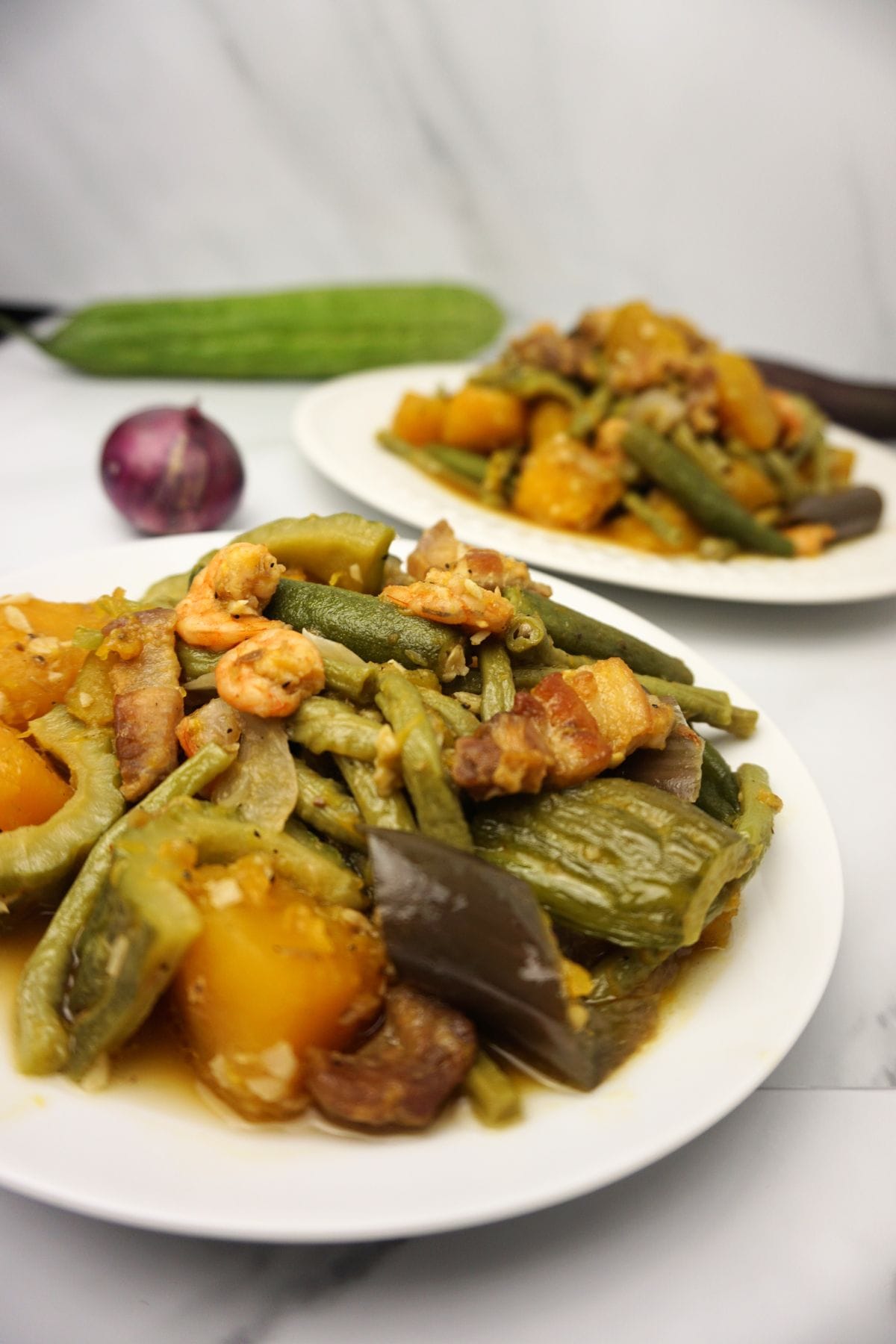
How To Cook Pinakbet?
Here, I am cooking the Tagalog version, using shrimp paste or alamang.
1. Sauté the Pork
Start by heating some oil in a pan and tossing in the sliced pork. Let it cook until the fat starts to render out and the pork gets nice and browned. Once it’s done, transfer it to a bowl and set it aside for later.
2. Sauté the Aromatics
Next, use that same pot to sauté some garlic and onion until they’re fragrant and golden brown. Then, add three tablespoons of shrimp paste and let it simmer before tossing in the peeled shrimp.
3. Cook the Veggies
Now, it’s time to add the veggies! Please start with squash since it’s the hardest of them. Cover the pot and let it simmer until the squash softens.
4. Add More Veggies
Once the squash is on its way, throw in the string beans and pour a cup of water. Bring it all to a gentle boil until the squash is tender.
5. Finish with the Rest
Add the okra and eggplant to the pot, covering it up and letting everything simmer together until the veggies are cooked to perfection. After a few minutes, add the bitter gourd and let it simmer for five more minutes, giving everything a gentle toss to ensure it mingles nicely.
6. Season and Simmer
Give it all a taste and add salt to adjust the seasoning according to your preference. Then, please return the sautéed pork and toss it back into the pot. Let it all simmer together for just a minute to let those flavours meld beautifully.
7. Serve and Enjoy
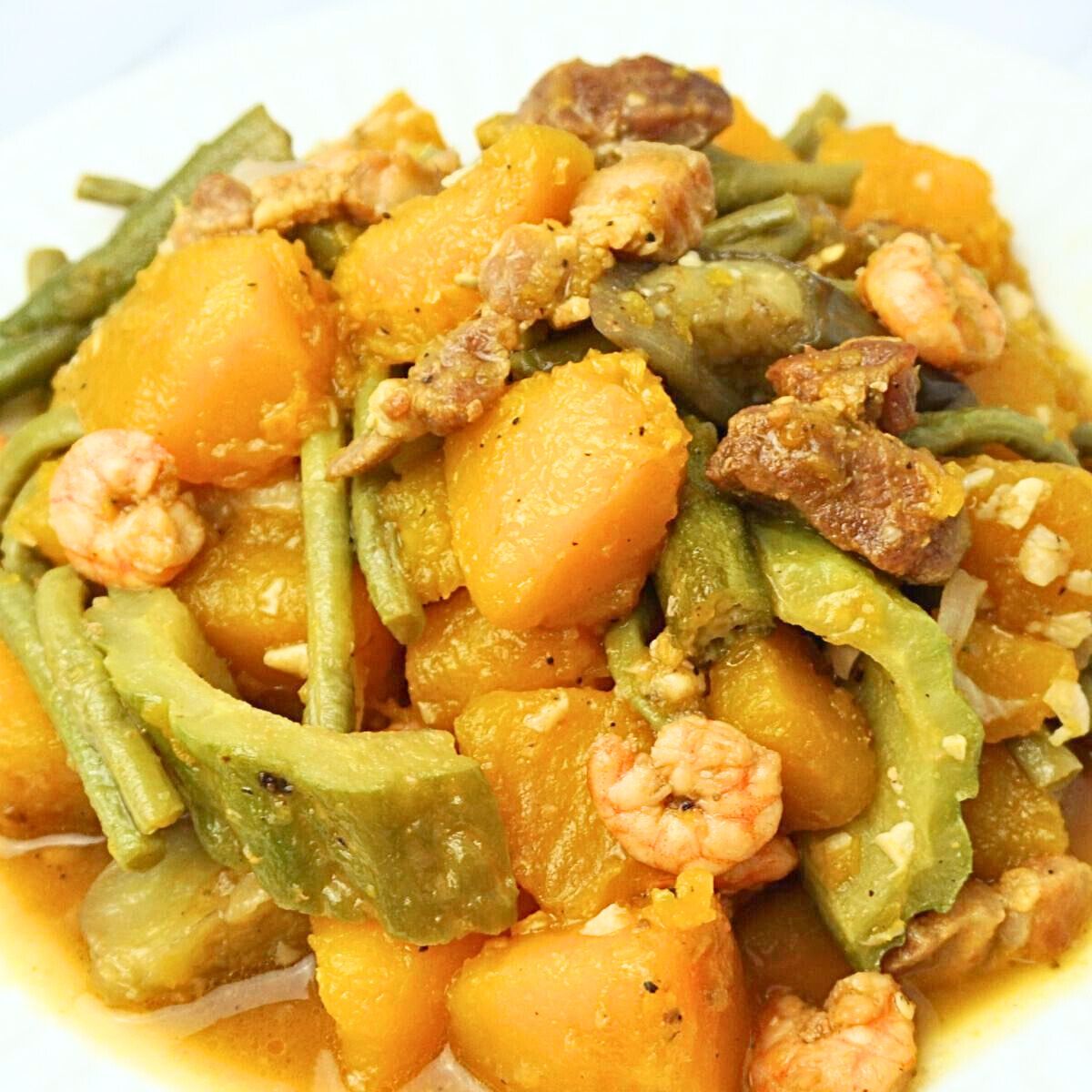
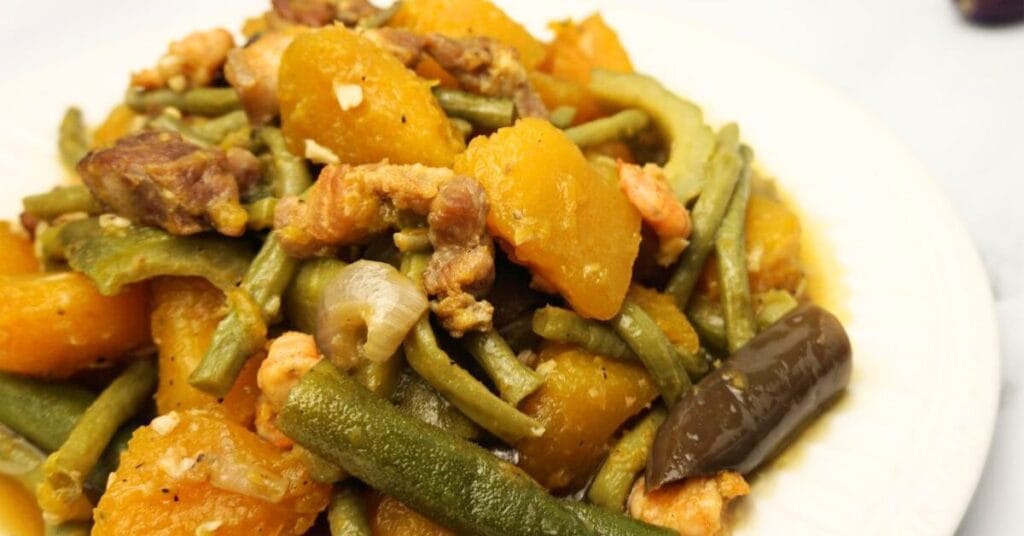
And there you have it – a steaming pot of Pinakbet that will satisfy your cravings! Transfer it to a bowl or plate and serve it up hot, ready to enjoy with steamed rice or on its own.
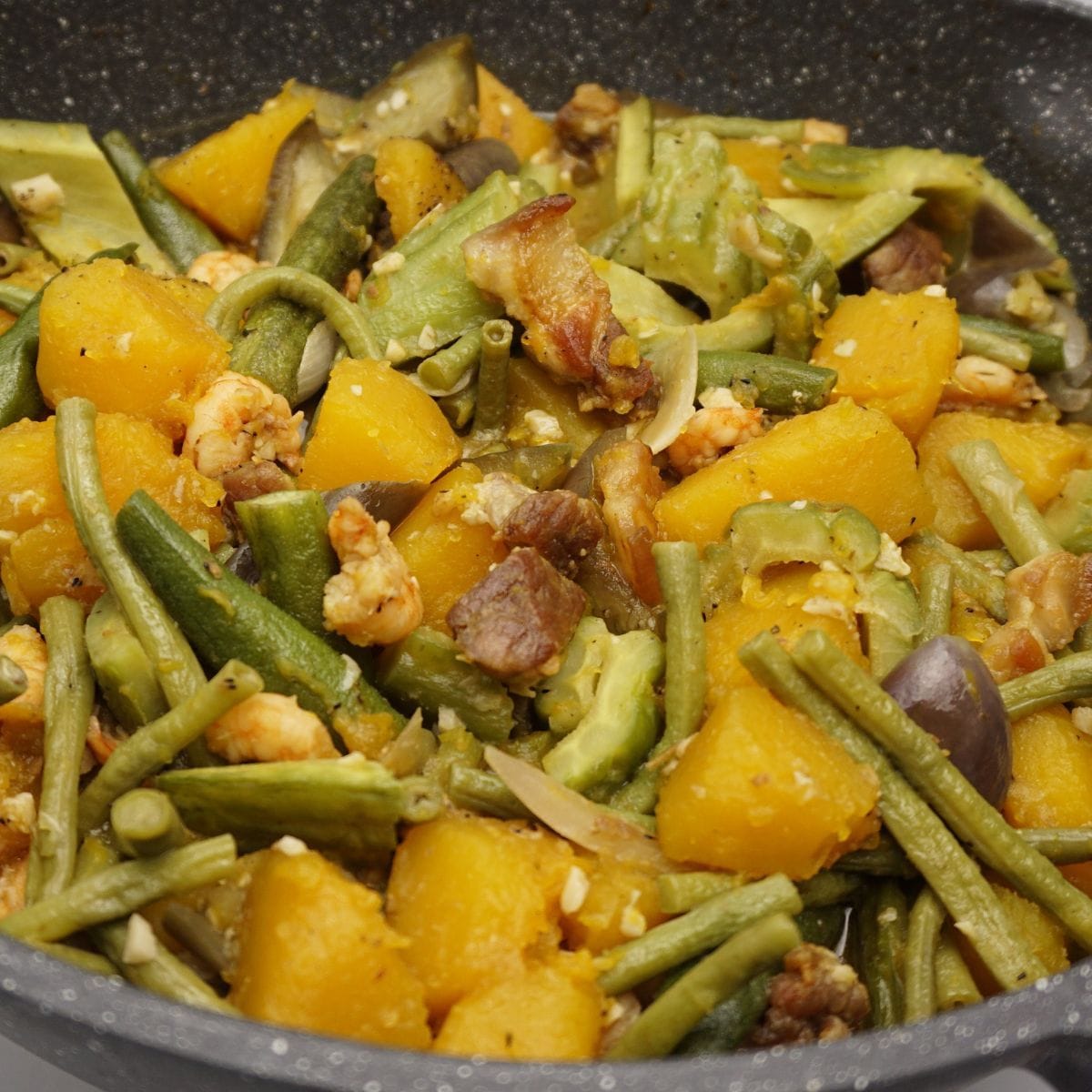
What to Serve With Pinakbet
If you visit Carinderias or Filipino-style restaurants here in the Philippines, you’ll notice that Pinakbet will only be complete with a partner dish. Here are my tried and tested recommendations to complete your Pinakbet meal:
Grilled or Fried Fish
Pair your Pinakbet with a serving of grilled or fried fish, such as tilapia or bangus. Daing na bangus is a perfect pair for this! The simplicity of the fish allows the flavors of the Pinakbet to shine, creating a satisfying and balanced meal.
Crispy Pork Belly (Lechon Kawali)
Indulge your taste buds by serving Pinakbet with crispy fried pork belly or lechon kawali. The crunchy texture of the pork belly complements the soft vegetables in the Pinakbet. At the same time, the savory flavor adds an extra layer of deliciousness to the meal.
Grilled or Roasted Chicken
Another excellent option is to serve Pinakbet with grilled or roasted chicken. The juicy, tender chicken pairs perfectly with the hearty vegetables, creating a comforting and satisfying meal that’s sure to please everyone at the table.
Cooking Tips on Pinakbet Recipe
Use Fresh Ingredients
For the best flavor and texture, use fresh vegetables, high-quality shrimp, and pork. Fresh ingredients will make a noticeable difference in the final dish.
Cut Vegetables Uniformly
To ensure even cooking, cut your vegetables into uniform pieces. This will help them cook at the same rate and prevent some from becoming overcooked while others are still undercooked.
Sauté Aromatics Well
Take your time when sautéing the garlic and onion and cooking them until golden brown will enhance their flavour and add depth to the dish.
Adjust Seasoning Carefully
Pinakbet relies on the balance of flavors, so taste as you go and adjust the seasoning accordingly. Be mindful of the saltiness of the shrimp paste and adjust the amount of salt added accordingly.
Simmer Gently
Once you’ve added all the ingredients to the pot, let the Pinakbet simmer gently over low to medium heat. This allows the flavors to meld together and the vegetables to cook through without becoming mushy.
Don’t Overcook the Vegetables
Keep an eye on the vegetables as they cook to prevent them from becoming too soft. They should be tender but still have a bit of bite to them.
Add the Bitter Gourd Last
Bitter gourd cooks relatively quickly compared to other vegetables, so add it to the pot towards the end of cooking to prevent it from becoming too mushy.
Let it Rest Before Serving
Allow the Pinakbet to rest for a few minutes before serving. This allows the flavours to intensify and ensures that the dish is at its best when served.
More Vegetable Recipes to Try
Looking for more vegetable recipes? Here are some delicious and easy Filipino veggie dishes you can cook at home:
Chopsuey Recipe – A colorful stir-fry packed with crisp vegetables, shrimp, and quail eggs. Great with steamed rice.
Ginataang Gulay with Shrimp – Vegetables simmered in rich coconut milk with shrimp. Creamy and comforting.
Ginataang Papaya with Chicken – Green papaya and chicken in a flavorful coconut sauce. A simple yet satisfying dish.
Ginisang Ampalaya – Sauteed bitter melon with egg and ground pork. A healthy classic with bold flavor.
Ginisang Monggo with Pork – Nutty mung beans stewed with pork and malunggay. Perfect for lunch or dinner.
Ginisang Repolyo – Light and healthy sauteed cabbage with garlic, onion, and a bit of pork or shrimp.
Ginisang Upo – Simple and quick bottle gourd stir-fry with savory broth and sahog of your choice.
Frequently Asked Questions
Yes, you can use other meats like beef or chicken for a different flavor twist in your Pinakbet.
To reduce the saltiness, you can add more water or balance it out with a bit of sugar or vinegar.
Yes, you can make Pinakbet ahead of time and reheat it before serving, but be mindful that the vegetables may become softer upon reheating.
Yes, you can use frozen shrimp, but be sure to thaw and drain them before adding them to the dish.
Pinakbet Recipe
Ingredients
- 400 grams Pork (small slices)
- 6 cloves Garlic
- 1 piece Onion large (sliced)
- 3 tbsp Shrimp Paste
- 250 grams Shrimp small
- 1 piece Squash small (squared)
- 10 pieces String Beans (about 3-inch length)
- 1 cup Water
- 10 pieces Okra
- 2 pieces Eggplant (sliced)
- 1 piece Bitter Gourd medium (sliced)
- Salt and Pepper to taste
Instructions
- In a pan saute the sliced pork, let it cook until fat renders. Put it in a bowl and set aside.
- In the same pot, saute the garlic and onion, then add three tablespoons of shrimp paste. Let it simmer then add the peeled shrimp.
- Add the squash first for it’s the hardest among the vegetables. Cover and let it simmer.
- Then add the string beans and put in a cup of water. Bring to boil until the squash is slightly tender.
- Then add the okra and eggplant. Cover and let it simmer.
- After a few minutes add the bitter guard, let it simmer for five minutes then toss one time.
- Check and add salt to adjust according to taste.
- Add the sauteed pork and toss one last time. Simmer for one minute.
- Transfer to a bowl or plate and serve!
Watch this!
Notes
- For a richer flavor, you can add a bit of coconut milk.
- Be careful not to overcook the vegetables. They should be tender but still have some bite.