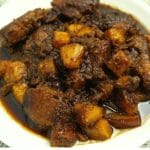
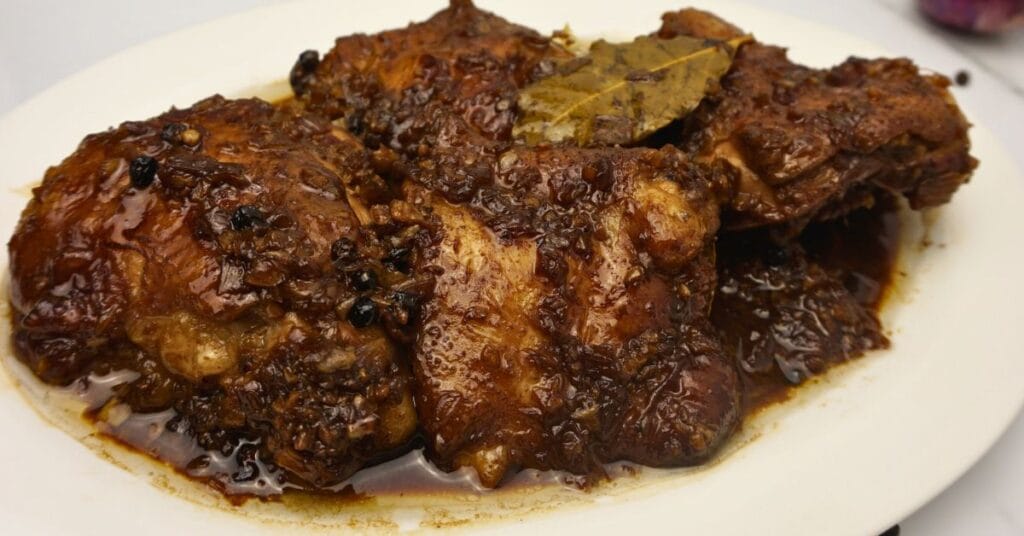
Chicken Adobo
Crave no more and cook anytime using this easy chicken adobo recipe that will surely make you and your family ask for extra rice!
Ingredients
- 1 kilogram Chicken Thigh
- 8 tbsp Soy Sauce
- 8 tbsp Vinegar
- 8 cloves Garlic (minced)
- 1 piece Onion large (diced)
- 1 cup Water
- 5 piece Bay Leaves / Laurel
- 1 tsp Black Pepper (whole)
- 1 tbsp Brown Sugar
- Salt to taste
Instructions
- In a mixing bowl marinade the chicken thighs with eight tablespoons of soy sauce, eight tablespoons of vinegar and a tablespoon of minced garlic. Set aside for thirty minutes.
- In a pan sear the chicken thighs until fat renders and lightly cooked, set aside.
- In the same pan saute, minced garlic and diced onion.
- Add the seared chicken thighs and let it simmer then add the rest of the marinated mixture.
- Add a cup of water, five pieces of bay leaves and a teaspoon of whole black pepper. Cover and bring to a boil.
- Adjust with salt according to taste and let it simmer until the chicken is well cooked.
- Add a tablespoon of sugar and let it simmer until the sauce thickens.
- Transfer to a plate and serve!
Watch this!
Notes
- You can add potatoes to your adobo. Just cut them in half.
- You can also add hard boiled eggs.
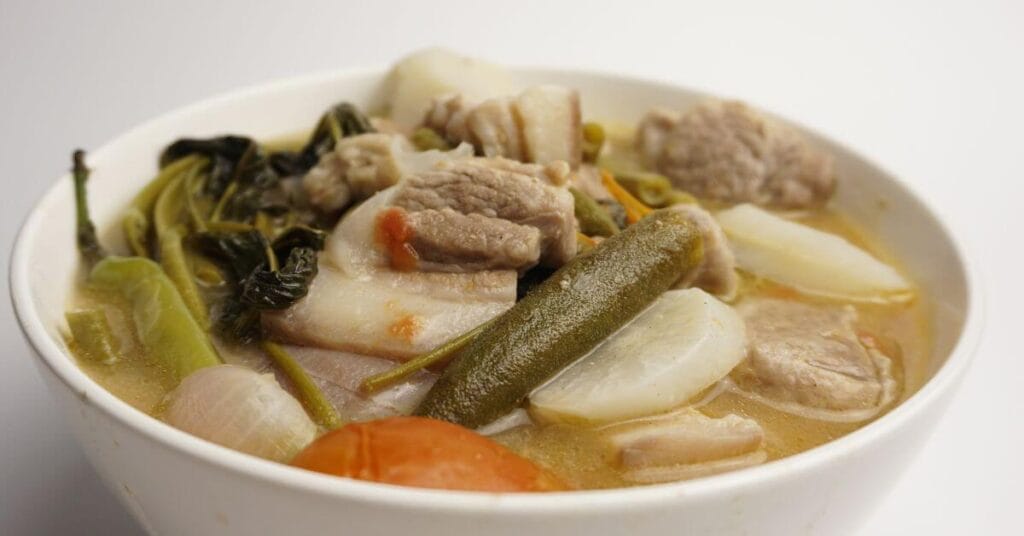
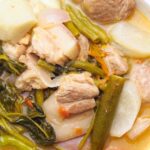
Pork Sinigang
Pork Sinigang is a classic Filipino soup with tender pork slowly simmered in a rich, tangy broth and fresh vegetables. Once you taste it, you will understand why this comforting dish is a must try and a favorite in many Filipino homes.
Ingredients
- 2 tbsp Oil
- 1 piece Onion large (squared)
- 4 pieces Tomato large (squared)
- 1 Kilogram Pork Belly (square slices)
- 4 pieces Taro/Gabi (sliced into four)
- 2 tbsp Fish Sauce
- 4 cups Water
- 1 sachet Sinigang Mix
- 8 pieces Okra
- 1 bunch String Beans (cut to 3 inch length)
- 1 piece Radish (sliced)
- 1 bunch Kangkong (cut to 3 inch length)
- 3 pieces Green Chili
- Salt to taste
Instructions
- Heat the oil in a large pot over medium heat. Sauté the onion until translucent. Add the tomatoes and cook until they begin to soften.
- Add the pork belly to the pot and cook until lightly browned.
- Add the taro (gabi) and stir in the fish sauce. Simmer for about 15 minutes.
- Pour in the water and bring to a boil.
- When the pork is slightly tender, add in the Sinigang Mix.
- Add the okra, string beans, and radish. Simmer for another 5-7 minutes until vegetables are tender but still crisp.
- Stir in the kangkong stalks and green chili peppers. Cook for an additional 2 minutes until the kangkong stalks are tender.
- Taste and adjust the seasoning with salt if needed. Serve hot with steamed rice.
Watch this!
Notes
- Sinigang is traditionally served with fish sauce (patis) and calamansi or lemon on the side for added flavor.
- Adjust the amount of sinigang mix according to your preferred sourness level.
- Cooking times may vary depending on the size and thickness of the pork belly and vegetables.
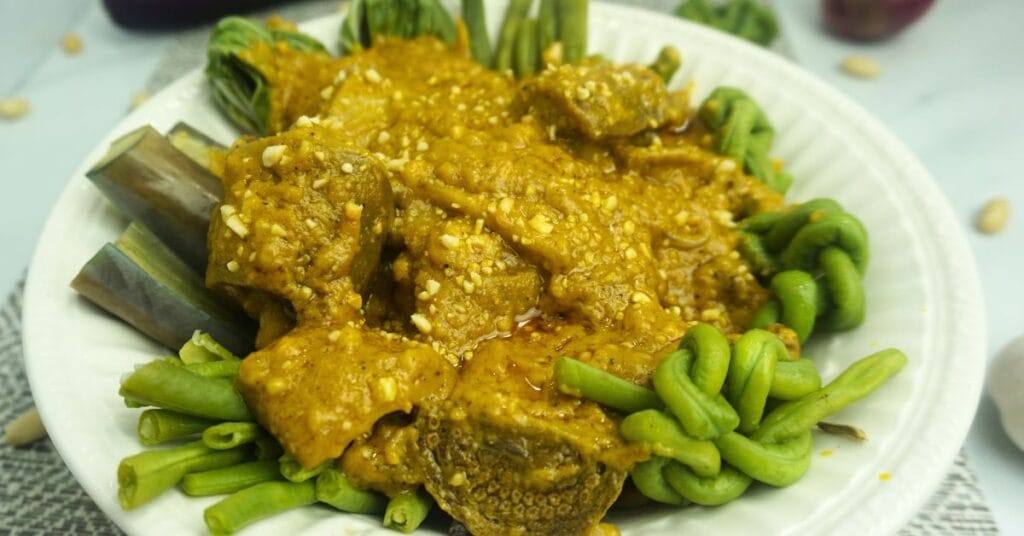
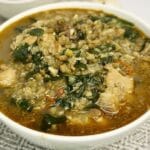
Beef Kare Kare
You are going to love this Beef Kare-Kare recipe, featuring beef that is slow-cooked until it's super tender and falls right off the bone. The magic is in the sauce, which is thick, creamy, and tastes wonderfully nutty because of the toasted peanuts, making it the perfect comfort food. Scoop it over rice with a side of fresh vegetables and salty bagoong (shrimp paste) for a hearty and totally delicious dinner you will want to make again and again.
Ingredients
- 1 kg Oxtail (cut into pieces)
- 500 gram Beef Tripe (cleaned and cut into pieces)
- 250 gram Beef Skin (cut into pieces)
- 1 tsp Black Pepper (whole)
- 1 bunch Green Onions
- 1 cup String Beans (cut into 3-inch pieces)
- 1 cup Green Beans (cut into 3-inch pieces)
- 2 bunch Pechay / Bok Choy
- 2 pcs Eggplants (sliced)
- 1 piece Banana Heart (sliced)
- 2 tbsp Annatto Oil
- 8 cloves Garlic minced
- 1 piece Onion chopped
- 1 cup Peanut Butter
- 1/2 cup Ground Peanuts (roasted)
- 1/4 cup Rice Flour
- 2 tbsp Fish Sauce
- Water
- Salt and pepper to taste
Instructions
- In a large pot, place the oxtail, beef tripe, and beef skin. Cover with water and bring to a boil. After 15 mins, discard the water in a strainer and rinse the meat.
- Boil again the oxtail, beef tripe and beef skin in hot water, salt and lemon grass. After 15 mins, discard the water in a strainer and rinse the meat.
- Put the boiled meat in a pressure cooker adding 2 liters of water, green onions, whole black pepper, and fish sauce. You can also add the beef cubes for a more meaty flavor. Boil for about 35 minutes then remove the beef tripe. Boil the oxtail and beef skin again for about 15 mins. Once cooked, set aside the meat and reserve the broth.
- In a separate pot, boil water and add a tablespoon of salt. Blanch the string beans, green beans, pechay, eggplant and banana heart until tender but still crisp. Set aside.
- In a large pan or pot, heat the annatto oil. Sauté the onion and garlic until fragrant. Then pour in about 5-6 cups of the reserved broth, bring to a boil.
- Add the peanut butter and ground peanuts, stirring well to combine. Slowly add the rice flour, stirring constantly to avoid lumps, stirring continuously until the sauce thickens.
- Add the fish sauce, and season with salt and pepper to taste. If the sauce is too thick, you can add more water to reach your desired consistency.
- Add the cooked oxtail, tripe, and beef skin to the sauce. Simmer for about 10-15 minutes, allowing the flavors to meld together. Add the blanched vegetables to the pot, stirring gently to combine.
- Serve the Kare Kare hot with steamed rice and bagoong (fermented shrimp paste) on the side.
Notes
- If you prefer a nuttier flavor, lightly roast the peanuts in a dry pan over medium heat, stirring frequently until they become fragrant. Let them cool before grinding.
- Use a food processor or a blender to grind the peanuts. Pulse until you achieve the desired consistency, whether you prefer a coarse or fine texture.
- Be cautious not to over-process, as this can turn the peanuts into a paste (like peanut butter).
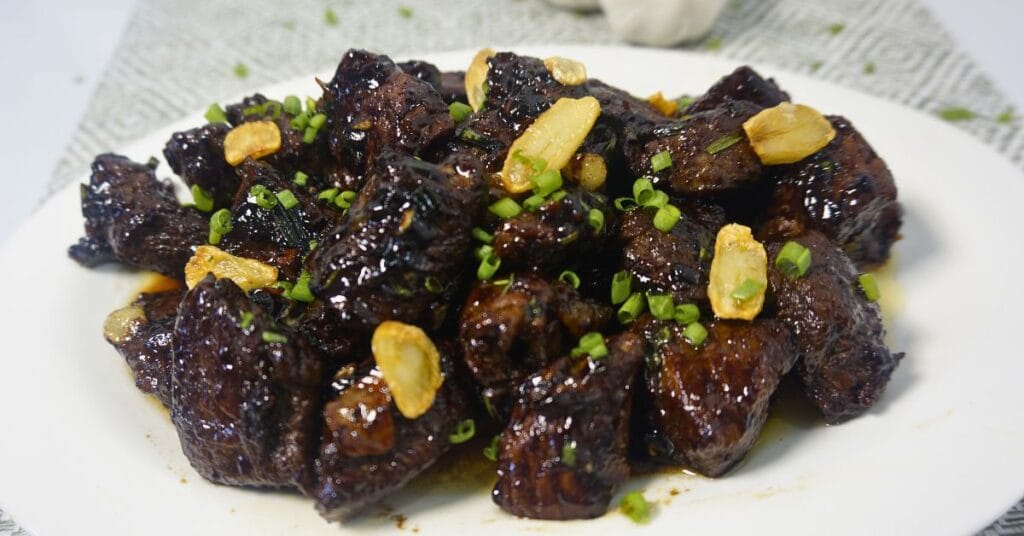
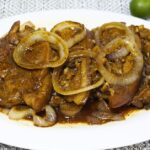
Beef Salpicao
You have to try this quick and absolutely delicious Beef Salpicao! It starts with tender cubes of sirloin or tenderloin that are flash-seared quickly to keep them juicy. The magic is in the incredibly rich and intensely garlicky sauce, made with savory soy sauce, lots of butter, and a hint of Worcestershire for deep umami flavor. It is finished with lots of crunchy, browned garlic bits, making this buttery, flavorful dish the best ulam (main dish) to eat with warm rice.
Ingredients
- 500 grams Beef Tenderloin (sliced into cubes)
- 2 tbsp Worcestershire Sauce
- 1 tsp Paprika (optional)
- 6 cloves Garlic (sliced)
- 4 cloves Garlic (minced)
- 3 tbsp Olive Oil
- 2 tbsp Butter
- 2 tbsp Soy Sauce
- 2 tbsp Oyster Sauce
- 1/2 tsp Black Pepper
- Pinch of Salt
- 1 tbsp Brown Sugar (optional)
- Green Onions chopped (for garnish)
- Fried Garlic (for garnish)
Instructions
- In a bowl, combine the beef tenderloin with Worcestershire sauce and paprika (if using). Mix well, ensuring all the beef cubes are coated. Let it marinate for at least 30 minutes.
- Heat the olive oil in a pan over medium heat. Add the sliced garlic and sauté until golden brown. Once browned, remove the garlic from the pan and set it aside.
- In the same pan with the garlic-infused oil, add the marinated beef cubes. Sear the beef on all sides until they are browned.
- Once the beef is browned, lower the heat and add the butter, minced garlic, soy sauce, oyster sauce, black pepper, and a pinch of salt. Stir well.
- If you prefer a slightly sweet touch, add 1 tbsp of brown sugar at this stage. Continue to cook for an additional 2-3 minutes until the beef is cooked to your desired doneness and the sauce is well combined.
- Transfer the beef salpicao to a serving plate. Garnish with the browned garlic slices and chopped green onions.
- Serve with steamed rice and enjoy your flavorful Beef Salpicao!
Watch this!
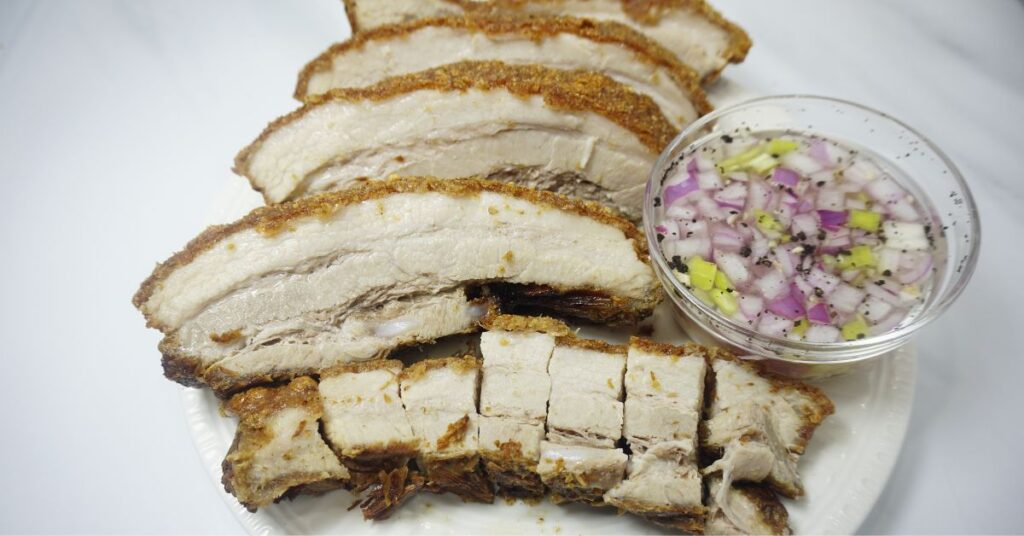
Crispy Lechon Kawali
Crispy on the outside, juicy on the inside. Learn how to cook the perfect Lechon Kawali at home with simple steps and real tips.
Ingredients
- 1 slab pork belly with skin
- 1 cup pork broth or water
- 8 cloves garlic crushed
- 2 bay leaves
- 1 tbsp whole peppercorns
- 1 tbsp salt
- Cooking oil enough for deep frying
Instructions
- Place the pork belly in a large pot. Add the pork broth or water, crushed garlic, bay leaves, whole peppercorns, and salt.
- Bring everything to a boil over medium heat. Then lower the heat and let it simmer for about an hour or until the pork is tender enough to pierce with a fork.
- Carefully remove the pork belly from the pot and let it drain completely. Allow it to cool, then pat it dry with paper towels to remove extra moisture.
- For extra crispy skin, refrigerate the pork belly uncovered for at least two hours or overnight to dry out the skin. This step is optional but highly recommended.
- Heat enough cooking oil in a deep pan to fully cover the pork belly. Once the oil is hot, carefully add the pork and fry until the skin puffs up and turns golden brown, about 8 to 10 minutes.
- Remove the pork from the oil and place it on a wire rack or paper towels to drain excess oil. Let it rest for a few minutes before slicing into serving pieces.
Notes
Tips
- Use pork fat oil when boiling for an authentic flavor boost.
- Be extra careful when frying — oil can splatter because of the pork’s moisture.
- You can double-fry for an even crunchier texture.
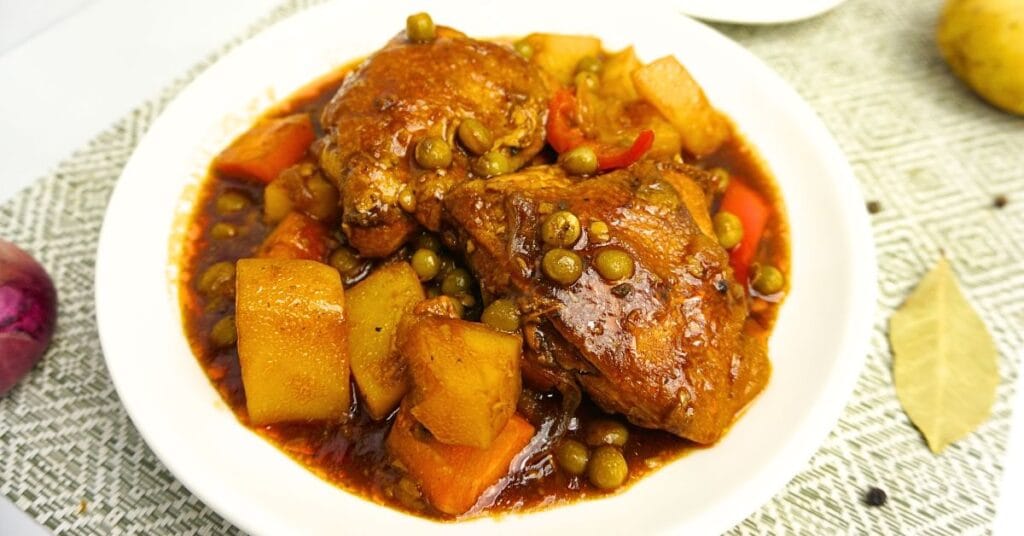
Chicken Afritada
Chicken Afritada is a classic Filipino dinner, known for its tender chicken simmered slowly in a rich tomato sauce. The sauce is deeply savory and smooth, with a balanced flavor from garlic, fish sauce, and just a hint of sweetness. It is packed with potatoes, carrots, and colorful bell peppers, making it a hearty and flavorful stew that is best served with warm rice.
Ingredients
- 1 kilogram Chicken (cut into serving pieces)
- 2 tbsp Cooking Oil
- 8 cloves Garlic (minced)
- 1 piece Onion large (chopped)
- 1 tbsp Tomato Paste (optional)
- 1 cup Tomato Sauce
- 2 cups Water / Chicken Broth
- 2 tbsp Soy Sauce
- 2 piece Bay Leaves
- 1 piece Chicken Cube
- pinch Salt and Pepper
- 2 pieces Potatoes large (squared)
- 2 pieces Carrots large (squared)
- 1 piece Bell Pepper large (strips)
- 1 cup Green Peas (fresh or frozen)
Instructions
- Heat the cooking oil in a large pot over medium-high heat.Add the chicken pieces and brown on all sides. Remove the chicken from the pot and set aside.
- In the same pot, add the minced garlic and chopped onions. Sauté until the onions become translucent and the garlic is fragrant.
- Add the tomato paste to the pot and cook for a couple of minutes, stirring constantly to prevent burning. This step is optional but adds depth to the flavor.
- Pour in the chicken broth (or water) and tomato sauce, stirring to combine. Add the soy sauce, bay leaves, salt, and pepper.
- Return the browned chicken pieces to the pot. Bring the mixture to a boil, then reduce the heat to low. Cover and simmer for about 20 minutes, or until the chicken is cooked through.
- Add the sliced potatoes, sliced carrots, and bell pepper strips to the pot. Continue to simmer for another 15-20 minutes, or until the vegetables are tender.
- Add the green peas and cook for an additional 5 minutes.
- Taste the sauce and adjust the seasoning with salt and pepper as needed.
Watch this!
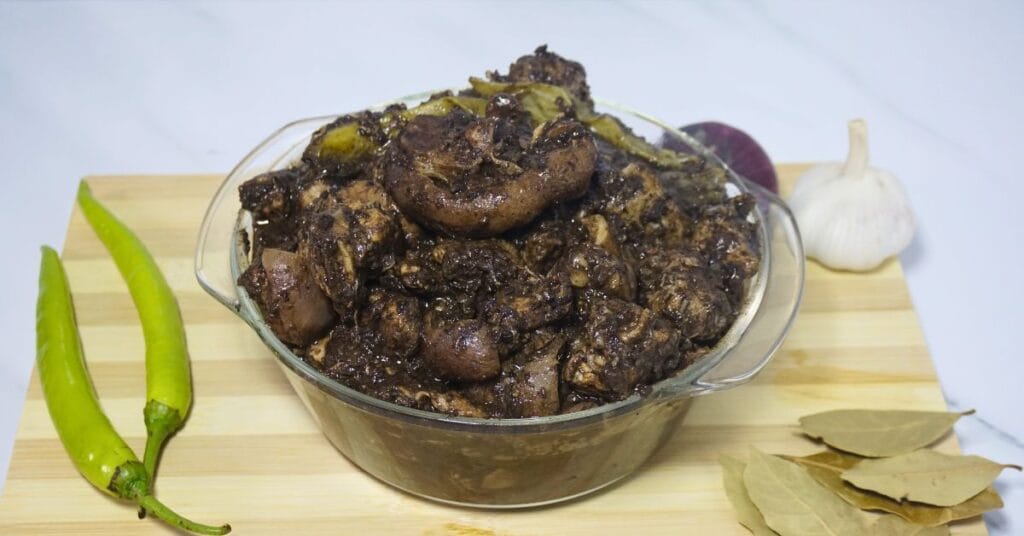
Dinuguan Recipe
Pork dinuguan is a savory, slightly tangy stew made from pork bits and pig’s blood that gives the sauce its rich, dark color. The combination of vinegar, garlic, and onions brings a bold, almost smoky flavor that’s uniquely Pinoy. Try it when you want something hearty, flavorful, and totally different from your usual ulam.
Ingredients
- 2 tbsp Cooking Oil
- 8 cloves Garlic (minced)
- 1 piece Onion (sliced)
- 1 kilogram Pork Hock / Pata (cut into cubes)
- 500 grams Pork Belly (cut into cubes)
- 3 pieces Bay Leaves
- 1 tbsp Sangkot-sangkot / Dried Oregano
- 1 tsp Black Pepper (cracked)
- 1 cup Vinegar (adjust to your desired sourness)
- 3 pieces Green Chilies (adjust to your spice preference)
- Pork Blood (about 2 cup or more, depending on how saucy you prefer your Dinuguan)
- Salt (to taste)
Instructions
- Heat 2 tablespoons of cooking oil in a large pot over medium heat. Add the 8 minced cloves of garlic and 1 sliced onion. Sauté until the garlic turns golden brown and the onions become soft and translucent.
- Add 1 kilogram of pork hock (pata) and 500 grams of cubed pork belly to the pot. Stir occasionally, allowing the pork to cook until it lightly browns on all sides.
- Toss in the 3 pieces of bay leaves, 1 tbsp of sangkot-sangkot (dried Oregano) and 1 tsp black pepper (cracked). Stir everything together, letting the pork absorb the flavors.
- Pour in the vinegar (adjust to your taste, around 1 cup should be a good start). Do not stir at this point to avoid a raw, sour taste. Let the vinegar simmer for about 5-7 minutes, allowing the sharpness to cook off.
- Add green chilies (adjust the amount depending on your spice preference). Let everything simmer together for another 10-15 minutes, allowing the flavors to meld.
- Reduce the heat to low and cover the pot. Let the pork simmer for about 1.5 to 2 hours, or until the pork is tender and fully cooked. You may add a little water if needed to keep it from drying out.
- Once the pork is tender, slowly add the pork blood to the pot. Stir continuously to prevent the blood from coagulating. Let it boil and cook for another 10-15 minutes, stirring occasionally, until the sauce thickens.
- Finally, season the dish with salt according to your taste. Give everything a final stir, and let it simmer for another 5 minutes.
- Serve hot with steamed rice or puto (steamed rice cake) on the side. Enjoy your flavorful Pork Dinuguan!
Watch this!
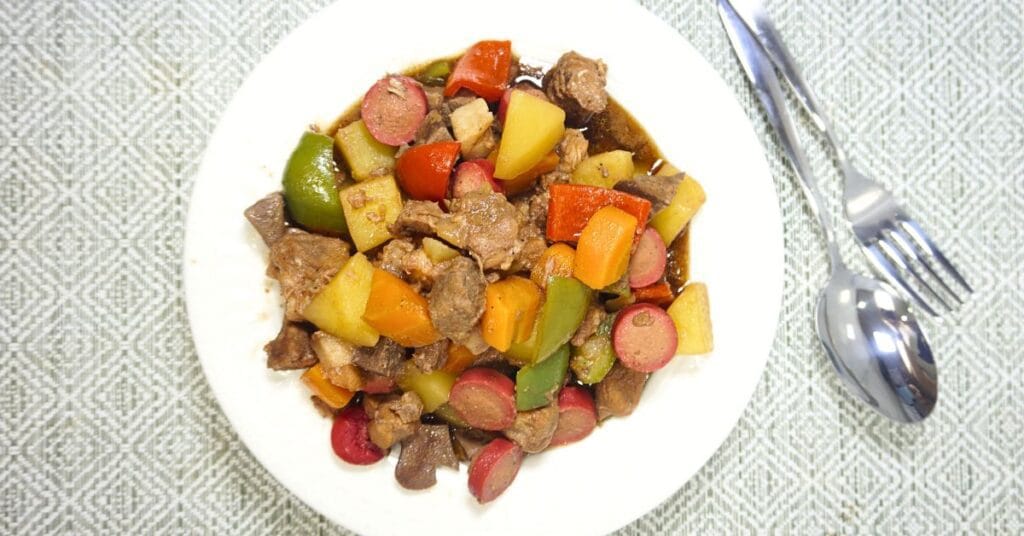
Pork Menudo (Kapampangan Recipe)
Try our Kapampangan Pork Menudo for a tangy twist on a Filipino favorite. Tender pork, savory flavors, and vibrant veggies make this dish a must-try!
Ingredients
For Marination:
- 1 kg Pork Shoulder (cubed)
- 4 tbsp Soy Sauce
- ½ cup Calamansi Juice
For Sautéing and Cooking:
- 2 tbsp Cooking Oil
- 8 cloves Garlic (minced)
- 1 piece Onion (sliced)
- 2 cups Water
- 3 pcs Bay Leaves
- 1/2 tsp Black Pepper
- 1 piece Pork Cube (bouillon)
- 2 pcs Potatoes (cubed)
- 2 pcs Carrots (cubed)
- 300 grams Pork Liver (cubed)
- 5 pcs Hotdogs (cubed)
- 1 piece Red Bell Pepper (cubed)
- 1 piece Green Bell Pepper (cubed)
- Salt to taste
Instructions
- In a bowl, combine the cubed pork shoulder, soy sauce, and calamansi juice. Mix well and marinate for at least 30 minutes to allow the flavors to penetrate the meat.
- In a large pan, heat 2 tbsp of cooking oil over medium heat. Sauté the minced garlic and sliced onions until fragrant and softened.
- Add the marinated pork to the pan. Sauté until the pork turns light brown, ensuring it's evenly cooked on all sides.
- Add back the marinade and pour in 2 cups of water and add the bay leaves and black pepper. Stir, then cover and simmer over low heat until the pork becomes tender (about 30-40 minutes).
- Once the pork is tender, add the pork cube, cubed potatoes and carrots. Continue simmering until the vegetables are slightly tender (about 10-12 minutes).
- Add the cubed pork liver and hotdogs. Simmer for two minutes.
- Add the red bell pepper, and green bell pepper to the pan. Stir well and cook for another 5-7 minutes, or until the liver is fully cooked but still tender.
- Add salt to taste and adjust the seasoning according to your preference. Simmer for another minute to let all the flavors meld together.
- Once cooked, remove from heat and serve your Kapampangan-style Pork Menudo with steamed rice.
Watch this!
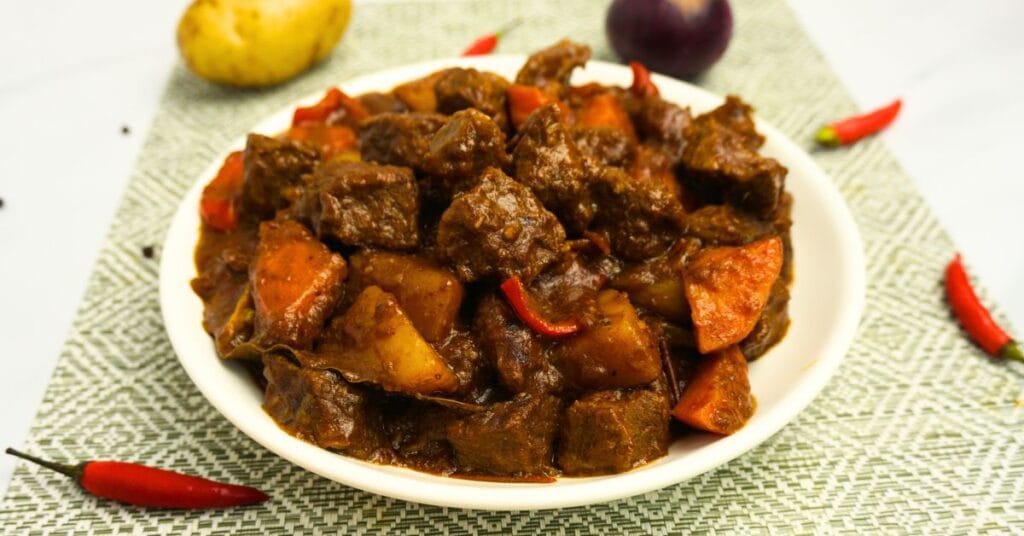
Beef Caldereta
Get ready for Beef Caldereta, a rich Filipino stew with tender beef chunks slow-cooked until they melt in your mouth. The hearty tomato sauce is blended with spices, liver spread for incredible richness, and chili peppers for a delightful, savory kick. With colorful bell peppers, potatoes, and carrots, this deeply flavorful dish is perfect scooped over hot rice for a comforting meal.
Ingredients
- 1 kg Beef sirloin
- 2 tbsp Cooking oil
- 1 piece Onion large (sliced)
- 8 cloves Garlic (minced)
- 1/4 cup Soy sauce
- 2 cups Beef broth
- 3 pieces Bay leaves
- 2 cups Tomato sauce
- 2 pieces Potatoes medium (squared)
- 1 piece Carrots large (squared)
- 1 cup Liver spread / Reno
- 1 piece Green bell pepper (wedge)
- 1 piece Red bell pepper (wedge)
- 1/2 tsp Ground black pepper
- 1-2 pieces Red chili (diced)
- 1 tbsp Sugar
- Salt to taste
Instructions
- Heat the cooking oil in a large pot over medium heat. Add the beef sirloin cubes and sear until browned on all sides. Remove the beef from the pot and set aside.
- In the same pot, add the chopped onions and garlic. Sauté until the onions are translucent and the garlic is fragrant.
- Return the beef to the pot. Add the soy sauce, beef broth, and bay leaves. Stir to combine. Pour in the tomato sauce and bring the mixture to a boil.
- Reduce the heat to low, cover the pot, and let it simmer for about 1.5 to 2 hours, or until the beef is tender. Stir occasionally and add water if necessary to keep the beef submerged in liquid.
- Once the beef is tender, add the potatoes, carrots, and liver spread (or pâté). Stir well to distribute the liver spread and cook for about 10 minutes or until the vegetables are tender.
- Add the bell peppers and green peas (if using). Stir to combine and cook for another 5 minutes.
- Season with ground black pepper, and salt to taste. Add the red chili if you prefer a spicy kaldereta. Add sugar if you prefer a slightly sweeter taste.
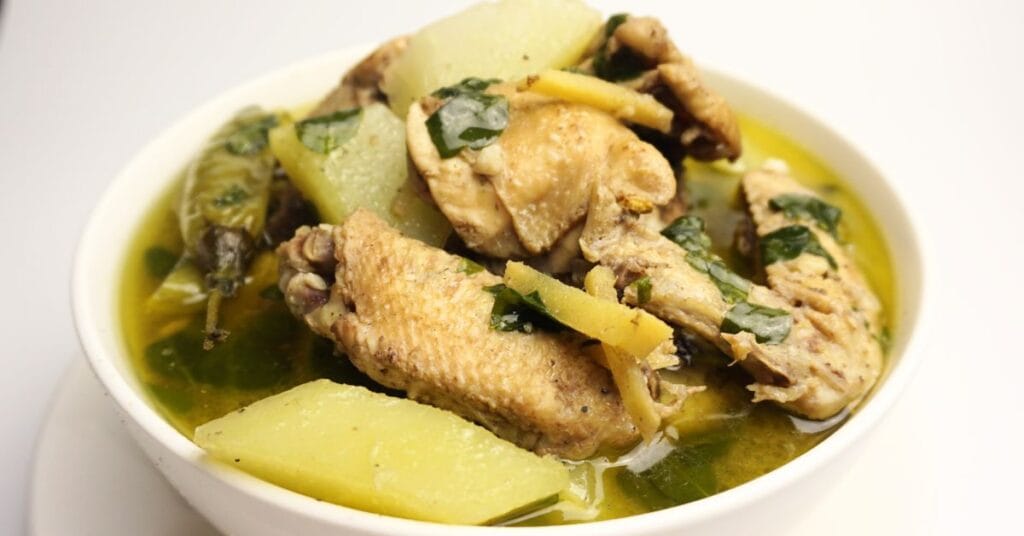
Chicken Tinola
Enjoy a comforting bowl of chicken tinola with our easy recipe that will sure warm your heart.
Ingredients
- 2 tbsp Oil
- 1 piece Ginger thumb-sized (julienne)
- 8 cloves Garlic (minced)
- 1 piece Onion medium (sliced)
- 1 kilogram Chicken
- 2 tbsp Fish Sauce
- 1 tsp Black Pepper (crushed)
- 4 cups Water
- 1 piece Chicken Cube
- 500 gram Papaya medium (Wedged)
- 2 piece Green Chili
- 1 bunch Malunggay Leaves
- Salt to taste
Instructions
- In a pot put the oil and the fire in a high setting then saute the ginger followed by garlic and onion.
- After one minute put in the sliced chicken toss and let it cook until golden brown.
- When the chicken is slightly cooked, put in the black pepper and fish sauce, toss and let it simmer.
- Add in the water and let it boil until the chicken is tender.
- Once the chicken is tender, put in the sliced papaya and chilis. Let boil until the papaya is tender.
- Add one chicken cube to give more flavor to the soup.
- Add salt according to your preference. After a few minutes toss the malunggay leaves and let it boil for another few minutes.
- Served in a bowl and enjoy!
Watch this!
Notes
- Adjust the amount of ginger according to your preference. Ginger gives Tinola its distinct flavor.
- If malunggay leaves are unavailable, chili leaves can be a good substitute.
Related posts:
 Top Filipino Recipes to Impress Non-Filipinos
  Healthy Ground Beef Recipes You’ll Actually Want to Cook
  Easy Chicken Breast Recipes You Can Make Any Day
  15 Healthy Dinner Recipe Ideas Even Busy People Will Love
  The Most Googled Filipino Recipes and What Makes Them Special
  Easy Chicken Recipes with Sauce
  Best Recipes with Soy Sauce and Vinegar Combo
  16 Rice Dishes That Prove Rice Goes with Everything