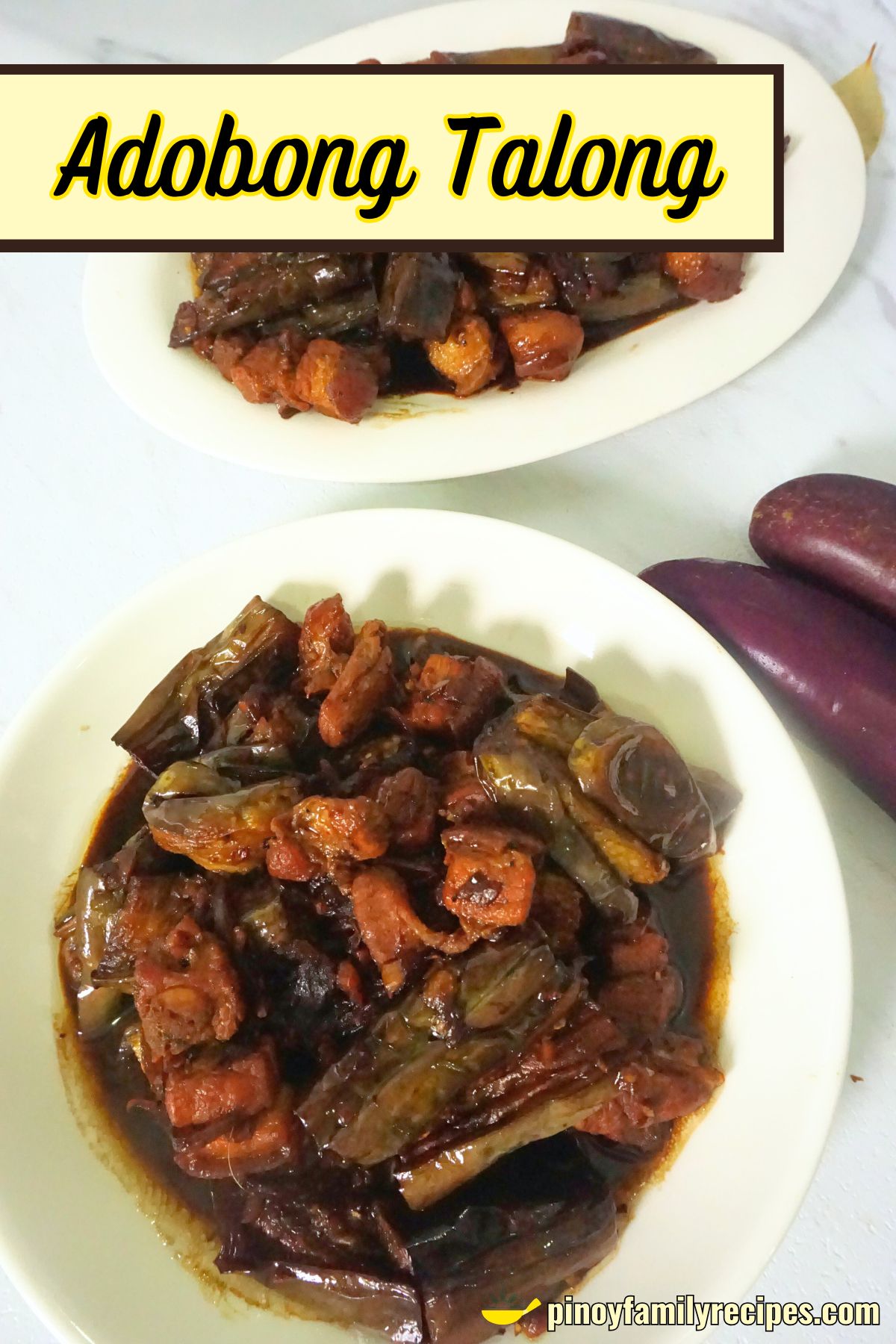
I had a leftover eggplant sitting in the kitchen after making tortang talong the other day.
Instead of letting it go to waste, I thought, “Why not cook it Adobo style?”
And wow! This turned out to be one of those simple gulay dishes that surprised me.
It’s soft, flavorful, and soaked up all that savory, garlicky adobo sauce.
If you’re like me and love stretching ingredients into something delicious, you’ll enjoy this one.
It’s budget-friendly, easy to cook, and pairs perfectly with a big serving of rice.
No fancy steps, just real good food.
What is Adobong Talong?
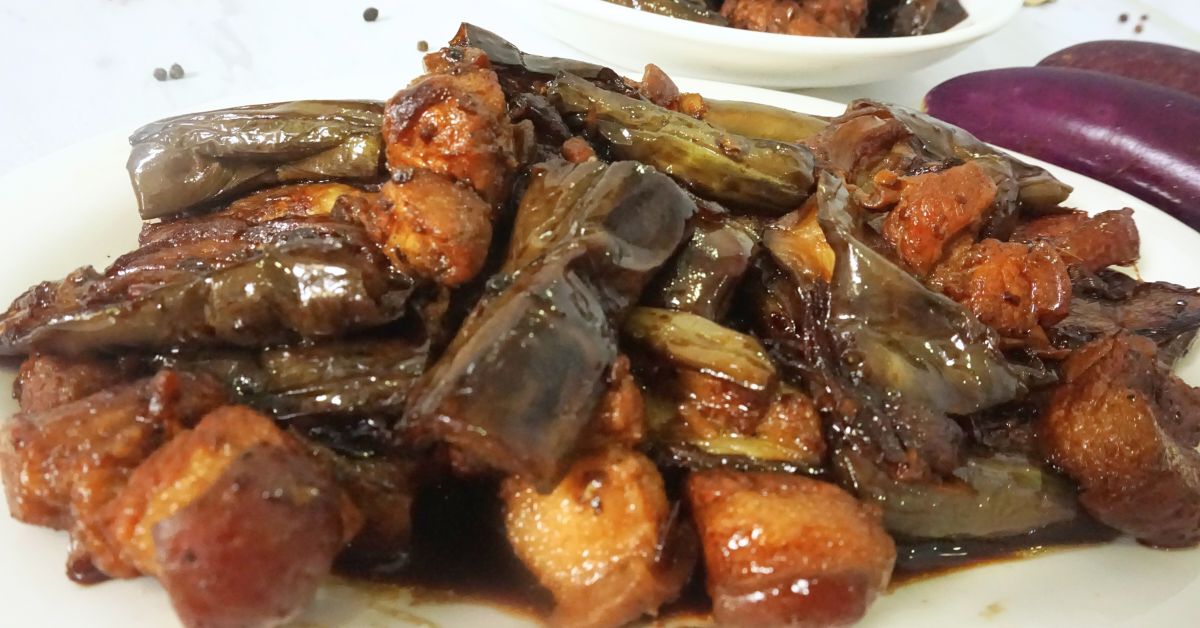
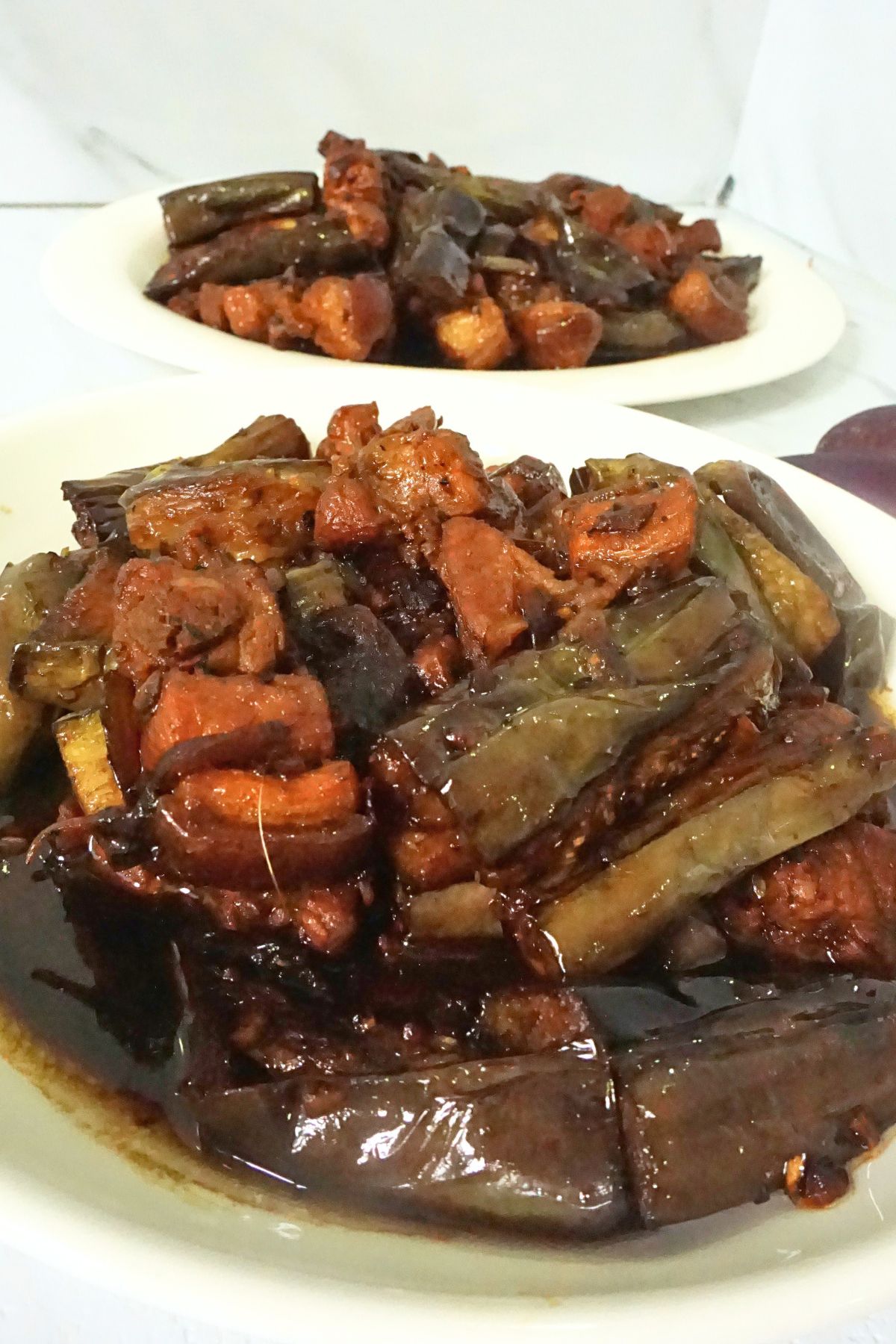
Adobong talong is just like regular adobo, but instead of pork or chicken, we use eggplant.
At first, I didn’t think much of it.
I mean, how exciting can eggplant be, right?
But once you cook it in vinegar, soy sauce, garlic, and all those classic adobo flavors, it turns into something surprisingly good.
The eggplant becomes soft and tender, and it soaks up the sauce so well.
It’s one of those dishes that feels simple, but the taste makes you want an extra cup of rice.
I like to cook this when I’m trying to keep things light or when there’s no meat left in the fridge.
It’s budget-friendly, quick to make, and still gives you that comforting adobo flavor.
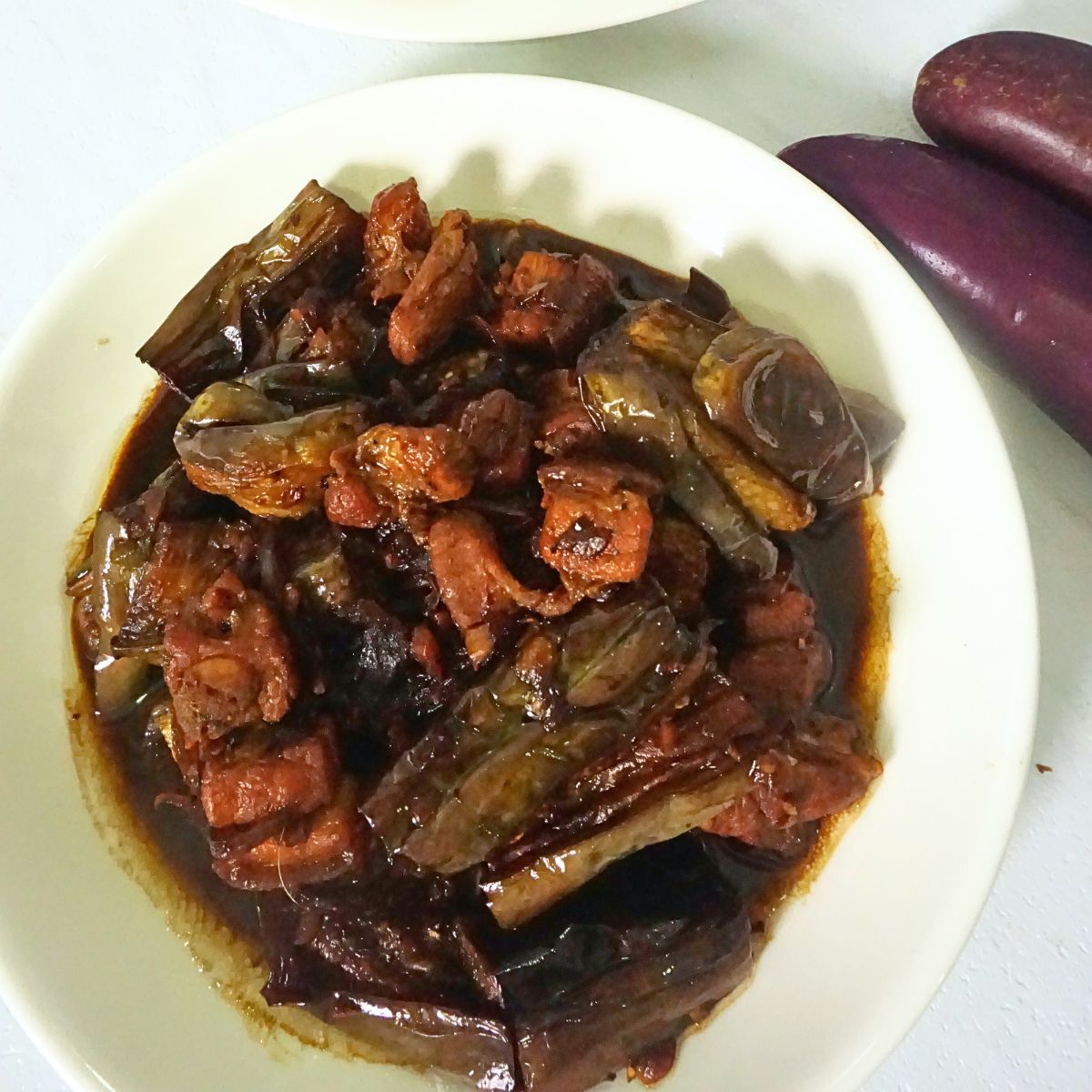
Why You’ll Love This Recipe
What I really like about this recipe is how simple it is.
No need for fancy ingredients or long cooking time.
Just eggplant, garlic, soy sauce, and vinegar.
But when it all comes together in the pan, the flavor hits just right.
It’s the kind of dish I turn to when I don’t want to overthink dinner.
And honestly, it’s a great way to use up leftover eggplant, especially when you’re tired of frying or making torta again.
It turns out soft, full of flavor, and perfect with rice.
Sometimes I even cook this when I want a break from meat but still want something that tastes like a proper ulam.
If you like easy recipes that still feel satisfying, this one’s a good choice.
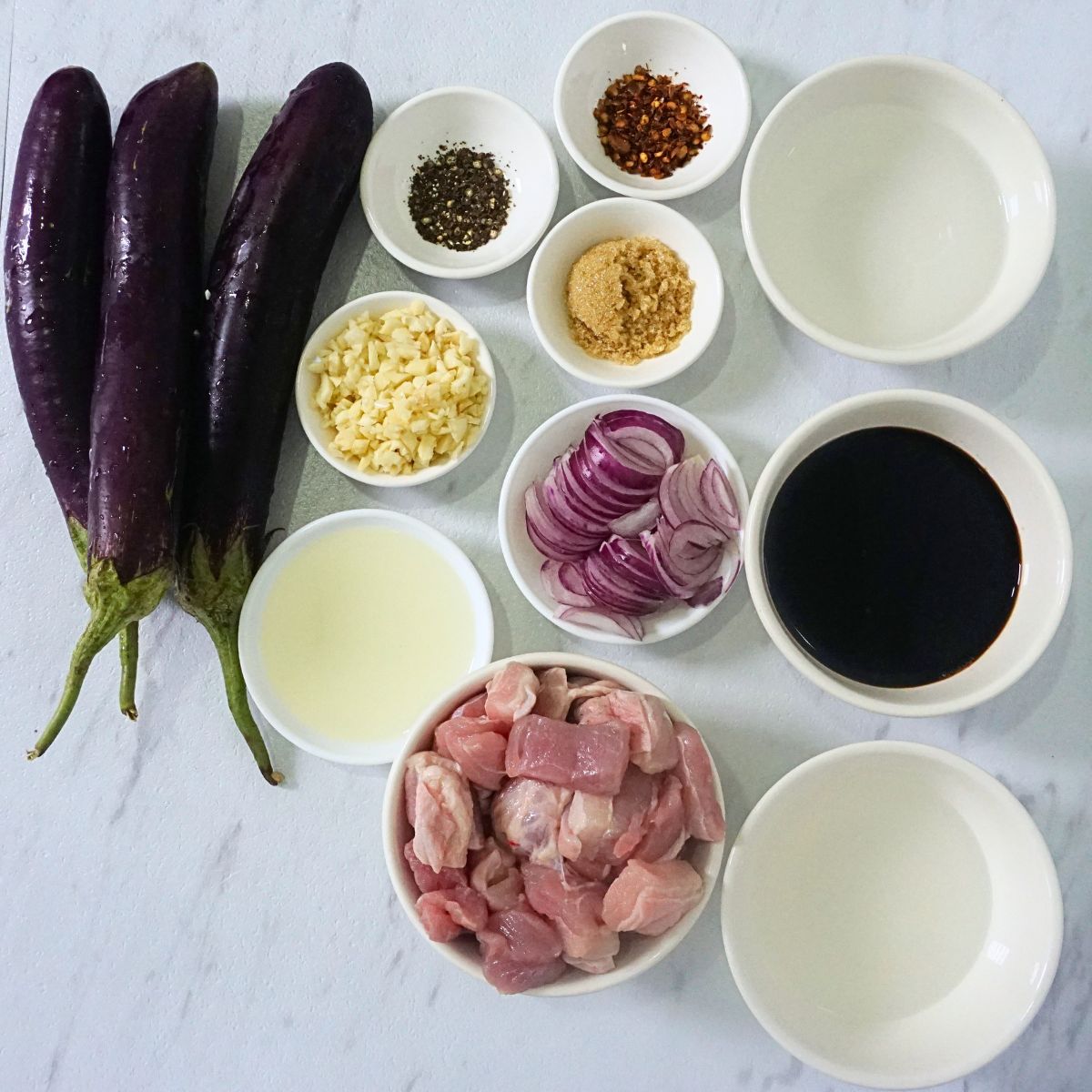
Eggplant Adobo Ingredients
Eggplants – Slice them thick so they stay firm and don’t turn mushy while cooking.
Pork Belly or Shoulder – Cut into small pieces for that extra flavor and tenderness in every bite.
Garlic – Minced to give that strong, familiar adobo aroma.
Onion – Sliced to add natural sweetness and balance to the base.
Soy Sauce – The main source of that savory adobo taste we all love.
Vinegar – Adds that tangy kick that makes the dish rich and flavorful.
Water – Just enough to simmer everything together until tender.
Brown Sugar – Optional but great if you like a little touch of sweetness in your adobo.
Black Pepper – Enhances the overall flavor and adds a mild spice.
Cooking Oil – For frying and sautéing the pork and eggplant.
Siling Labuyo or Chili Flakes – Optional if you like your adobo with a spicy twist.
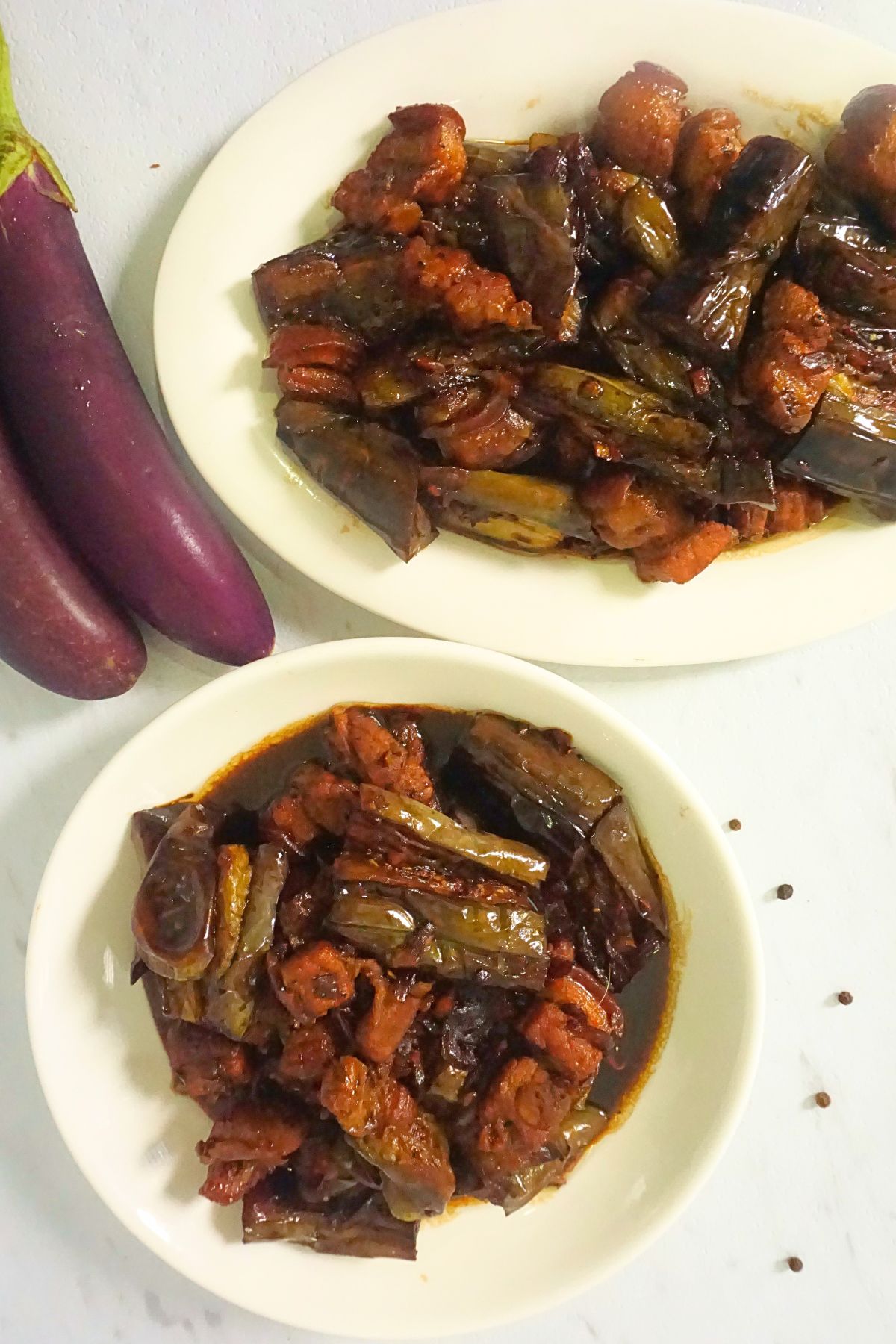
How to Cook Eggplant Adobo
1. Sauté the Eggplant
Start by frying the eggplant slices until they’re lightly browned and soft, then set them aside for later.
2. Brown the Pork
In the same pan, cook the pork until it starts to brown and release some of its fat.
3. Add Garlic and Onion
Toss in the garlic and onion and sauté until everything smells nice and fragrant.
4. Pour the Sauces
Add the soy sauce, vinegar, and water, but don’t stir yet — let it boil first to cook off the strong vinegar taste.
5. Simmer Until Tender
Once it’s boiling, stir everything, cover the pan, and let it simmer until the pork becomes tender and flavorful.
6. Add the Eggplant
Put the eggplant back into the pan and gently mix it in so it doesn’t break apart.
7. Season and Finish
Add sugar, black pepper, and chili if you like, then simmer a bit more until the sauce thickens and the eggplant soaks up the flavor.
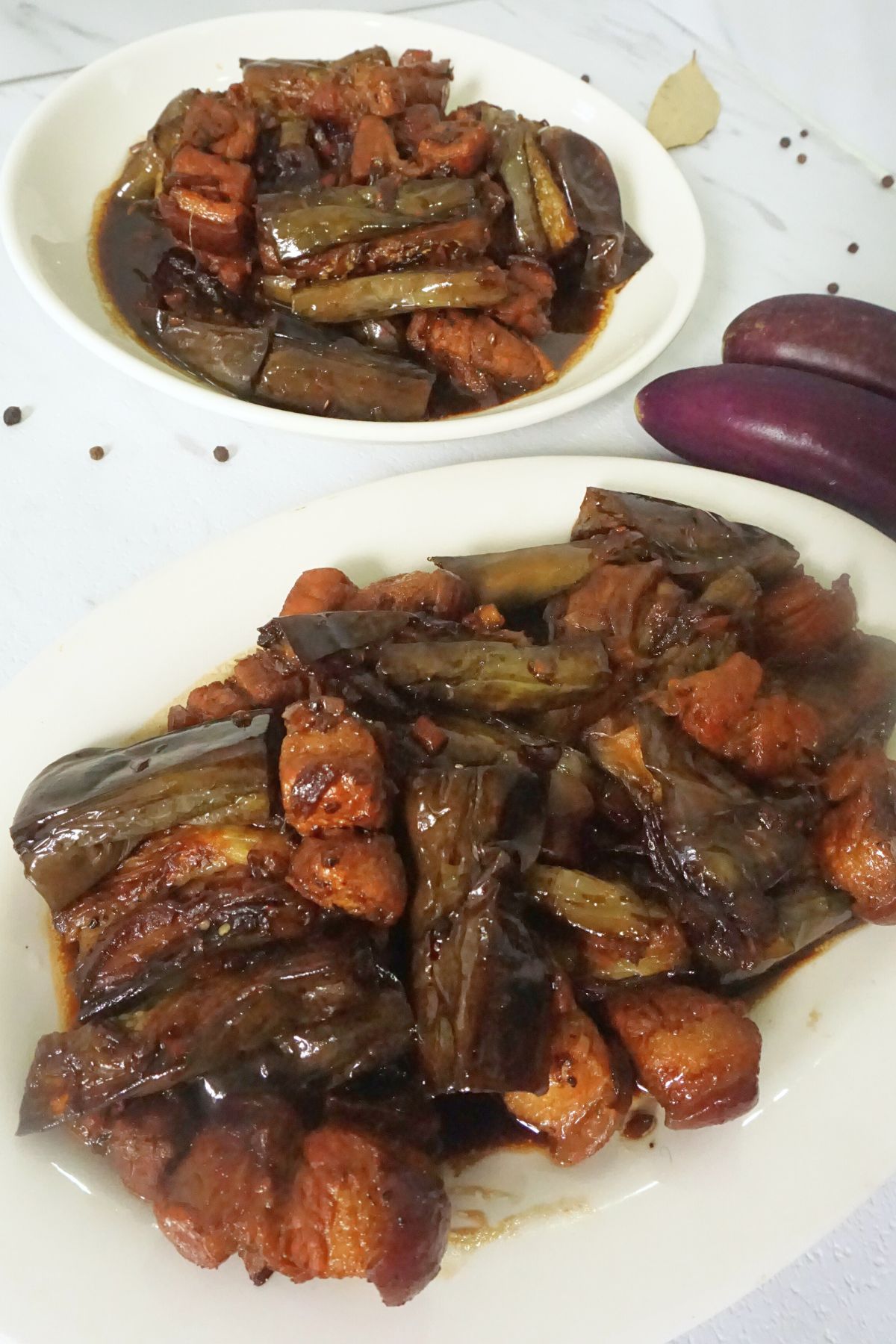
My Tips for Best Results
This is just a straightforward recipe, nothing complicated, but there are a few small things that can make a big difference.
- Fry the eggplant first so it stays firm and doesn’t get too soft in the sauce
- Don’t stir right after adding the vinegar. Let it boil first to remove the strong, raw taste
- If the sauce starts drying up while simmering, just add a bit of water
- A bay leaf can give it that extra adobo flavor if you have one
- Add more pork or even fried tofu if you want it to be more filling
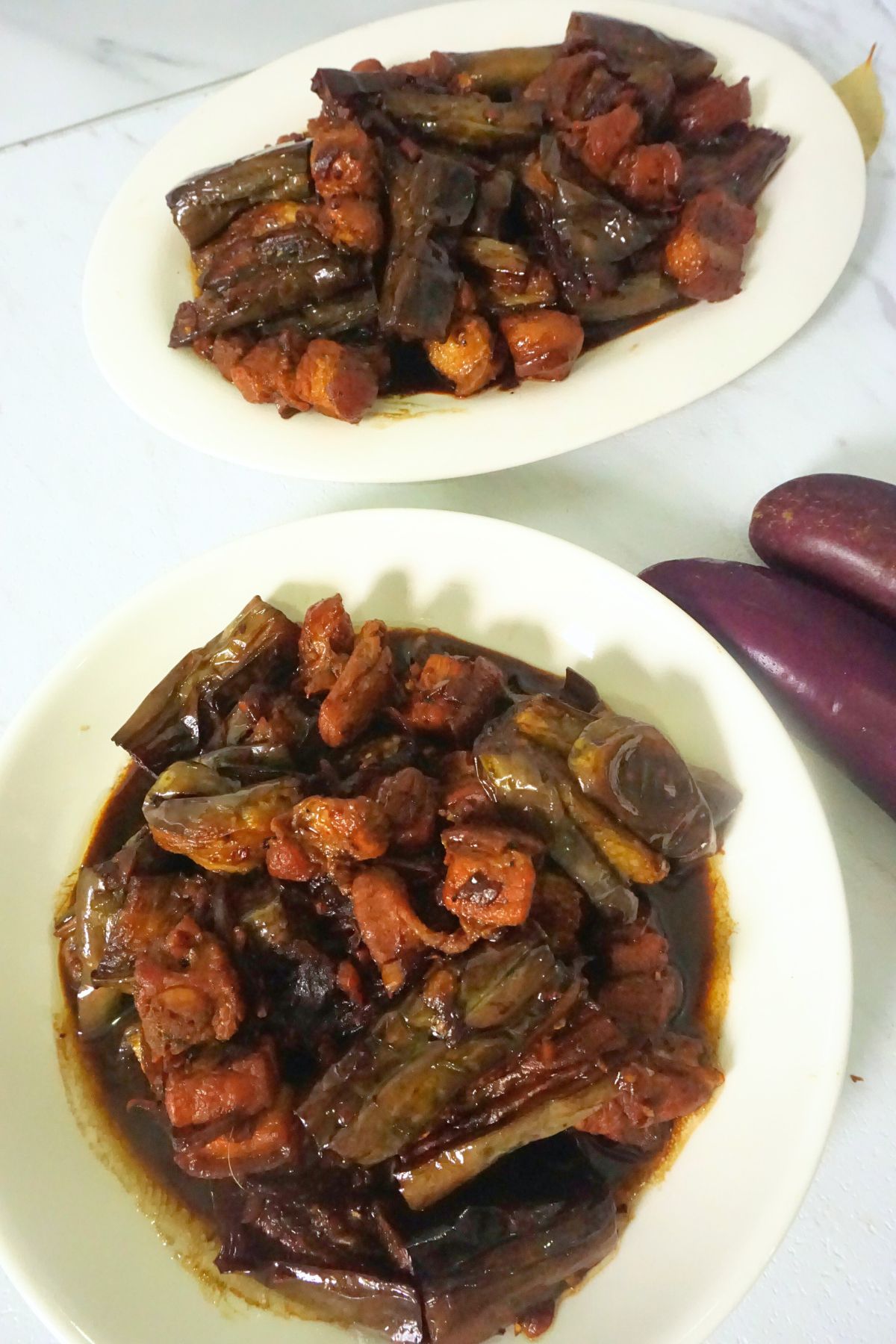
More Must Try Adobo Recipes
If you love adobo as much as I do, you’ll definitely want to try these other delicious variations. Each one has its own twist, but they all have that irresistible savory-tangy flavor we can’t get enough of.
Filipino Chicken Adobo Recipe – The classic version with tender chicken simmered in soy sauce, vinegar, and spices.
Adobong Kangkong – A quick, budget-friendly vegetable adobo using water spinach.
Adobong Paa ng Manok – Chicken feet cooked adobo-style for a rich, gelatinous texture.
Adobong Sitaw with Pork – String beans and pork belly in a savory, tangy sauce.
Pork Adobo Recipe – Hearty pork chunks braised until flavorful and tender.
Frequently Asked Questions
Yes, you can. Just skip the pork and cook the eggplant in the adobo sauce as is. You can also add tofu or boiled egg if you want something extra.
I usually use the long, local eggplant because it’s softer and absorbs flavor better. But any kind will work as long as you don’t slice it too thin.
You can, but frying gives it a better texture and helps it hold its shape when mixed with the sauce.
You can keep it in the fridge for up to 3 days. Just reheat in a pan so the eggplant doesn’t turn too soggy.
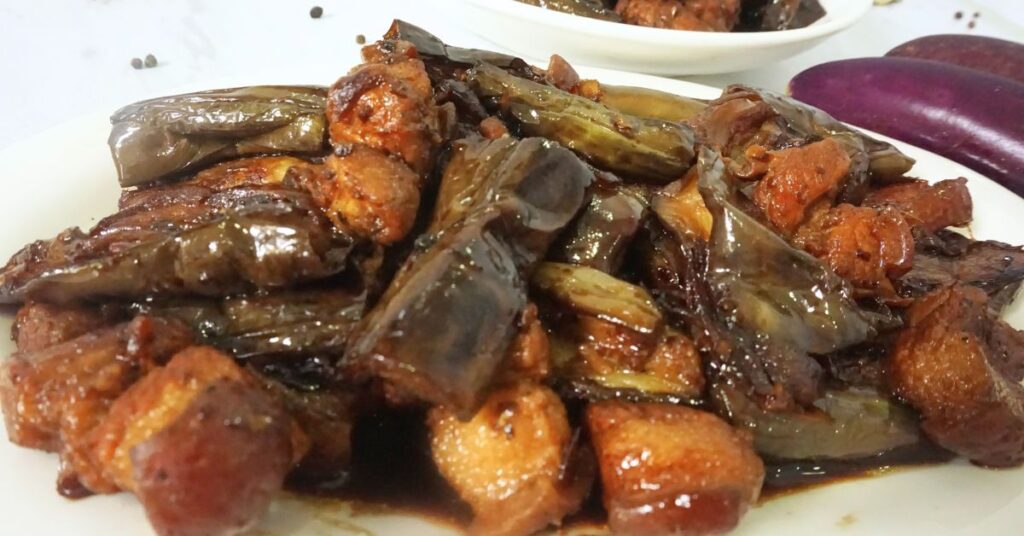
Adobong Talong with Pork (Eggplant Adobo with Pork)
Ingredients
- 500 grams talong eggplant, sliced into thick strips or rounds
- 300 grams pork belly or pork shoulder cut into small cubes
- 6 cloves garlic minced
- 1 medium onion sliced
- ½ cup soy sauce
- ¼ cup vinegar
- ½ cup water
- 1 tablespoon brown sugar optional
- 1 teaspoon black pepper
- 2 tablespoons cooking oil
- Siling labuyo or chili flakes optional for spice
Instructions
- In a wide pan, heat 1 tablespoon of oil. Sauté the eggplant slices until lightly browned and softened (about 3–5 minutes per side). Set aside.
- In the same pan, add another tablespoon of oil. Sauté the pork until browned and starting to render fat (6–8 minutes).
- Add garlic and onion, sauté until fragrant.
- Pour in the soy sauce, vinegar, and water. Do not stir. Let it boil uncovered for 2–3 minutes to cook off the vinegar.
- Stir everything, then cover and simmer for 10–12 minutes or until pork is tender.
- Add the eggplant back into the pan. Stir gently so the pieces stay intact.
- Sprinkle brown sugar and black pepper (add chili if using). Simmer uncovered for another 5–7 minutes, or until the sauce thickens slightly and the eggplant absorbs the flavors.
- Taste and adjust seasoning. Serve hot with rice.
Notes
- Frying the eggplant first helps it hold its shape and gives it a better texture.
- For extra flavor, you can use native vinegar or add a bay leaf.
- If the sauce reduces too fast, add a splash of water.